How to Build a Minimalist Wardrobe for Men (Step‑by‑Step Guide)

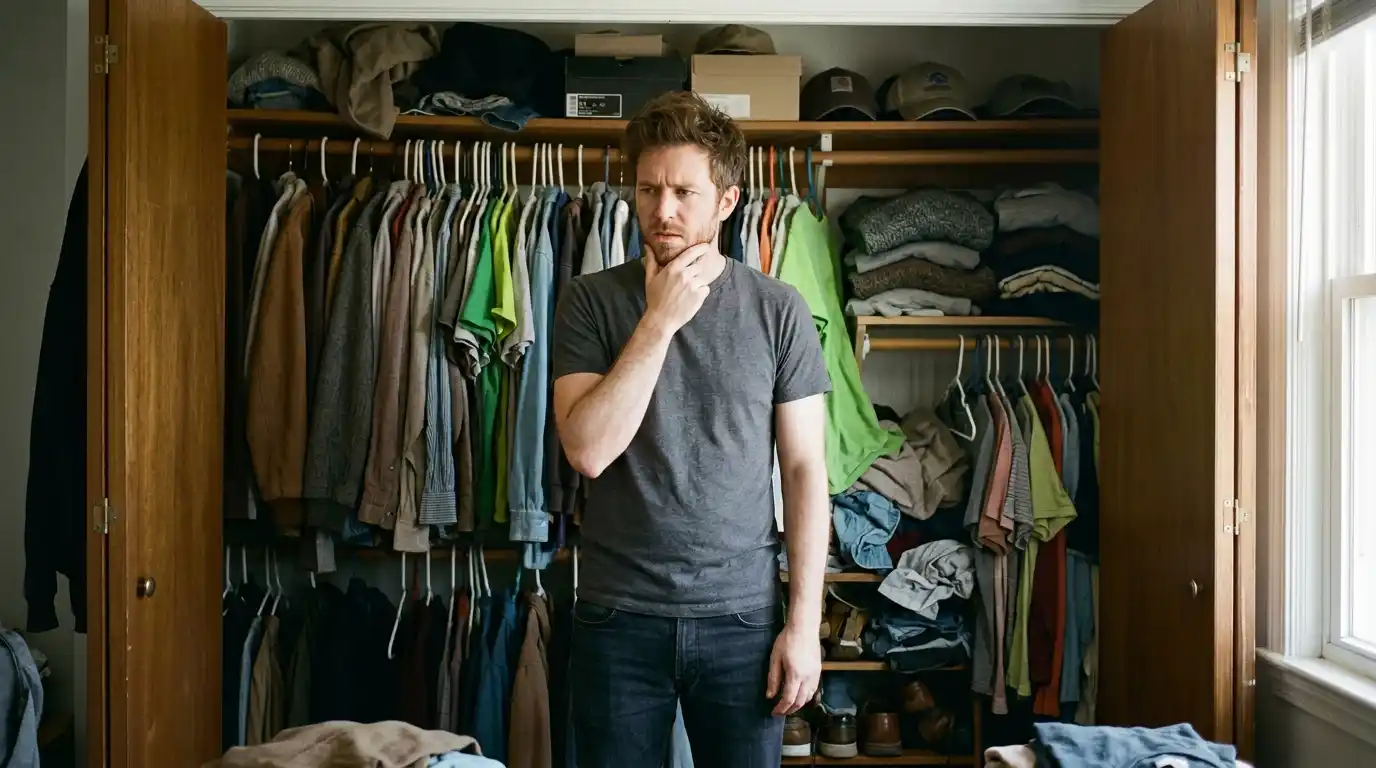
The average man wears only 20% of the clothing in his closet on a regular basis.
The remaining 80% gathers dust, traps visual noise, and drains your mental energy every single morning.
Many men face the same frustrating cycle.
Your closet is packed with impulsive fast-fashion purchases, mismatched colors, and garments that lose their shape by the third wash.
You stand in front of a full wardrobe and feel like you have nothing to wear.
Building a minimalist wardrobe for men fixes this frustration.
You will learn how to construct a high-utility 30-piece system from scratch using a strict rule-of-three matrix.
This serves as a men’s capsule wardrobe blueprint that saves you money and cuts morning decision stress.
By focusing on menswear essentials 2026, you can build a clean, interchangeable wardrobe that makes getting dressed effortless.
Why Your Packed Closet Makes Dressing Harder
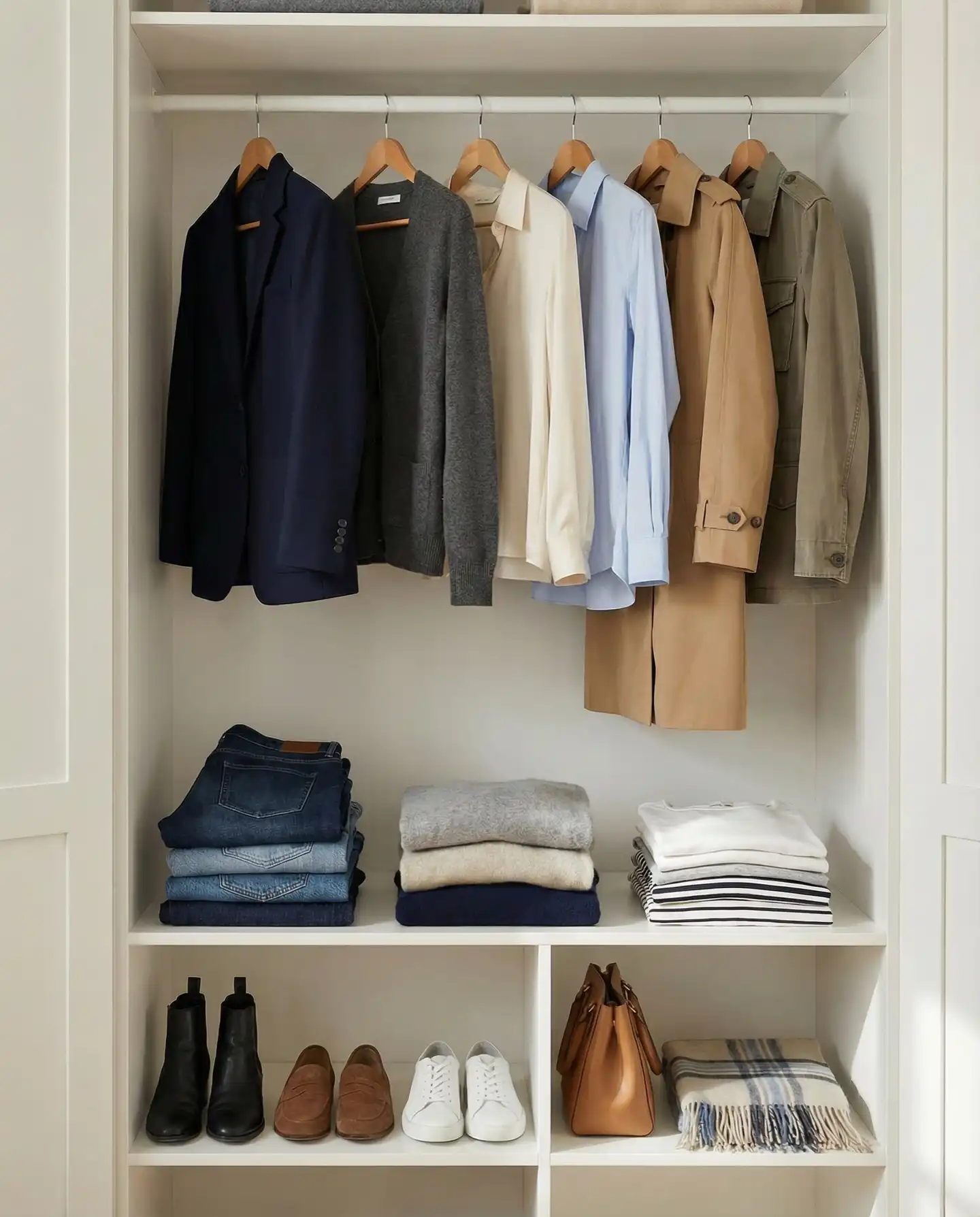
You stand in front of your closet every morning surrounded by dozens of shirts and pants, yet you still struggle to pick an outfit.
Psychologists call this choice paralysis. When you have too many low-quality options, your brain gets overwhelmed, causing unnecessary stress before your day even begins.
To fix this, stop looking at shopping as retail therapy. Start viewing your clothes as a small network of assets.
The best way to track the value of your clothing is by using a simple financial formula.
This cost per wear formula exposes the hidden expense of cheap clothing. For example, a $30 synthetic fast-fashion shirt that warps, pills, and gets thrown away after 5 wears costs $6.00 per wear.
A $90 premium long-staple Supima cotton shirt worn 60 times costs just $1.50 per wear. High-quality items cost less over time because they last longer.
To make a minimalist wardrobe for men work, every item must follow the Rule of 3. This means any shirt you buy must easily match at least three different pants in your closet.
🔗 The Rule of 3
If it can’t pair with at least 3 bottoms — leave it on the rack.
If an item cannot do this, leave it store. Buying versatile menswear essentials 2026 ensures your clothes do more work for you.
Clean Out Your Closet with the 6-Month Test
You cannot build a high-performance men’s capsule wardrobe until you remove the dead weight from past impulse buys. Most men hold onto clothes they never wear out of guilt or habit.
To start your closet audit, pull every piece of clothing out and place it on your bed. Separate your garments into four distinct piles using a strict structural sorting process.
✅ Keep
Fits perfectly, worn regularly
🎁 Donate
Good condition, unworn
💰 Consign
Premium brands, resale value
🗑️ Trash
Stained, torn, stretched
If you are on the fence about a garment, apply the 6-Month Wear Test. Ask yourself if you have worn the item in the last six months.
If the answer is no, remove it from your primary wardrobe space immediately.
Next, run a quick fit evaluation on the items you want to keep. Check for sagging shoulders, stretched necks, and sleeve bunching.
Textile lifecycle data shows that the average person discards garments after just 7 to 10 wears due to poor fabric choices or micro-trends.
Be honest about what actually fits your body today. Do not save items for a hypothetical future state.
Start by Choosing Your Core Wardrobe Colors
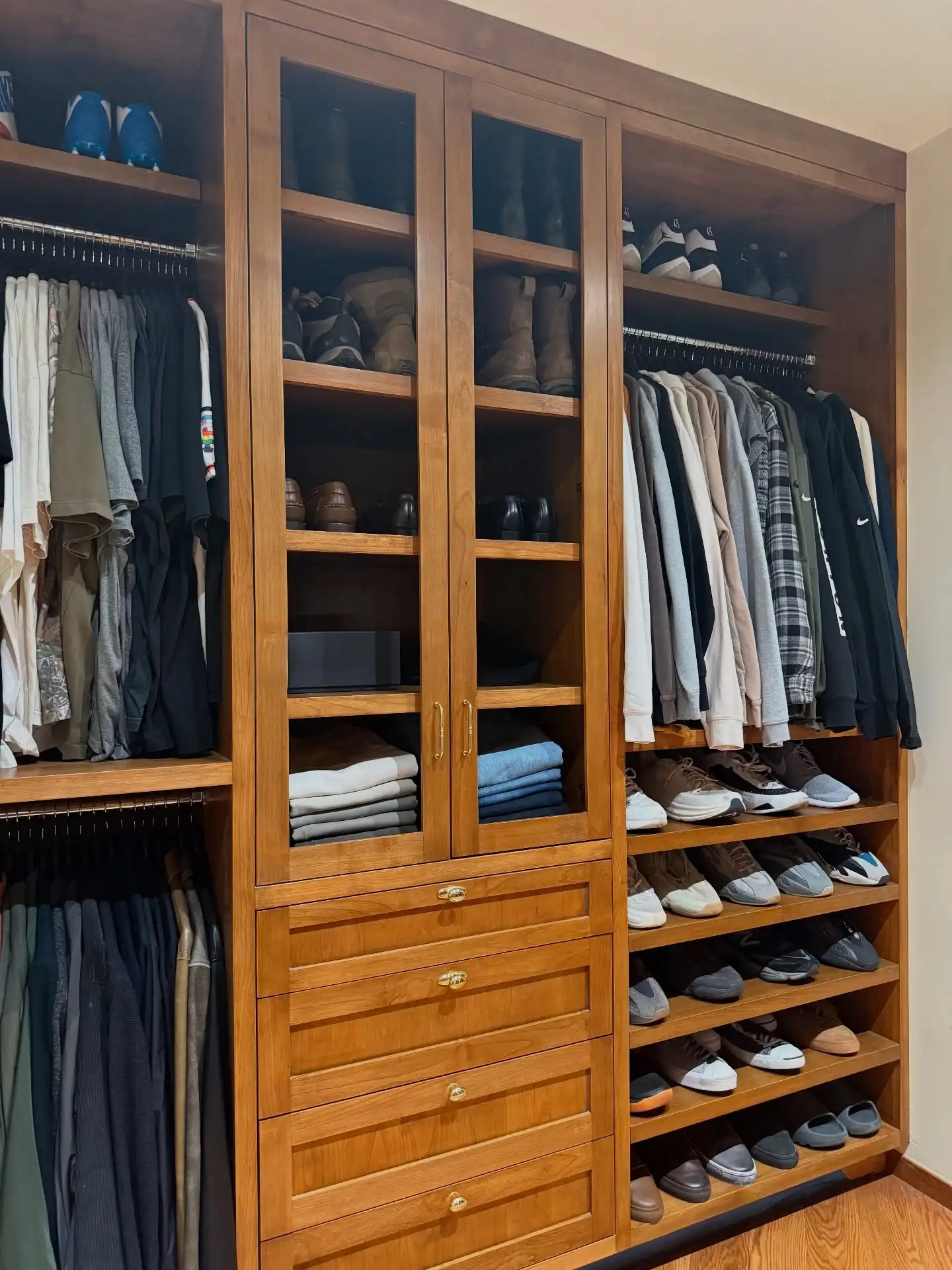
Most mix-and-match attempts fail because men buy highly saturated, competing trend colors.
When your closet is a random mix of bright patterns and graphic prints, nothing works together.
The secret to an effortless men’s capsule wardrobe is starting with a neutral-first color palette. Your foundational clothes should rely on four core architectural colors.
- True Black
- Clean White
- Charcoal Grey
- Rich Navy
Your 4-Color Foundation
There is a mathematical reason to build around these specific neutrals.
Every top in these colors will mechanically pair with any bottom in your matrix. You can get dressed in total darkness and your outfit will still look balanced.
Once your neutral base is secure, you can safely add secondary seasonal accents.
Stick to earthy, muted tones like olive green, camel or tan, and deep burgundy.
The menswear essentials 2026 design framework focuses on eliminating large logos and heavy branding. Plain, unbranded garments offer maximum visual flexibility.
Styling metrics confirm that a four-color neutral base creates up to four times more useful outfit combinations per piece than a closet reliant on loud trend colors.
The 30-Piece Blueprint for All Occasions
You do not need a massive closet to look sharp. These 30 interlinking items form the core blueprint of your minimalist wardrobe for men, generating over 80 unique outfit combinations.
30
Pieces
= Over 80 Unique Outfit Combinations
The Layering Tops
- 5 Heavyweight T-Shirts: Choose 100% cotton crewnecks with a fabric weight between 230 and 275 grams per square meter. These hold their shape and do not look like thin undershirts.
- 3 Oxford Cloth Button-Down Shirts: Get these in white, light blue, and grey for reliable business-casual wear.
- 2 Merino Wool Knits: Lightweight crewneck sweaters that layer perfectly over button-downs.
The Foundational Bottoms
- 2 Pairs of Dark Denim: Pick raw or selvedge dark-rinse jeans in a straight or slim-straight cut.
- 3 Cotton Chinos: Choose mid-rise twill pants in stone, navy, and olive.
- 1 Tailored Trouser: A wool-blend pair in charcoal grey for formal settings.
The Structural Outerwear
- 1 Unlined Wool Blazer: Single-breasted and dark navy, perfect for dressing up or down.
- 1 Canvas Overshirt: A rugged chore jacket that adds structure to a simple t-shirt.
- 1 All-Weather Topcoat: A sleek, mid-thigh coat to wear over sweaters and suits.
The Footwear Rotation
- 1 Pair of White Leather Low-Tops: Clean, minimalist sneakers with zero logos.
- 1 Pair of Leather Service Boots: Goodyear-welted boots that handle bad weather and look better with age.
- 1 Pair of Suede Loafers: A comfortable, versatile shoe for smart-casual events.
Textile data shows that 100% Supima cotton long-staple fibers have double the strength of standard short cotton. Investing in these quality fabrics prevents pilling and keeps your clothes looking new across a high-rotation schedule.
How to Recognize Quality Fabric and a Great Fit
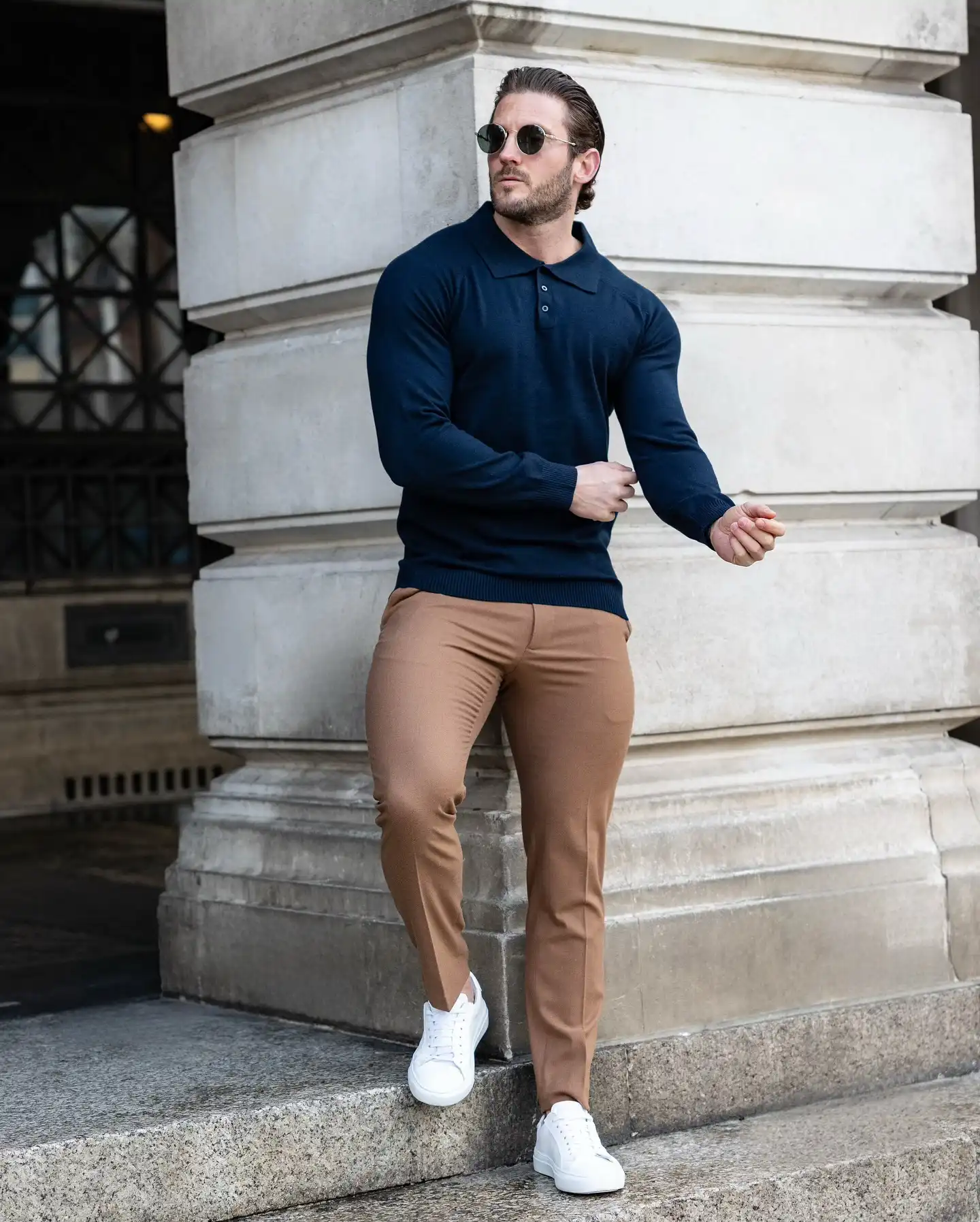
A $50 shirt that fits perfectly will always look better than a poorly fitted $500 luxury item.
When shopping for menswear essentials 2026, focus entirely on garment construction and fabric weight.
First, check the shoulder seam rule.
The seam where the sleeve meets the body must sit directly on the corner of your shoulder bone.
If it droops down your arm, the garment is too big. If it pulls inward, it is too tight.
Next, look at your pant legs. Avoid pooling fabric at your ankles by asking for a clean trouser profile with a precise ankle break.
The fabric should just touch the top of your shoe without bunching up into folds.
Synthetic nylon and polyester blends lock in body odors and degrade quickly in hot water. Stick to breathable natural fibers.
If an off-the-rack item does not fit perfectly, take it to a local tailor. Spending $20 to $30 on minor alterations like tapering or hemming can increase the visual appeal of your clothing by up to 200%.
The Wash and Care Routine That Doubles Garment Life
Your investment in high-quality natural fibers will go to waste if you destroy the fabric in the laundry room. Proper maintenance lowers your cost per wear formula by preserving structural integrity.
Follow a strict, non-negotiable cleaning sequence to keep your minimalist wardrobe for men in top shape.
1.Prepare the Garments:Pre-wash check.
Turn all shirts, t-shirts, and jeans inside out. This step protects the outer face of the fabric from rubbing against the washing machine drum.
2.Set the Temperature:Wash settings.
Wash your clothes using a cold-water cycle set strictly at 30°C or below. Hot water cooks natural fibers, causing immediate shrinkage and fading.
3.Skip the Tumble Dryer:Drying process.
🔄
Turn Inside Out
❄️
Cold Wash 30°C
🌬️
Air Dry Only
Never use a heated dryer. It breaks down elastic fibers and can shrink your garments permanently — air-drying preserves elasticity by over 50% across two years.
Hang your clothes to air-dry or lay heavy knits flat on a towel. Commercial heated dryers break down elastic fibers and cause extreme shedding.
For your footwear, always insert cedar wood shoe trees into leather boots and loafers immediately after wearing them. Cedar absorbs foot moisture and prevents the leather from cracking or creasing.
Finally, replace your traditional iron with a handheld fabric steamer. Steam relaxes cotton and wool fibers safely without crushing them under raw heat.
Use a horsehair clothing brush to sweep away dust and lint from wool coats and blazers instead of using sticky tape rollers.
Fabric science tests show that avoiding heated dryers preserves garment elasticity by over 50% across two years.
Your Plan for a Clean Closet
Transitioning to a minimalist system replaces visual chaos with a modular asset network that flatters your frame every single day.
You will spend less time choosing outfits and less money replacing worn-out garments.
Go to your closet tonight and calculate the cost-per-wear of your last five purchases.
Identify the pieces that fail the utility matrix and clear out the clutter. Start building a wardrobe based on quality, fit, and timeless style.

