
How to Declutter a Men’s Closet Into a Minimalist Wardrobe


Look inside your closet right now. If it is packed to the ceiling, yet you end up wearing the exact same five shirts every single week, you are trapped in a wasteful cycle.
The average man owns a massive archive of unworn fast fashion.
This leads to an invisible tax of morning stress and choice paralysis.
Fortunately, you do not have to live with a messy wardrobe.
This guide outlines an exact, data-backed process to strip away the dead weight.
You will learn how to declutter a men’s closet quickly.
By the end, you will construct a high-performance, interchangeable daily look and reduce clothing choice fatigue for good.
Why Closet Chaos Destroys Your Morning Efficiency
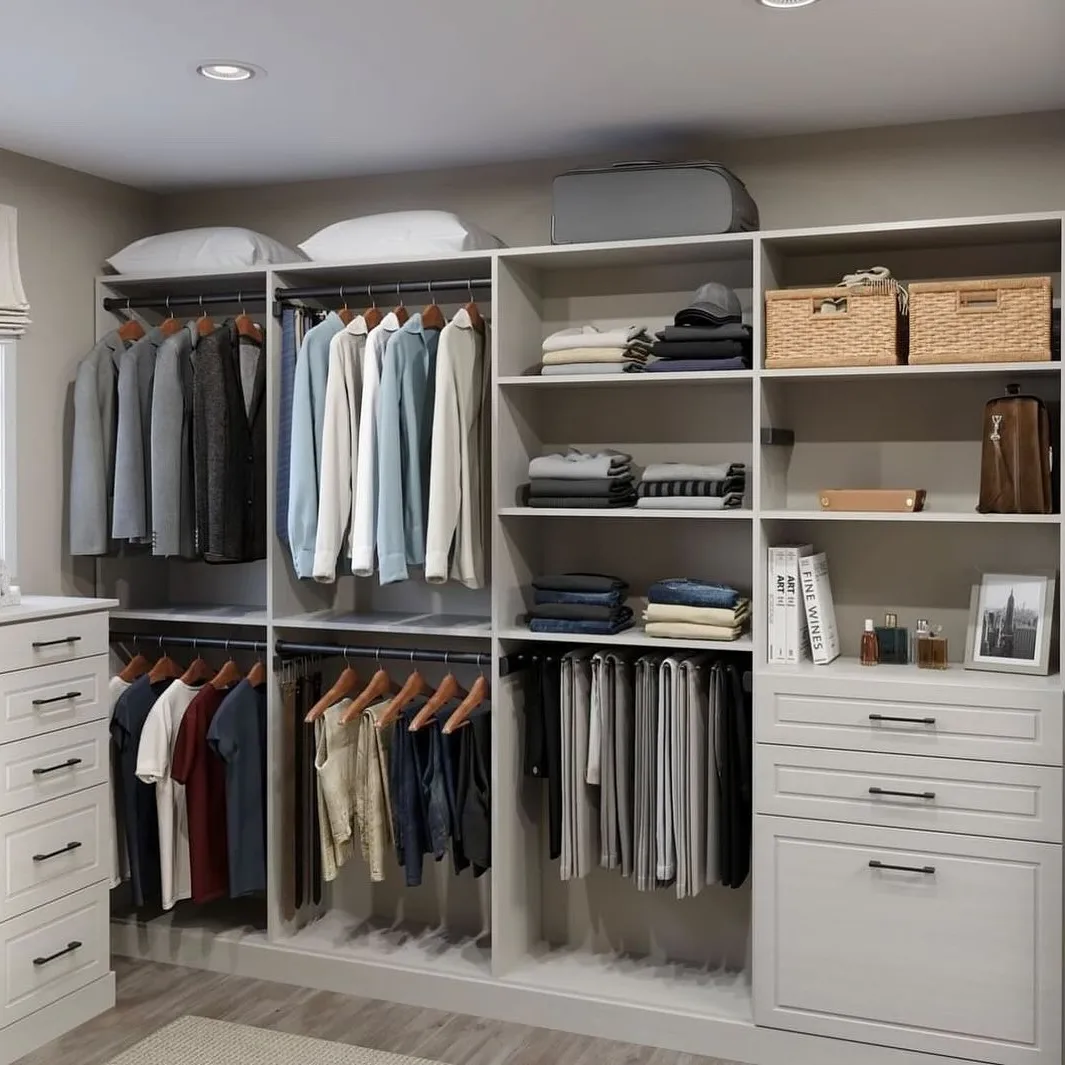
A cluttered space creates friction in your morning routine. When you see too many options, your brain stalls.
This is called decision fatigue. You waste mental energy before you even leave the house.
And here is why that matters. Recent 2026 textile data shows that 80% of the average wardrobe is never worn regularly.
This means most men are trapped in an impulse-buy loop. They buy cheap clothes they do not need, which fills the closet with visual noise.
To fix this, you must understand the math of cost-per-wear. A cheap $20 shirt that you wear twice costs $10 per wear.
A high-quality $100 shirt that you wear 50 times costs just $2 per wear. Buying fewer, better things saves money over time.
Fast Fashion Shirt
$20
Worn 2 times
$10.00 / wear
Quality Shirt
$100
Worn 50 times
$2.00 / wear
Modern retail data from 2026 confirms a massive shift in how men shop.
Men are now 20% more likely than women to prioritize structural durability and fabric quality over low prices. Men want garments that last.
Clearing out the chaos is a liberating solution that sets you up for a better lifestyle.
Run the “Hero Selection” Audit to Find Your Baseline
Most organizational advice tells you to dump all your clothes onto your bed at once. Do not do this.
It creates massive operational fatigue and leaves you with a giant mess if you run out of time.
Instead, use the Reverse Audit technique. Open your closet and pull out your absolute favorite items first. These are the pieces you wear constantly and feel great in.
Stylist Allison Bornstein popularized a similar strategy of identifying your everyday hero items to map your actual lifestyle.
Look closely at these pieces. You will start to see common threads among your favorite clothes.
Your Hero Audit Checklist
Slim fits or relaxed shapes — which do your favorites lean toward?
Heavy cotton, linen, or wool — note the texture that keeps you reaching for it.
Which labels consistently fit your body type without alteration?
If your top items are raw denim, heavy cotton tees, and unlined blazers, your baseline style is elevated casual.
Knowing your preference helps you understand your garment fit requirements.
Now that you have isolated your essentials, you can easily process the remaining items left hanging in your closet.
Ruthlessly Cull Your Remaining Clothes
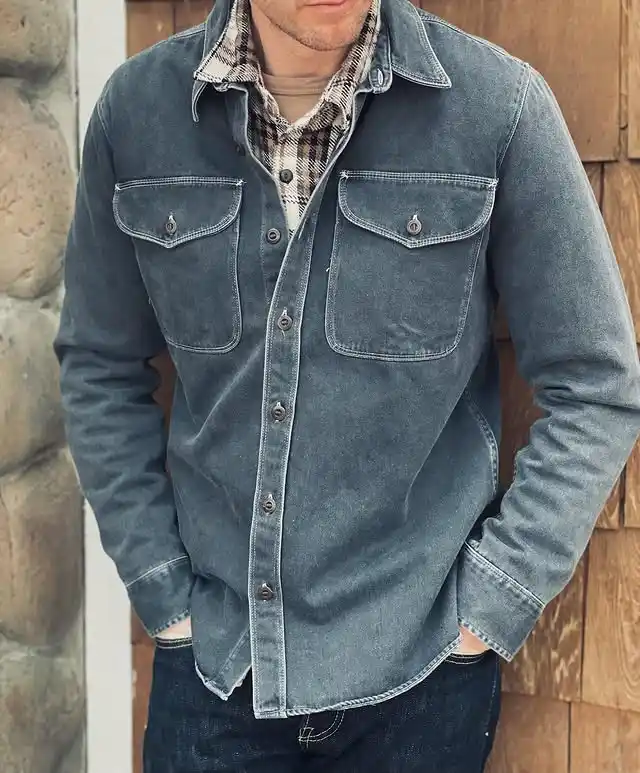
Now look at the clothes left in your closet. You must sort them into three strict, actionable zones: Keep, Donate or Sell, and Responsibly Recycle.
Keep
Fits your calendar this week or next month.
Donate / Sell
Good condition, no longer serving your life.
Recycle
Worn out fabric that can’t be resold.
To do this, dump the old 12-month rule. Use the Modern Utility Rule instead.
Ask yourself if the garment serves your actual calendar this week or next month. If it does not fit your current life, it needs to go.
Dealing with emotional clutter can be tough. Old concert tees, college hoodies, and garments that no longer fit take up valuable space.
Move true sentimental items into a storage bin outside your closet. Your closet is a tool for daily living, not a museum.
Actionable textile life-cycle data shows that 60% of low-quality garments are thrown out within 12 months of purchase. You can break this cycle.
60% of low-quality garments get thrown out within 12 months of purchase. Buying fewer, better pieces breaks this cycle for good.
The secondhand menswear market is growing at 14% annually in 2026. High-quality items retain real resale value.
You can sell your premium items online or donate them to give them a second life. This step leaves you with a clean slate, ready for your core pieces.
Build Your 30-Piece Minimalist Menswear Capsule Wardrobe
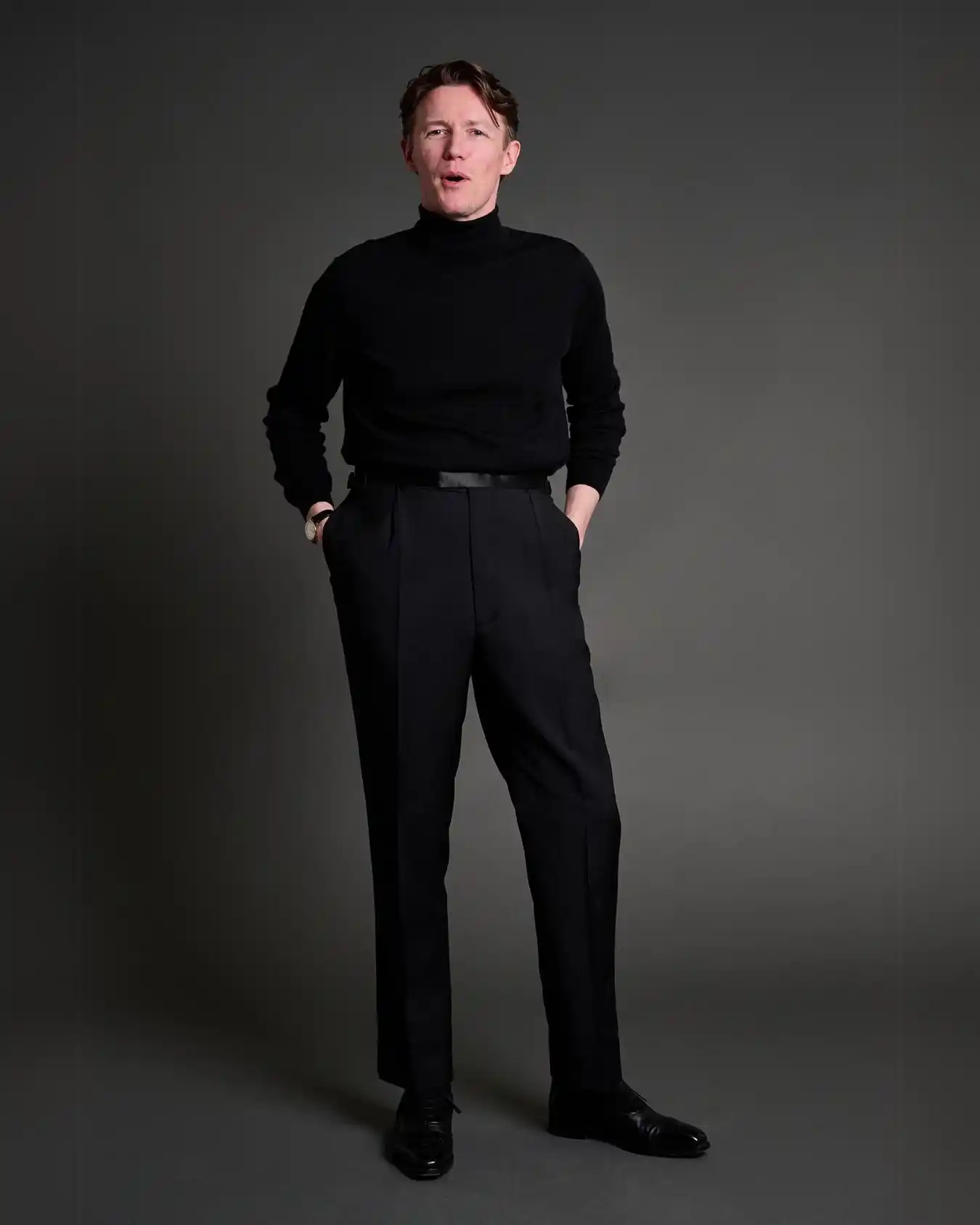
The modern 2026 benchmark for an optimal wardrobe is 30 to 35 total structural pieces. This small number covers work, weekends, and formal events.
To make this work, you must establish an interchangeable, neutral-first color palette. Stick to these core colors: Navy, charcoal, black, white, olive, and tan.
The golden rule of minimalist styling is simple. Every single top must match every single bottom.
Every single top must match every single bottom.
If a piece only works with one other item, it doesn’t belong in your capsule.If a shirt only works with one specific pair of pants, it does not belong in a minimalist menswear capsule wardrobe.
| Category | Spring and Summer Focus | Fall and Winter Focus | Interchangeable Core |
| Tops | Linen shirts, Pima cotton tees | Merino wool knits, Oxford buttons | White and navy crew tees |
| Bottoms | Lightweight chinos, Technical shorts | Heavy selvedge denim, Wool trousers | Slim dark wash denim |
| Outerwear | Unlined cotton blazer | Structured wool overcoat, Trench | Utility jacket or shacket |
| Footwear | Breathable leather loafers | Water-resistant leather boots | Minimalist white sneakers |
Here is your exact blueprint for men’s style essentials 2026:
- Tops: Five crisp neutral tees, three white or light blue oxford shirts, and three mid-weight knit layers.
- Bottoms: Two pairs of dark-wash selvedge denim and three pairs of tailored neutral chinos.
- Outerwear: One clean, structured wool jacket and one all-weather trench coat.
- Footwear: One pair of minimalist white leather sneakers and classic chelsea boots.
This tight selection allows you to change your outfit easily across different scenarios.
You can transition from a casual office meeting to a weekend dinner without switching your entire look.
Use Visual Engineering for High Visibility
Physical visibility dictates what you choose to wear every morning.
If you cannot see an item clearly, you will not wear it. This is why proper layout is key to a great closet organization system.
Start with your hardware. Ditch mismatched plastic hangers for uniform velvet or wooden hangers.
Standardized hangers keep your clothes at the same level. This makes your wardrobe look neat and easy to scan.
Next, group your garments by structural category and color gradient. Do not hide clothes away in seasonal storage boxes.
Keep your core items out where your eyes can find them instantly.
You can also use technology to optimize your wardrobe tracking. Digital wardrobe management applications like Whering or Indyx help track garment utilization.
Log outfits in an app like Whering or Indyx — they auto-calculate your cost-per-wear so you always know which pieces are earning their closet space.
These apps automatically display your cost-per-wear metrics based on how often you log your outfits. This digital setup completely eliminates daily decision fatigue.
Reclaim Your Morning Routine
Decluttering your closet is not about restriction. It is an upgrade to your personal clarity and style.
By paring your wardrobe down to 30 or 35 high-quality, interchangeable essentials, you save time and reduce daily stress.
You ensure that you look highly intentional every single day.
Dedicate two hours this weekend to run the Reverse Audit on your wardrobe. Pick your heroes, donate the excess, and reclaim your morning routine.