15 Hair Designs for Men (And Exactly What to Ask Your Barber For)

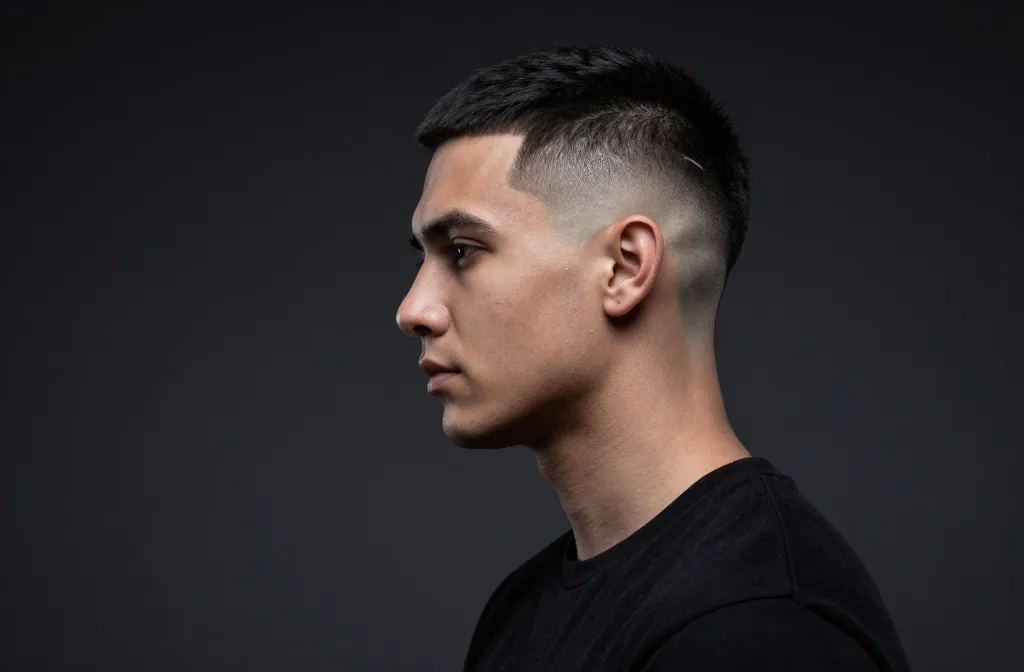
Making a statement with your hair goes one of two ways. Either the texture does it — waves, curls, grey left long enough to move — or a blade does it, carved into the fade in lines you can see from across the room.
This list runs both. The first handful are shape cuts: mullets that curve instead of drop, curly fringes sitting over a clean mid fade, grown out grey that works because nobody tried to hide it.
The trick with all of them is taking weight out of the sides rather than length off the top, which is the opposite of what most guys do when their hair starts looking shapeless.
The rest is design work. Hard parts, geometric angles, surgical lines through a burst fade, abstract linework over a skin fade.
These hit harder and fade faster — most grow out inside two weeks, so time your appointment around whatever you’re actually getting the haircut for.
Each one below tells you what to ask for and what to do with it after you leave the chair.
1. Curly Modern Mullet With A Tapered Nape
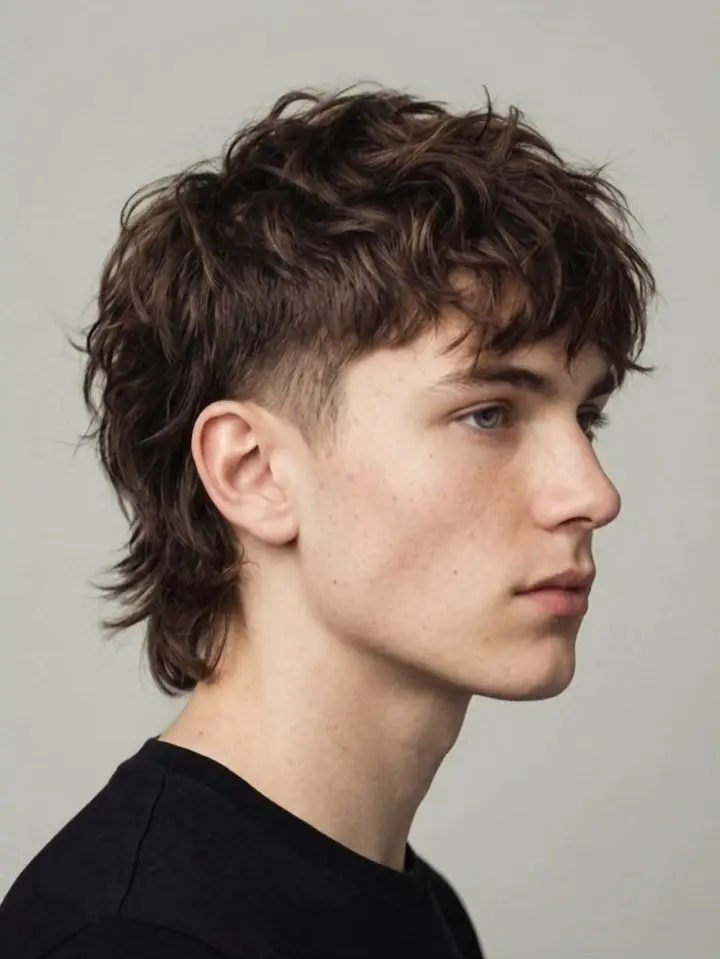
The old mullet was a straight line between short and long. This one is all curve.
Length builds slowly from the temple down to the neck, the sides are tapered close behind the ear, and the curls at the back are left loose so the shape stays soft.
Pieces that make it work:
Recreate this look
Growing this one out is half the process, so plan for a few awkward weeks before it settles.
2. Curly Fringe With A Clean Side Fade
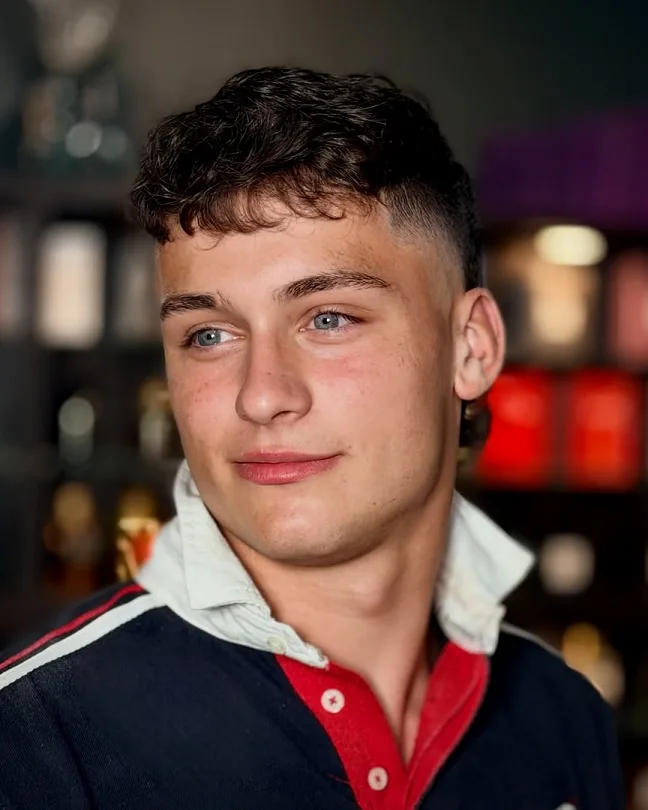
Two ways to handle natural curl: cut it all off, or leave enough on top for the curl pattern to show and take the sides down instead. This is the second one, and it is the more flattering choice for most guys.
Length across the top runs short, maybe two inches, so the curls stay tight and defined instead of turning into a mass of frizz.
The fringe falls straight down onto the forehead in small clumps. Sides drop into a mid fade that starts right at the temple, so the curl has a hard clean edge underneath it.
Skip the comb entirely once it dries.
Ask your barber to cut curly hair dry so they can see where each curl sits.
Use a light curl cream on damp hair, then leave it alone.
Sleep on a smooth pillowcase to cut down morning frizz.
Thinning shears through the top, which shortens curls unevenly.
Towel rubbing after a shower, since that is what causes the frizz.
Heavy wax, which drags the curl flat and looks wet all day.
3. Grown Out Grey Waves Left Natural
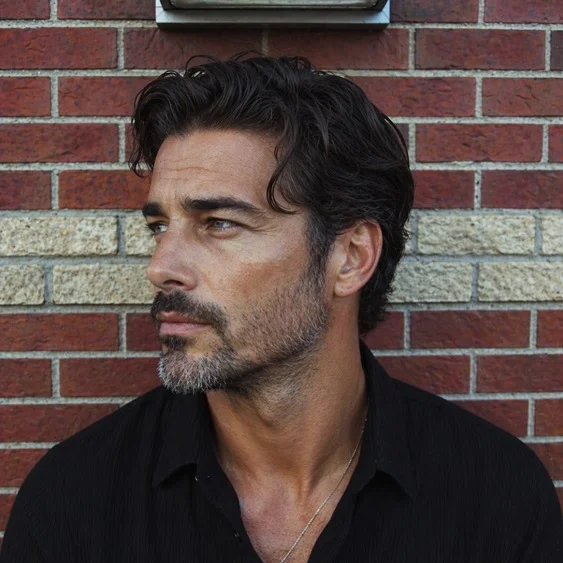
Greys read as a statement when the cut around them has some length and movement. Cropping short makes salt and pepper look like you are hiding it.
Leaving it longer, pushed back with the natural wave intact, makes it look like a decision.
The hair here sits over the ears with no fade and no hard lines anywhere, cut with scissors and left to fall where it wants.
The beard carries its own grey through the chin, which ties the whole thing together.
| Leave The Grey | Cover The Grey |
|---|---|
| Zero upkeep beyond regular trims | Root touch ups every few weeks |
| Needs length and movement to work | Works at any length |
| Grey hair runs coarse, so use conditioner | A hard line appears if you ever stop |
4. Loose Waves Pushed Back Over A Low Taper
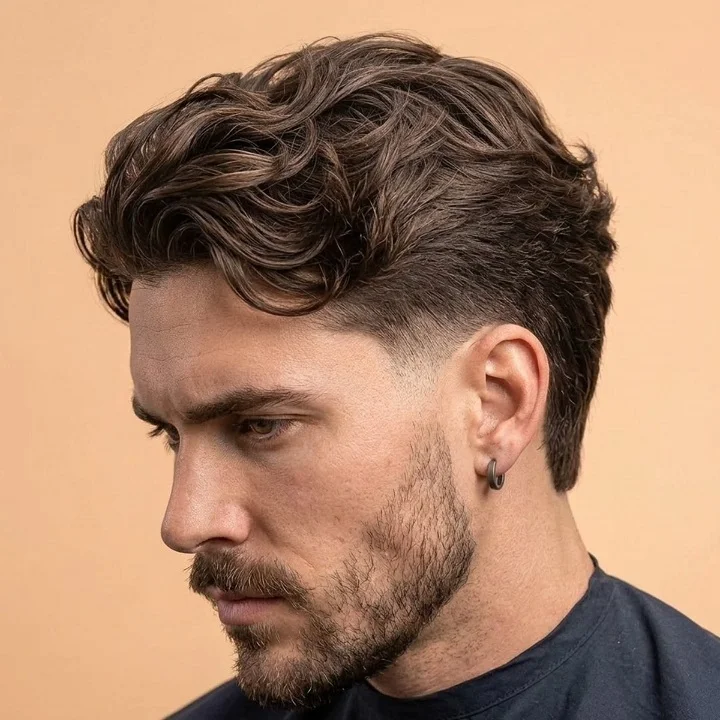
Grown out hair with a natural wave gets a bad reputation because most guys let it get shapeless.
The fix is not cutting it shorter, it is taking weight out of the sides so all the volume sits where you want it.
Here the top is left long enough for the waves to form real S shapes and pushed back off the forehead, while the sides taper close behind the ear.
The back stays a little longer at the neck, which softens the whole outline.
Equal length everywhere, so the sides puff out over the ears and the waves flatten under their own weight. Reads unkempt rather than intentional.
Sides tapered tight, top left long and layered. The waves lift, the head looks narrower, and the same hair suddenly has a shape.
5. Scissor Cut Waves With No Fade At All
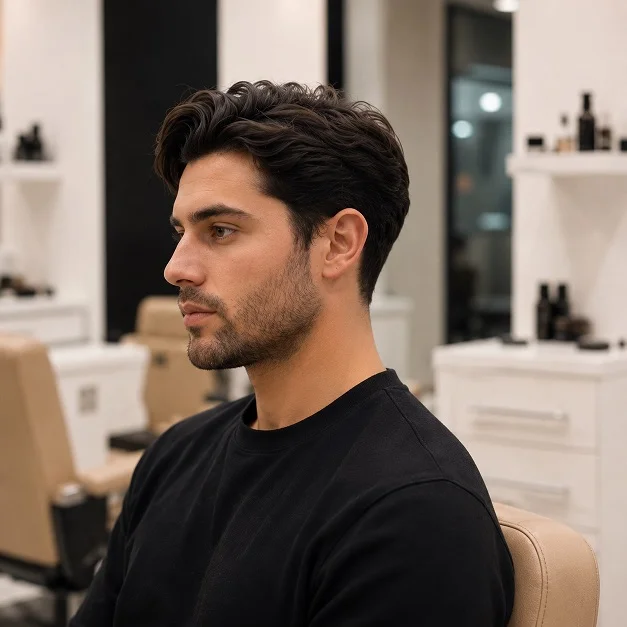
Clippers never touch this cut. The sides are taken down with scissors over comb, so the length shortens gradually with no visible line anywhere, and the hair still covers the top of the ear.
It is the most forgiving option in this whole list. There is no fade to grow out, no line to lose, and it looks the same in week two as it does in week six.
The top is left thick and swept back with a bit of lift at the front, held with something light so the waves keep moving.
Building it takes patience more than product.
Grow the sides past the ear before your first shaping trim.
Ask for scissors only, with weight removed from the sides and back.
Blow dry back and slightly up at the front, using a round brush.
Finish with a light cream, never a heavy wax, so the waves stay soft.
6. The Hard Part Over A Fresh Fade
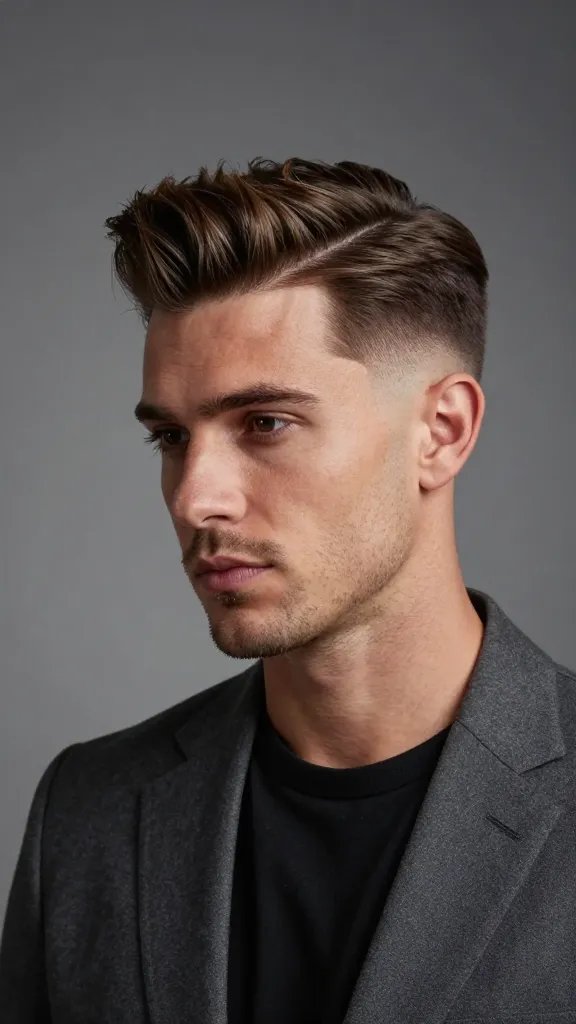
A hard part is one line. The barber runs a trimmer edge or a straight razor along the spot where your hair already splits, and a cut that looked grown in starts looking deliberate.
It works because it puts a hard break between the long hair on top and the short hair on the sides. Without it, the two lengths blend into each other and the whole thing goes soft.
With it, the top has somewhere to sit. Pompadours, comb overs and quiffs all hold their shape better with a line under them.
Have it cut on the side your hair already falls to, not the side you saw in a photo. Working against your own growth pattern means fighting it every morning.
Matte paste after, nothing shiny, since a wet finish fills the gap and hides the line you just paid for.
The edge softens after about ten days. The part stays useful long after that.
7. The Lightning Bolt At The Temple
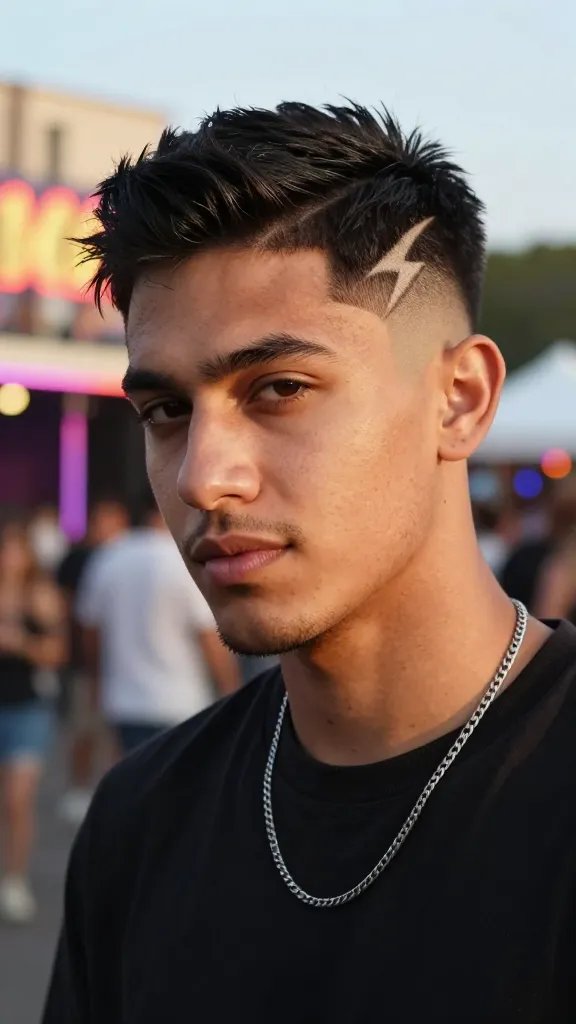
Small designs land better than big ones. A bolt about the width of two fingers, sitting at the temple or angled along a taper, reads as a detail rather than a costume.
Size is the whole thing here. Scaled up across the side of the head, it stops being a haircut.
Kept short and shallow, it catches light when you turn your head and does nothing the rest of the time.
It holds for one to two weeks before the edges fill in. Book the cut two or three days before whatever you want it for, not the morning of.
8. The Geometric Fade
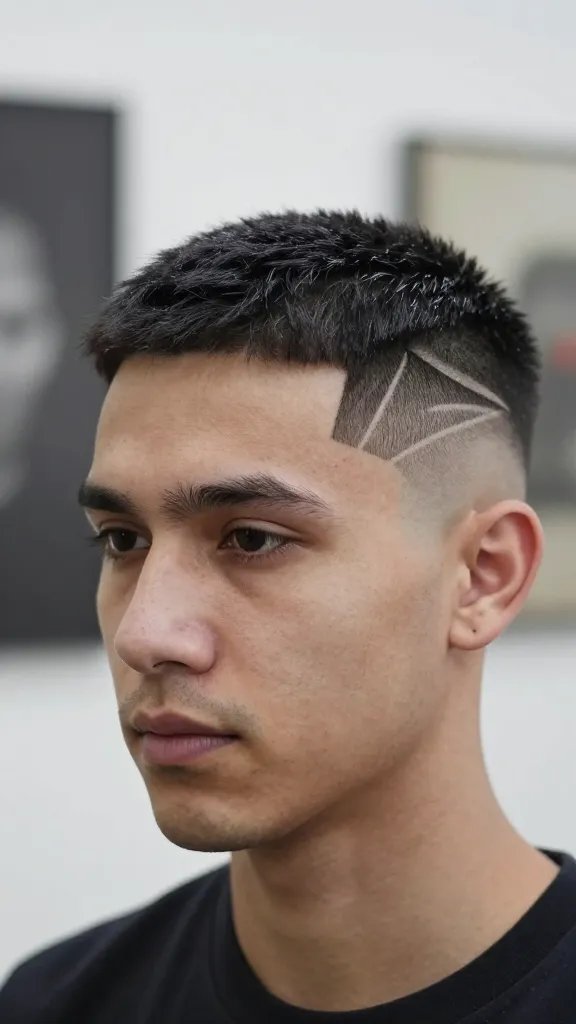
Triangles, chevrons, straight angles cut into a mid or high fade. Done well it looks like graphic design. Done badly it looks like a mistake someone tried to fix.
This one depends entirely on the blade work, so it is worth asking your barber for photos of designs at week two rather than day one.
Everything looks sharp fresh out of the chair. Only clean lines with real depth still read after the hair grows a few millimetres.
Keep the top short to medium so the eye goes to the sides. Long hair on top competes with the design and usually wins.
A salt spray gives enough lift up there without adding shine that pulls attention back up.
9. The Shadow Burst Fade with Design
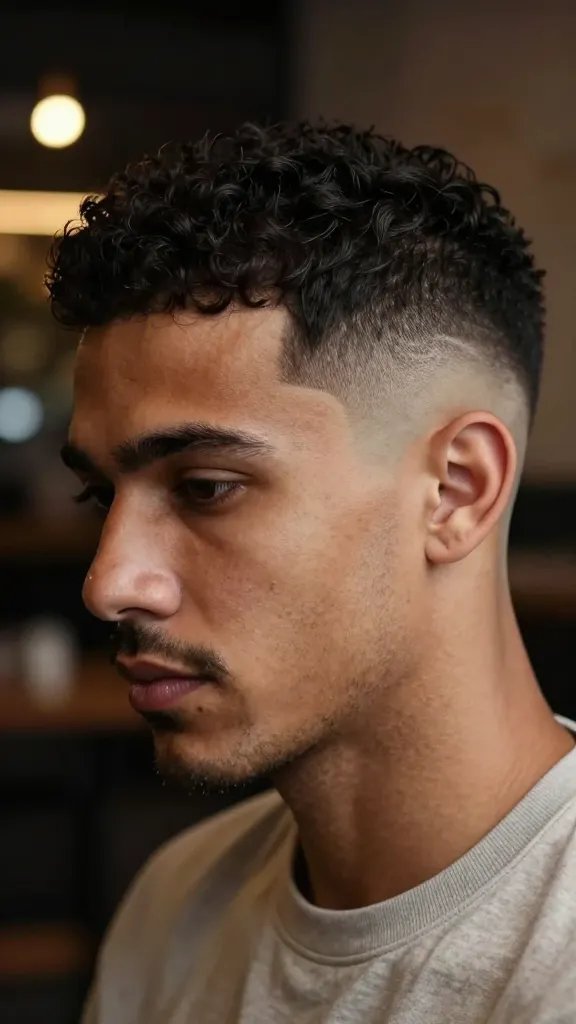
A burst fade curves around the ear instead of running straight across, which leaves a natural pocket of space behind it. That curve is where the design goes.
Shadow finish means the fade is blended a shade darker rather than taken to skin, so the pattern sits inside a softer background instead of a stark white one.
The result is detail that only shows up close.
Do this
- Keep the design tight to the ear or the sideburn where the burst already draws a curve.
- Pair it with curls or a short crop on top so the texture and the linework do not fight.
- Ask for the shadow blend by name, since it is a different finish from a skin fade.
Skip this
- Running the pattern up past the temple, which turns a subtle cut loud.
- Taking the fade to bare skin under a design, which makes every regrown millimetre obvious.
- Shine products, since gloss on the sides flattens the shadow effect completely.
10. The Curly Top with Surgical Lines
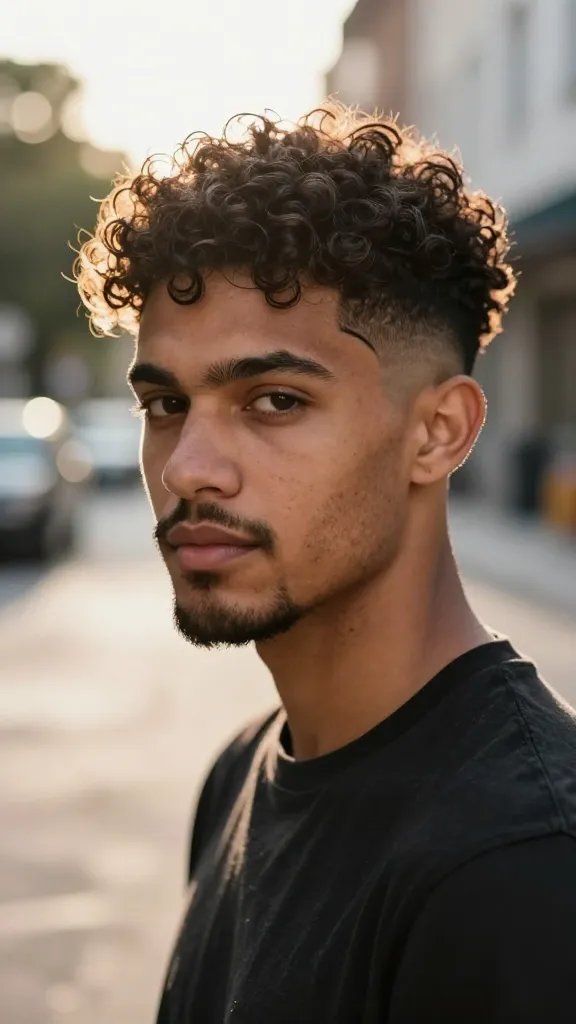
Soft against sharp. The curl stays loose and moves on top, and two hairline thin cuts run through the fade below it. Neither would do much alone. Together the contrast is the point.
Restraint matters more here than in any other design on this list. One line looks intentional. Two looks composed. Five looks like a barber practising.
The lines also need clean fade around them to read at all, so a low or mid fade beats anything longer.
Curl cream on damp hair, scrunched, then left alone. On a windy day the top moves and the sides stay locked, which is the whole effect working.
11. The Minimalist Slash
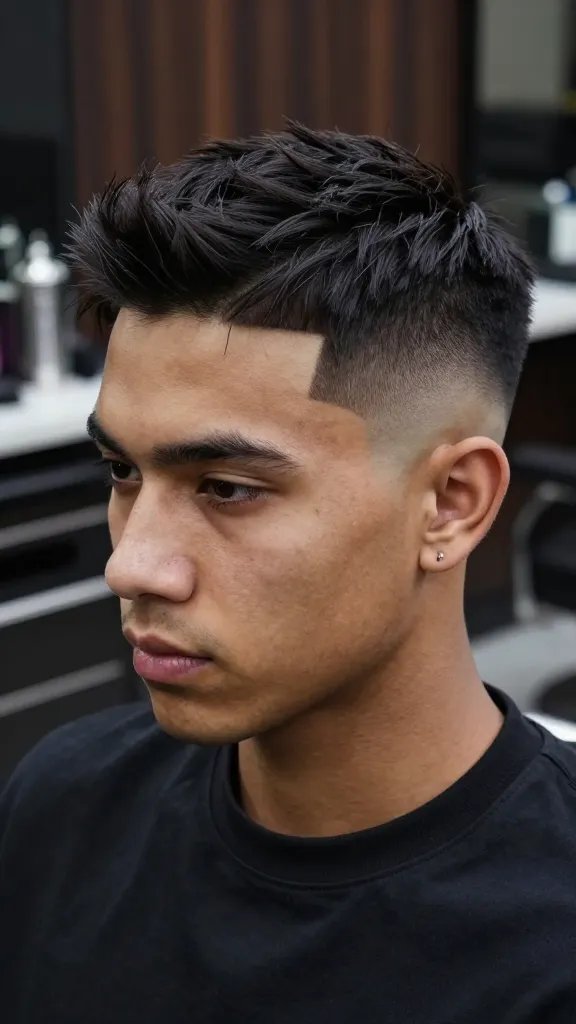
One line. Angled or horizontal, cut into a taper at the temple or just behind the ear. It is the smallest design a barber can give you that still counts as one.
The slash needs a clean hairline around it or it just looks like a gap. It also sits best under a messy top, a French crop or a textured quiff, where the disorder above makes the one straight line below look chosen.
Recreate this look
- A taper rather than a fade, so the slash has some length to cut through.
- One line only, placed at the temple or behind the ear.
- A cleaned up hairline and neck, since the slash reads against those edges.
- Matte clay on top, pushed forward and left rough.
Good first design if you have never had one. Nobody at work will comment, which for some jobs is the entire brief.
12. The Mohawk Fade with Linework
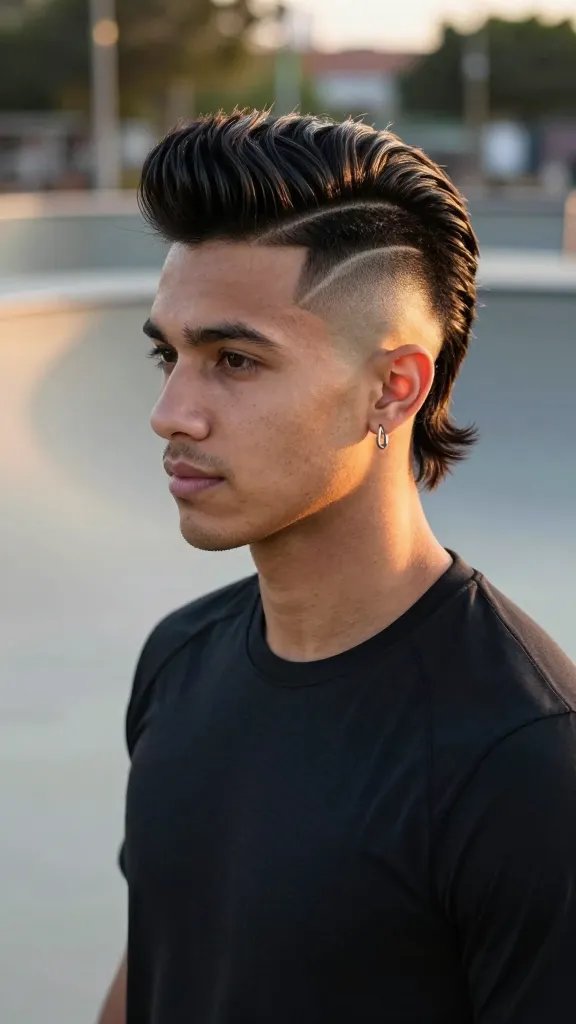
A strip of length down the centre, fades either side, and one or two lines cut parallel to the fade line. It keeps the shape of a mohawk without the commitment of shaving everything else off.
Width is what separates this from a costume. Roughly the gap between your eyebrows is a good measure. Wider and it goes eighties. Narrower and your head looks strange from the front.
The lines should follow the fade rather than cut across it, which keeps everything pointing the same direction.
Strong hold clay or gel through the strip so it stands up instead of splitting. It also survives a helmet, which most textured styles do not.
13. The Crop with Etched Fringe
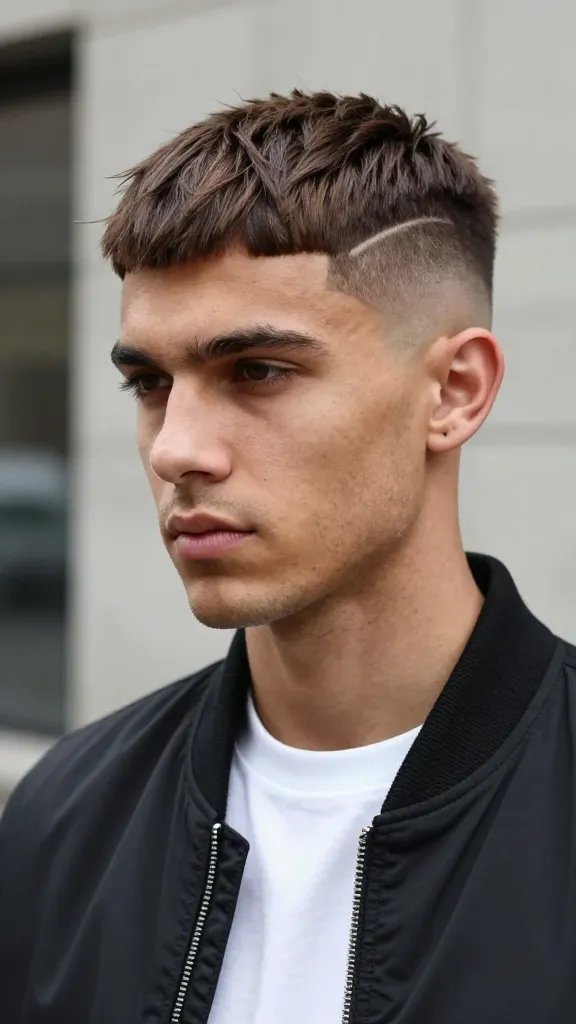
The crop is already the easiest cut to live with. Blunt fringe pushed forward, short back and sides, no styling beyond a smear of clay.
Adding two or three micro slashes at one corner of the fringe changes it without adding a single minute to your morning.
Keep the etching to one corner. Spread across the whole fringe it starts to look like damage.
| Plain Crop | Etched Crop |
|---|---|
| Looks the same as everyone else’s | Reads as yours from across a room |
| Trim whenever you get around to it | Etching blurs after about two weeks |
| Any barber can do it | Needs someone who can hold a straight line |
Works under a suit and works with streetwear, which is more than most designs on this list can claim.
14. The Parted Waves with Hair Tattoo Fade
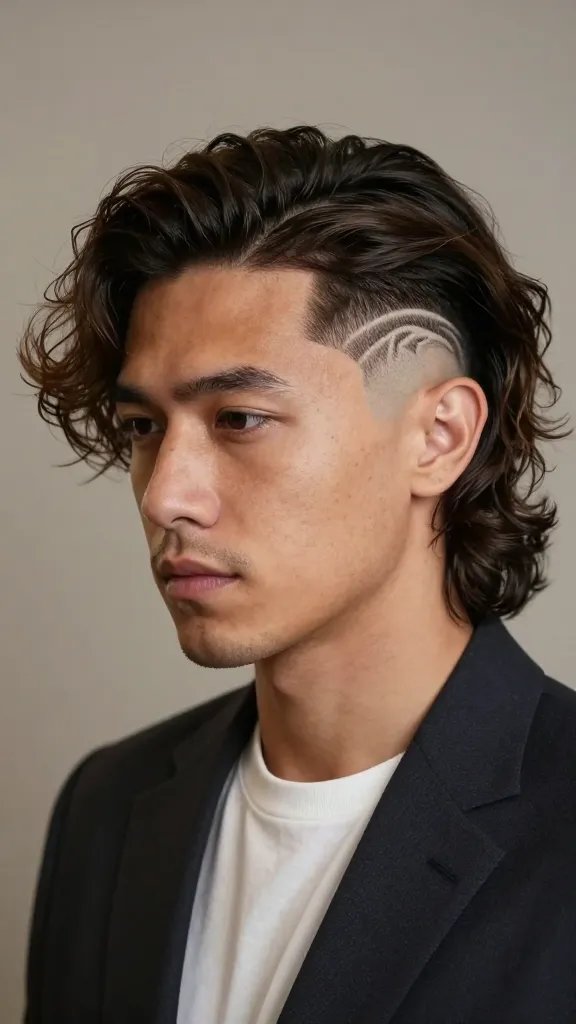
Medium length on top with natural wave, split by a soft part and left to fall. Underneath, a mid fade carrying curves or chevrons. Tidy above, graphic below.
The patterns should follow the shape of your head rather than a template off a wall.
Everyone’s skull curves differently, and a design drawn to a stock shape sits crooked on most of them. A barber who checks the curve before starting is worth keeping.
Light mousse through damp hair is enough on top. Anything heavier drops the waves flat onto the fade and hides the work.
15. The High-Contrast Buzz with Abstract Line Art
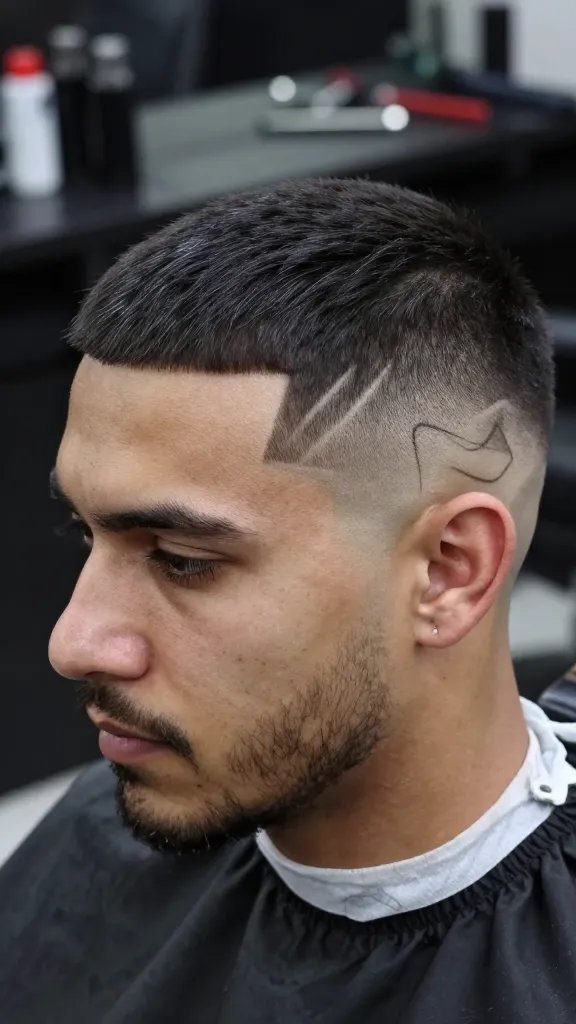
Buzz cuts don’t have to be boring. Go high-contrast with a skin fade and abstract lA buzz is the plainest cut there is, which makes it the best surface for linework.
Curves, broken lines, a little asymmetry, cut into a skin fade against a number one or two on top.
The short length is what makes the contrast work. There is no texture competing with anything, so a single curved line across the side carries the whole look.
A light sheen spray stops very short hair looking dull under bad lighting. Beyond that there is nothing to style, which is the appeal.

