15 Business Formal Guide for Plus Size Men: Suits that Fit Right


Finding business formal clothes that actually fit right is harder than it should be for plus size men, and most style advice out there just was not built with a bigger frame in mind.
The truth is a great look has less to do with trends and everything to do with proportion, structure, and knowing which details matter.
This business formal guide for plus size men focuses on suits that fit right, from single versus double breasted jackets to where your trouser should break at the shoe.
Across these fifteen looks, you will see how a single button stance can slim a silhouette, why pleated trousers give more room without looking sloppy, and how layering pieces like vests, quarter zips, and sweaters can carry an outfit on days a full suit feels like too much.
Some entries break down what makes a jacket close cleanly across the chest. Others show how color, texture, and small accessories like a pocket square or a watch pull a whole look together.
1. Layer a Vest Under Your Blazer for Instant Structure

A navy blazer paired with a blue layering vest is one of the easiest ways to add shape through the middle without a single tailoring appointment.
The vest sits close to the body and breaks up the front of the jacket, so the eye reads structure instead of bulk.
A few things make this combo work for a bigger frame:
- The blazer is buttoned at the natural break point, not stretched to close
- The vest color is close in tone to the shirt, so nothing fights for attention
- Khaki trousers keep the bottom half light, which balances the darker top
2. Olive Suits Add Depth Without Trying Too Hard
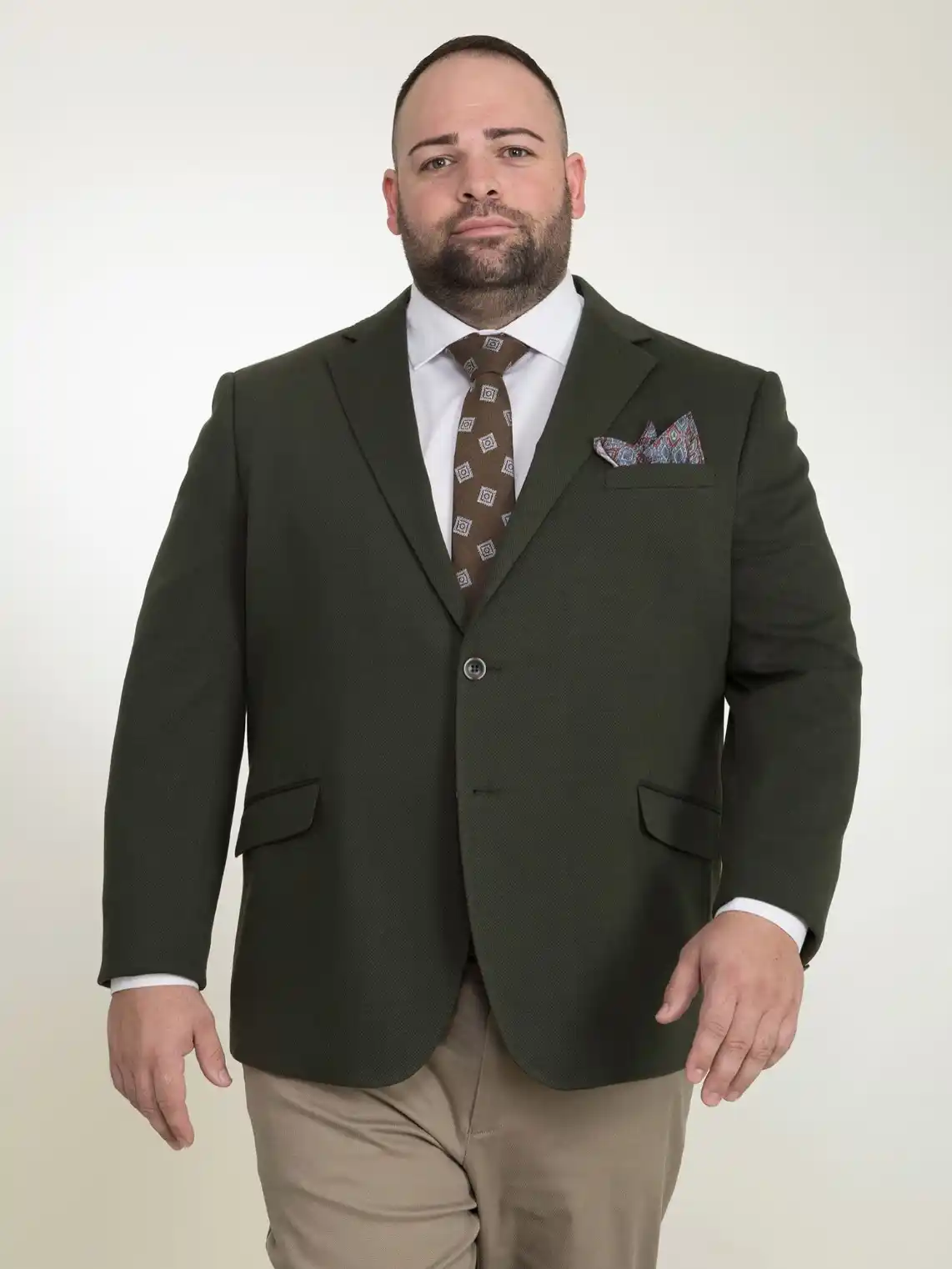
Olive is not the color most guys reach for first, but it works hard on a bigger frame. The single button stance keeps the front clean, and the notch lapel sits flat instead of pulling. The pocket square and patterned tie do the visual work up top, so the jacket itself stays simple.
What works here:
The jacket length hits right at the hip, which keeps the torso from looking boxy. The two button jacket is fastened at just the top button, which is the classic move for a fuller midsection since it opens up room through the chest and stomach.
Button only the top button on a two button jacket.
Let the jacket hem land at the hip, not lower.
Fastening both buttons on a two button jacket.
Choosing a jacket long enough to cover the seat.
3. Go Monochrome When You Skip the Jacket
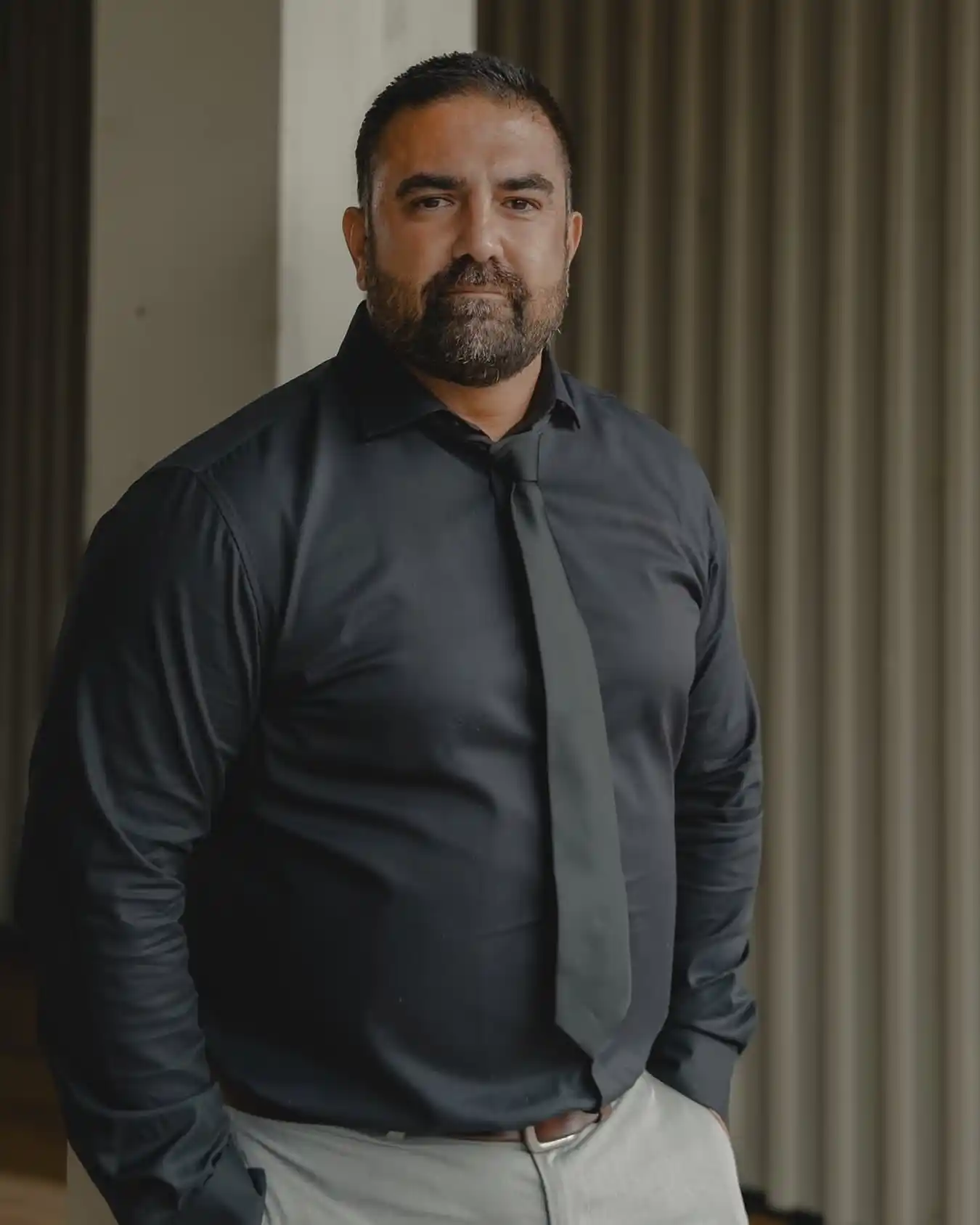
Not every business formal day calls for a full suit. This charcoal shirt and matching tie, tucked into light grey trousers, shows how a tonal top half can look just as sharp on its own.
Keeping the shirt and tie in the same dark family creates one long vertical line instead of breaking the body into sections.
The fit here does the heavy lifting. The shirt sits close through the shoulders and chest without pulling at the buttons, and it’s tucked in rather than left loose.
A tucked shirt with a defined waistline reads far more intentional than an untucked one, even on a fuller build.
💡 Quick Tip
Match your shirt and tie within one shade family and let a plain belt bridge the transition to your trousers. That single unbroken line is what makes tonal dressing look deliberate instead of accidental.
4. The Trouser Break Is Where Most Suits Go Wrong
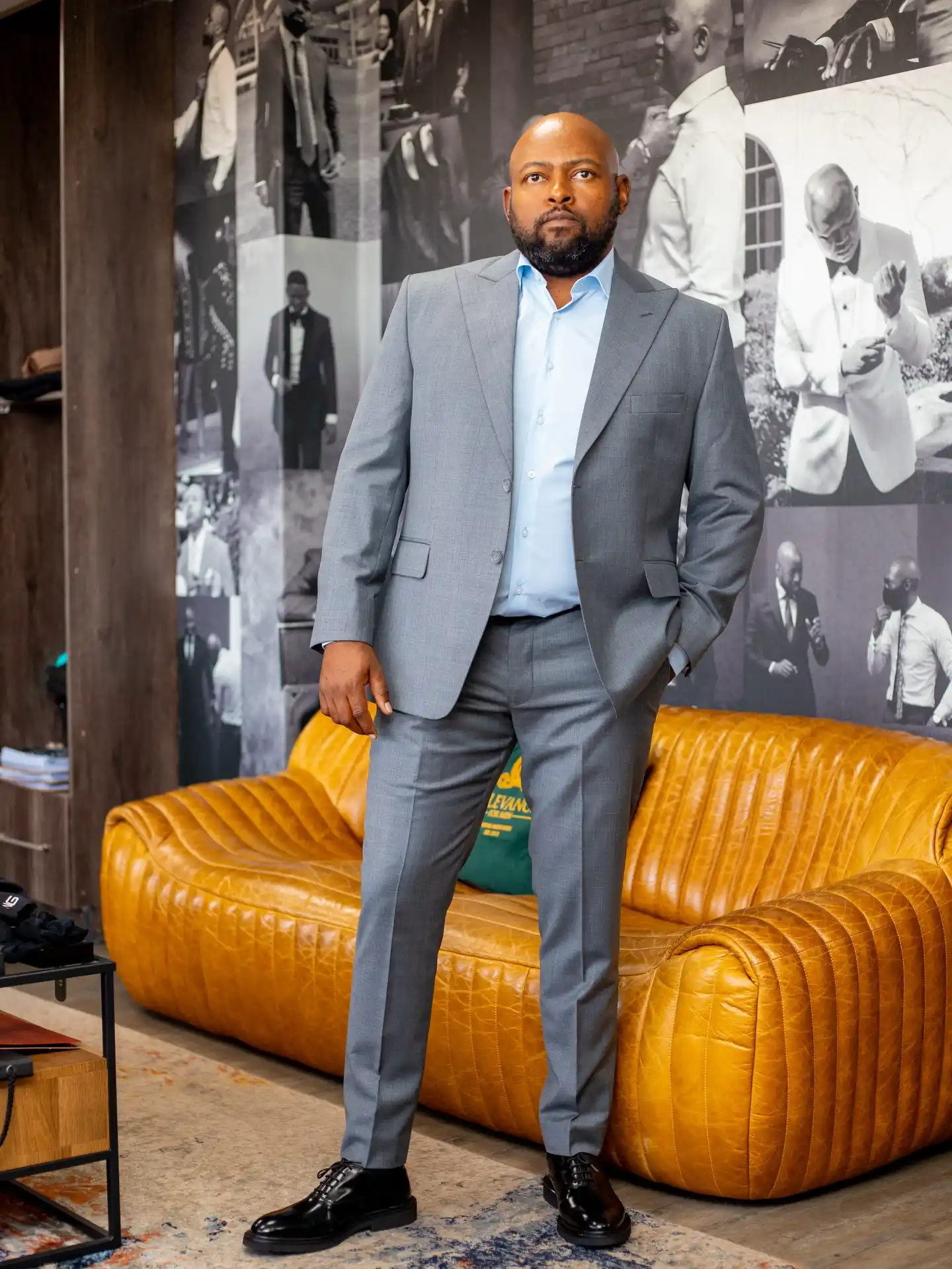
Look past the jacket for a second and check the pants. This grey suit shows a clean, straight leg with barely any break at the shoe, which is exactly the silhouette that keeps a bigger frame looking long instead of stacked.
Too much extra fabric pooling at the ankle adds visual bulk right where you don’t need it.
Three fit markers to check on your own trousers:
Have a tailor check your waistband height before anything else.
Ask for a straight leg cut, not tapered or wide.
Get the hem measured with the shoes you’ll actually wear.
5. A Single Button Stance Slims the Silhouette
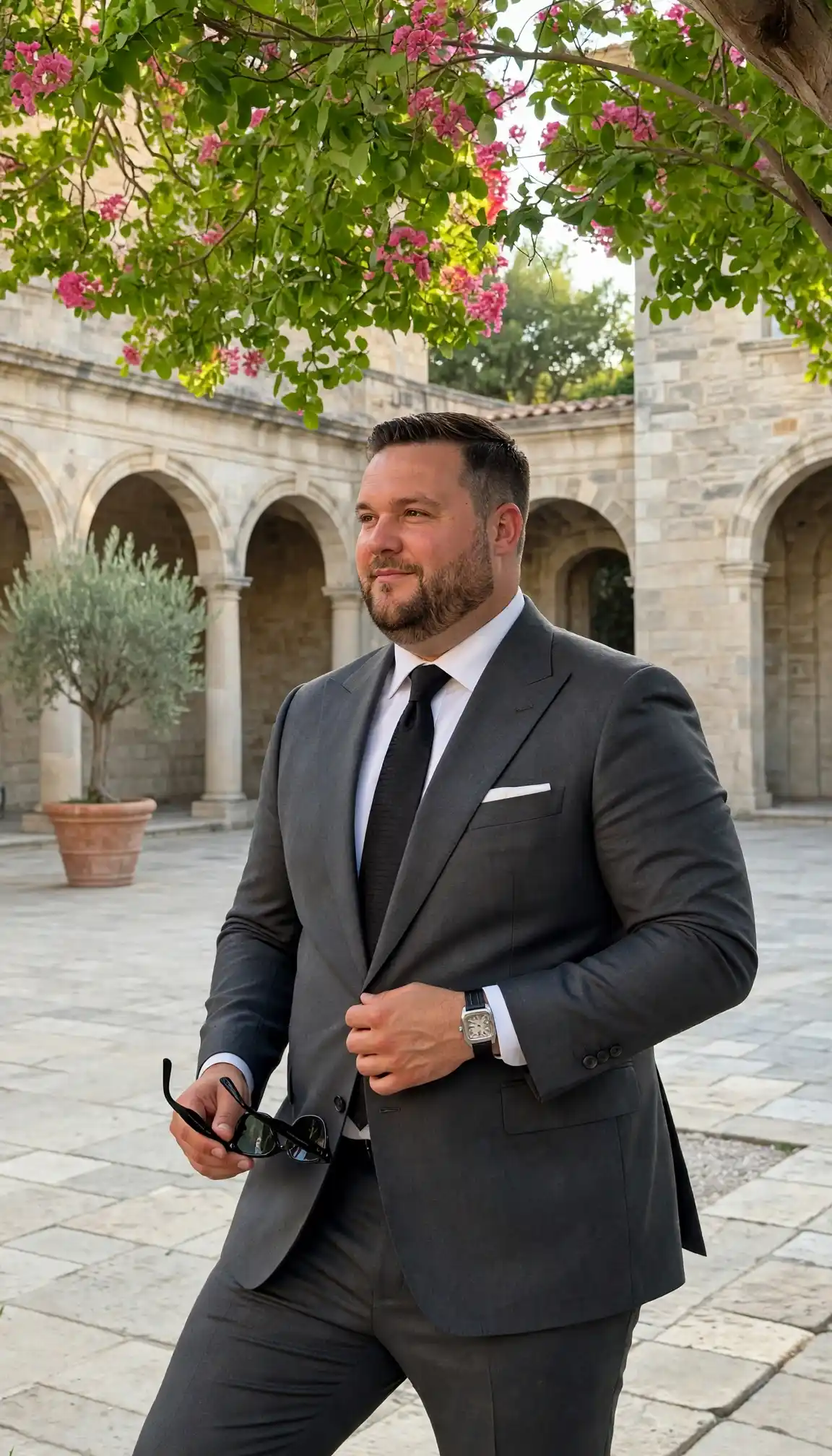
Charcoal suits photograph incredibly well in daylight, and this one shows why a single button closure matters so much on a fuller build.
With only one button doing the work, the V of the lapel opens wider and pulls the eye upward instead of across the midsection. That’s a small tailoring detail with a big visual payoff.
Notice how the jacket handles movement too. Buttoned at the natural waist while walking, it holds its shape instead of pulling or gapping across the chest.
The black tie against the white shirt keeps a strong vertical line running straight down the center, which adds height to the whole look.
A single closed button plus a strong vertical tie line pulls the eye up and down instead of side to side.
6. Layer a Quarter Zip Over Your Shirt and Tie for Dress Down Days
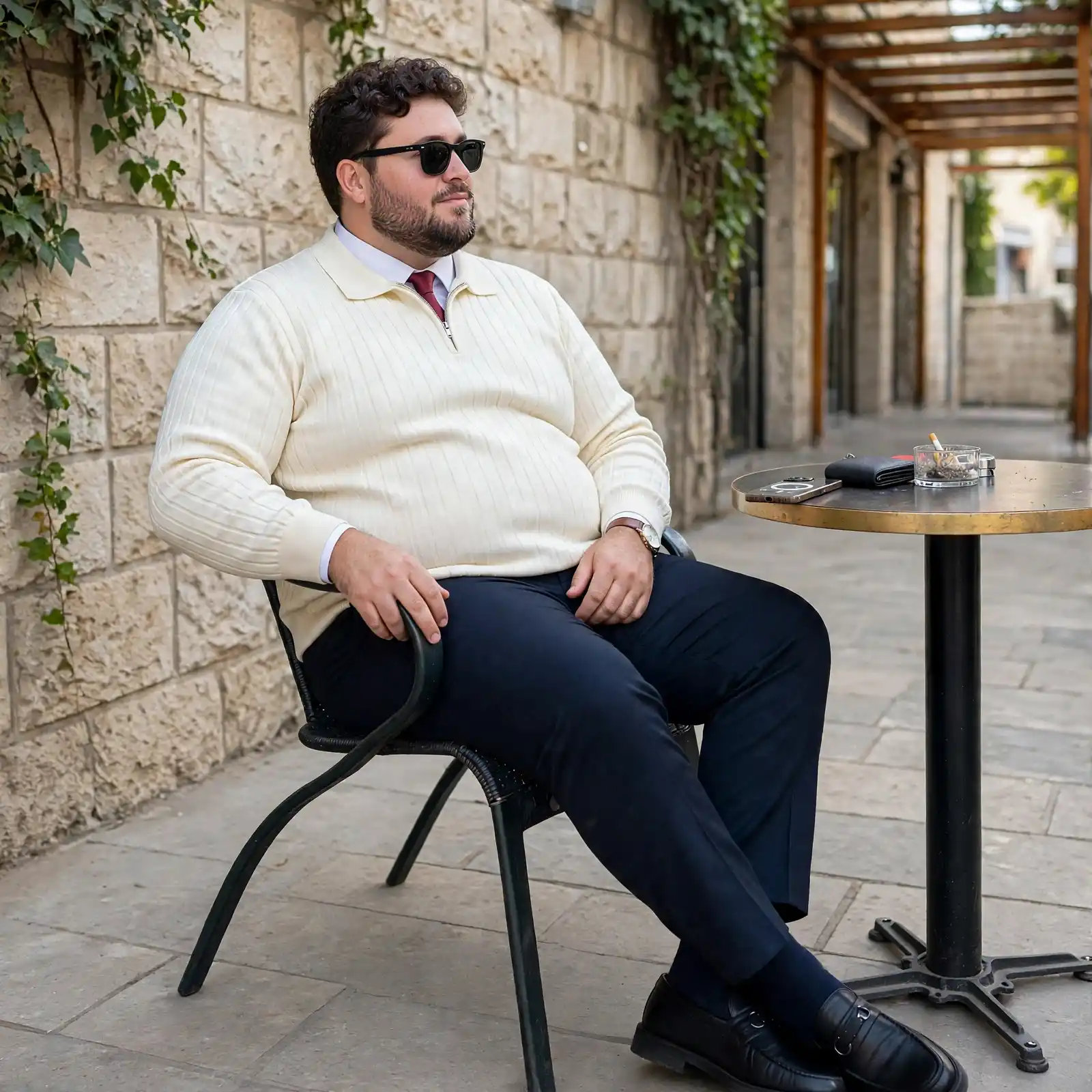
Not every day at the office calls for a full suit, and this outfit is proof that you can dial things back without looking sloppy.
A cream quarter zip goes right over a dress shirt and burgundy tie, with the collar and tie knot peeking out at the neck. Underneath it all, the trousers stay navy and tailored, and the loafers keep the shoe game dressy even though the top half relaxed.
This kind of layering works because the sweater is fitted through the body rather than boxy. A loose pullover would hide the shirt collar and swallow the tie completely. Here, the tie still shows, so the outfit reads as business casual instead of weekend errands.
Make this work for a dress down day
7. Crew Neck Sweaters Work When You Ditch the Tie
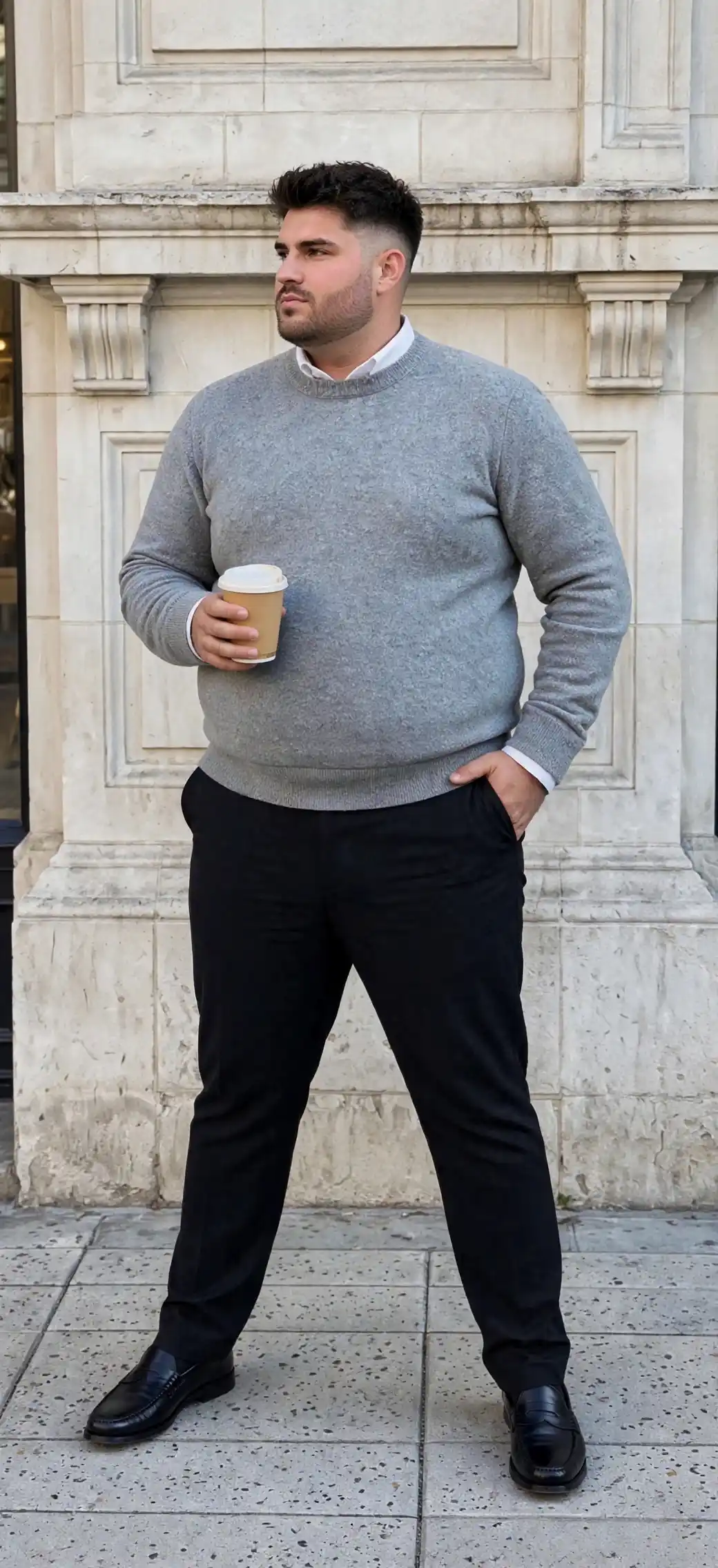
Swap the quarter zip for a classic crew neck and the whole vibe shifts. Here, a heather grey sweater sits over just a white dress shirt collar, no tie in sight.
Black tailored trousers and slim leather loafers pull the outfit back into business casual instead of full weekend mode.
The contrast between the light grey top and black bottom is doing real work. It splits the body into two clean blocks instead of one long shape, which reads sharp on a taller, fuller frame.
The sweater also has just enough ease through the shoulders to layer over a shirt without pulling.
8. Casual Friday Still Needs the Same Fit Rules
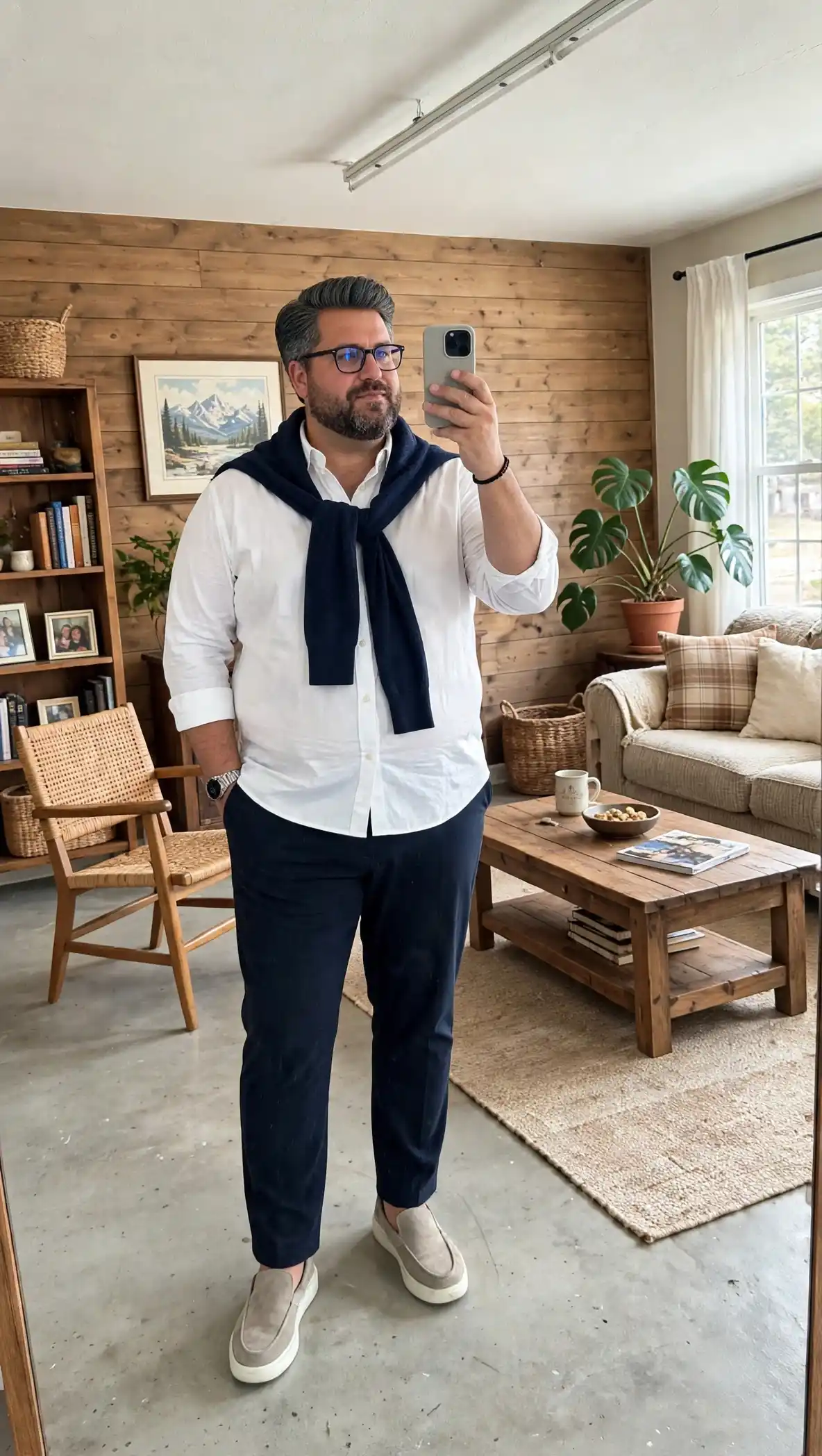
Take the tie and blazer away entirely and the same fit principles still apply. This crisp white shirt, tucked and buttoned to the top, sits close through the chest without gaping between the buttons.
Navy tapered trousers carry the formal DNA even though the sneakers and sweater tied over the shoulders push the whole thing into weekend territory.
Rolled sleeves and a relaxed collar keep this from looking stiff, but the trouser still tapers cleanly to the ankle instead of pooling. That’s the real lesson here: the tailoring underneath doesn’t change just because the accessories get more relaxed.
- ▸Keep the shirt tucked even when the top button is open
- ▸Choose a tapered trouser that still holds its shape without a blazer
- ▸Let one relaxed piece, like a sweater over the shoulders, signal the day off
9. Knit Polos Read Smart Casual, Not Sporty
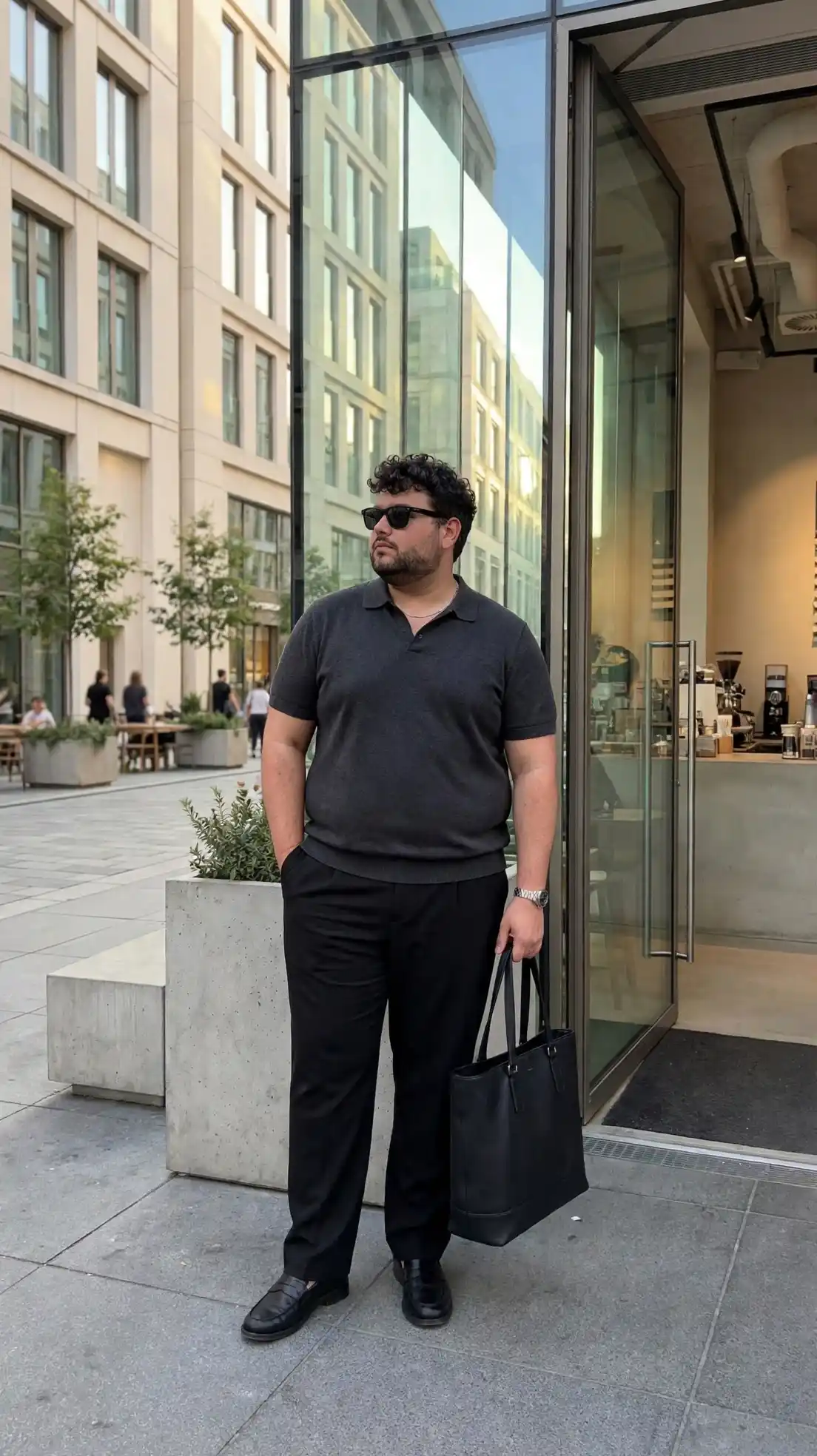
Charcoal changes everything about a polo. Swap a cotton pique for a fine knit polo in a dark neutral and pair it with pleated black trousers, and suddenly this looks like a founder heading into a meeting, not someone leaving the gym.
The open collar and short sleeves keep it relaxed, but the pleated waist and loafers anchor it back in business casual.
Pleats matter here more than people think. On a fuller midsection, a pleated trouser gives room through the seat and thigh without the fabric straining, which is exactly why this pair sits so cleanly at the waist.
| Flat Front Trouser | Pleated Trouser |
|---|---|
| Slimmer line through the leg | More room through hip and thigh |
| Can pull or gap on a fuller build | Sits smooth without straining fabric |
10. Let the Collar and Cuffs Peek Out for Instant Polish
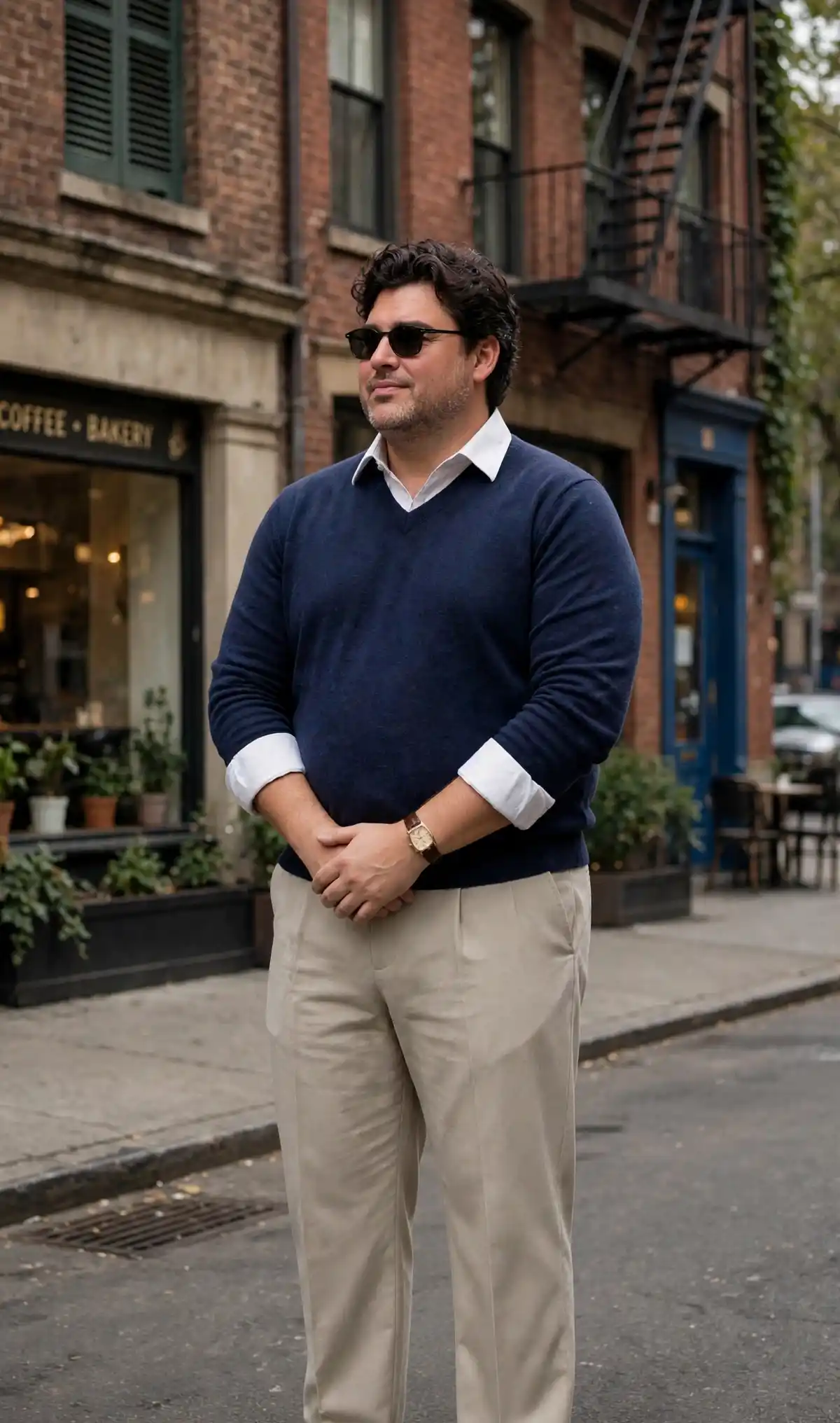
A V-neck sweater over a button down is one of the oldest tricks in the book, and it still works because of what it reveals rather than what it covers.
The white collar frames the face, the cuffs fold back over the sweater sleeves, and navy against khaki keeps the whole combination classic without trying too hard.
The V-neck itself matters for a fuller build. A crew neck would sit high and tight against the throat, but this V opens things up and gives the collar room to sit naturally instead of getting bunched underneath.
11. Double Breasted Jackets Are More Forgiving Than People Think
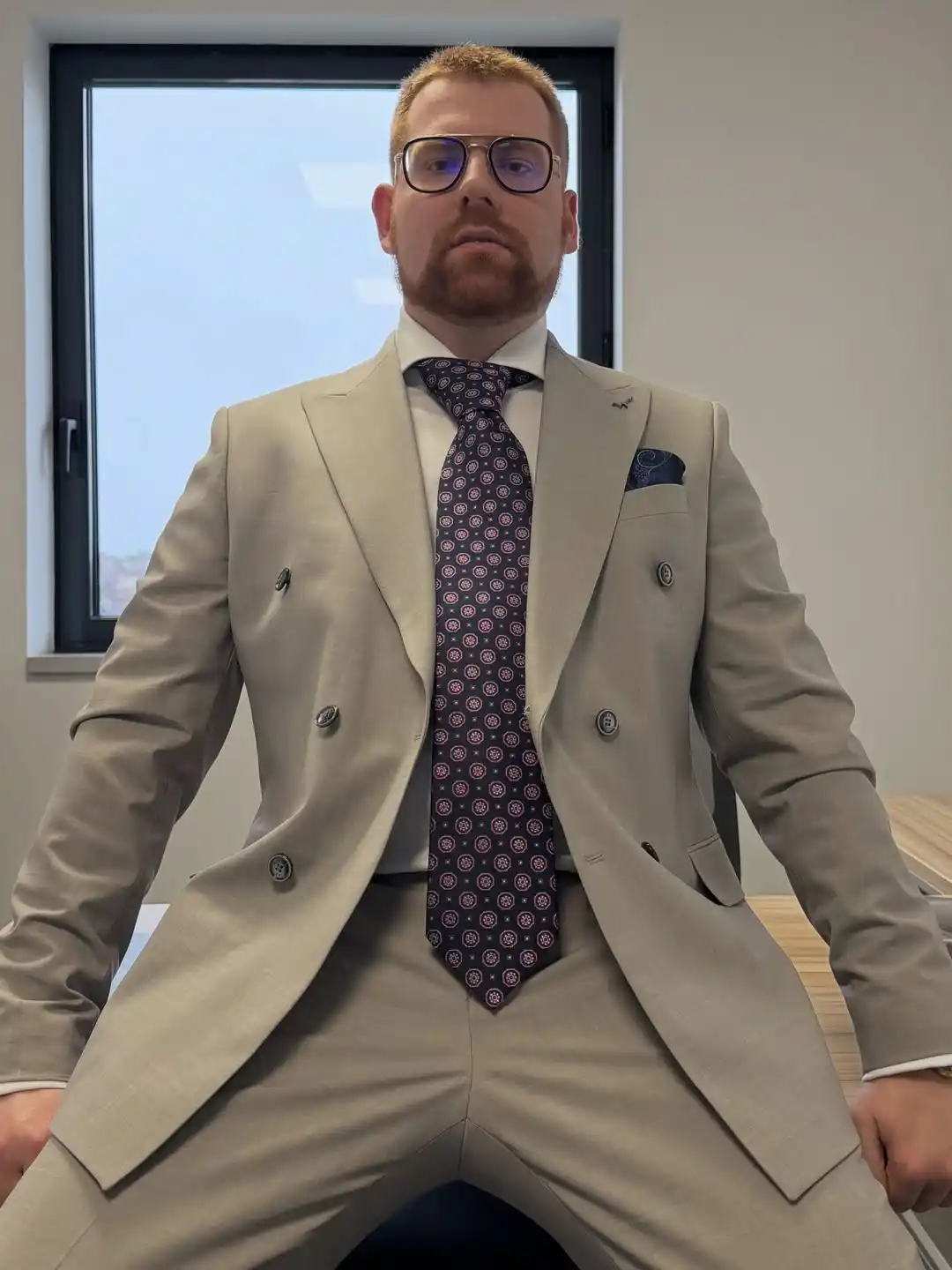
There’s a myth that double breasted suits only work on slim guys, and this tan suit pushes back on that.
The overlapping front panel and structured lapels actually give more coverage through the midsection than a single breasted jacket would, while the peak lapels draw the eye upward and outward across the shoulders.
A patterned tie in deep plum and cream is the standout piece here, and it earns its spot because everything else stays neutral.
The tan suit, white shirt, and navy pocket square all play a supporting role so the tie can carry the visual interest without the outfit feeling busy.
📌 Good To Know
Double breasted jackets need a slightly closer fit through the shoulders to hang correctly. If the shoulder seam sits past your natural shoulder, size down and let a tailor adjust the waist instead.
12. Subtle Plaid Beats Solid When You Want Texture Without Noise
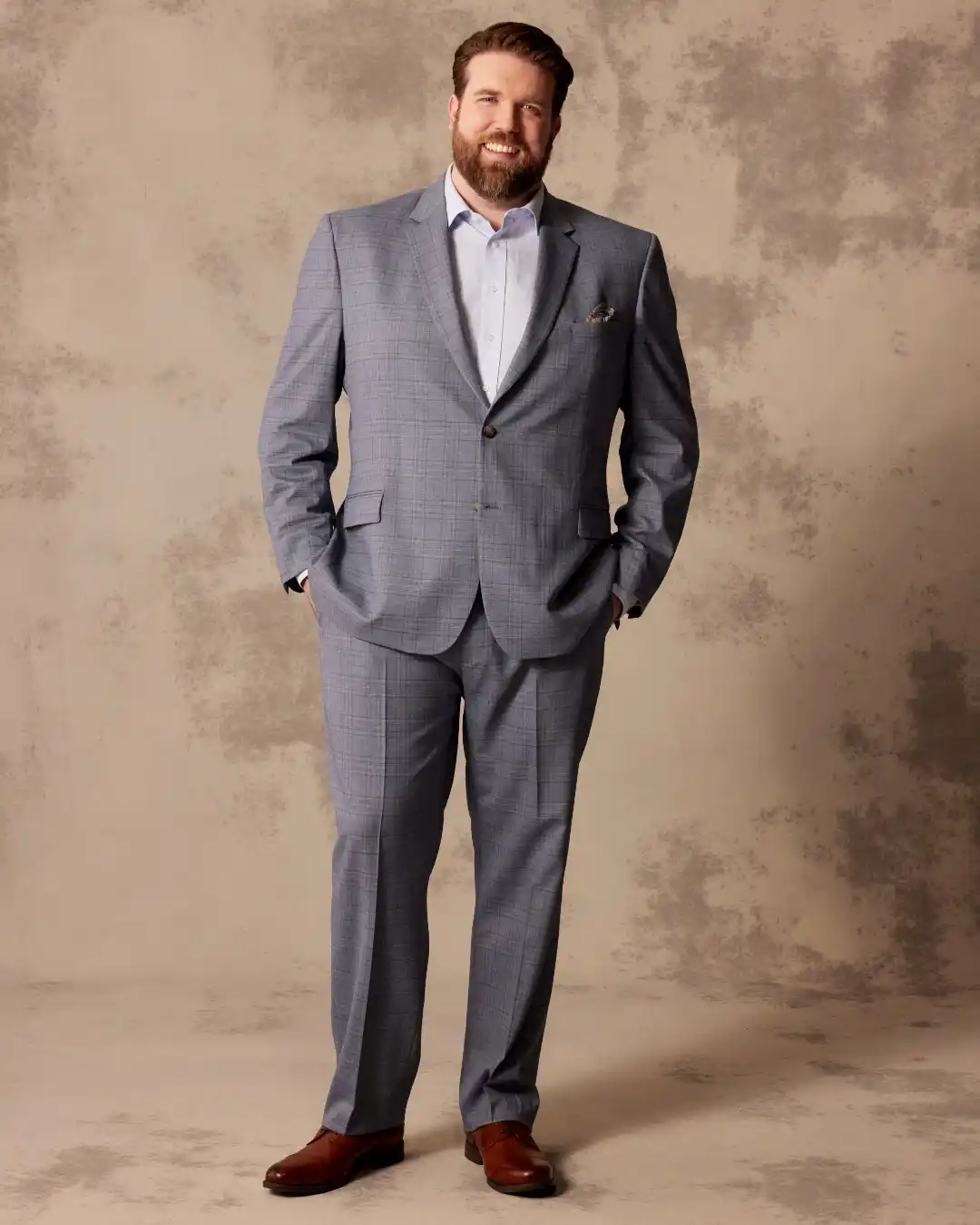
A soft blue-grey plaid does something a plain suit can’t. Up close there’s a woven grid of thin lines running through the fabric, but from a normal viewing distance it reads as a simple heathered grey.
That’s the sweet spot: you get texture and depth in the cloth without the pattern shouting for attention.
Skipping a tie here is the other smart move. The open collar with just a pocket square keeps things from feeling stiff, which matters when the suit fabric itself already carries visual interest.
Brown leather shoes also warm up the cool grey tone instead of matching it exactly, which keeps the whole outfit from feeling flat or monochrome.
13. This Is What a Properly Tailored Double Breasted Suit Looks Like
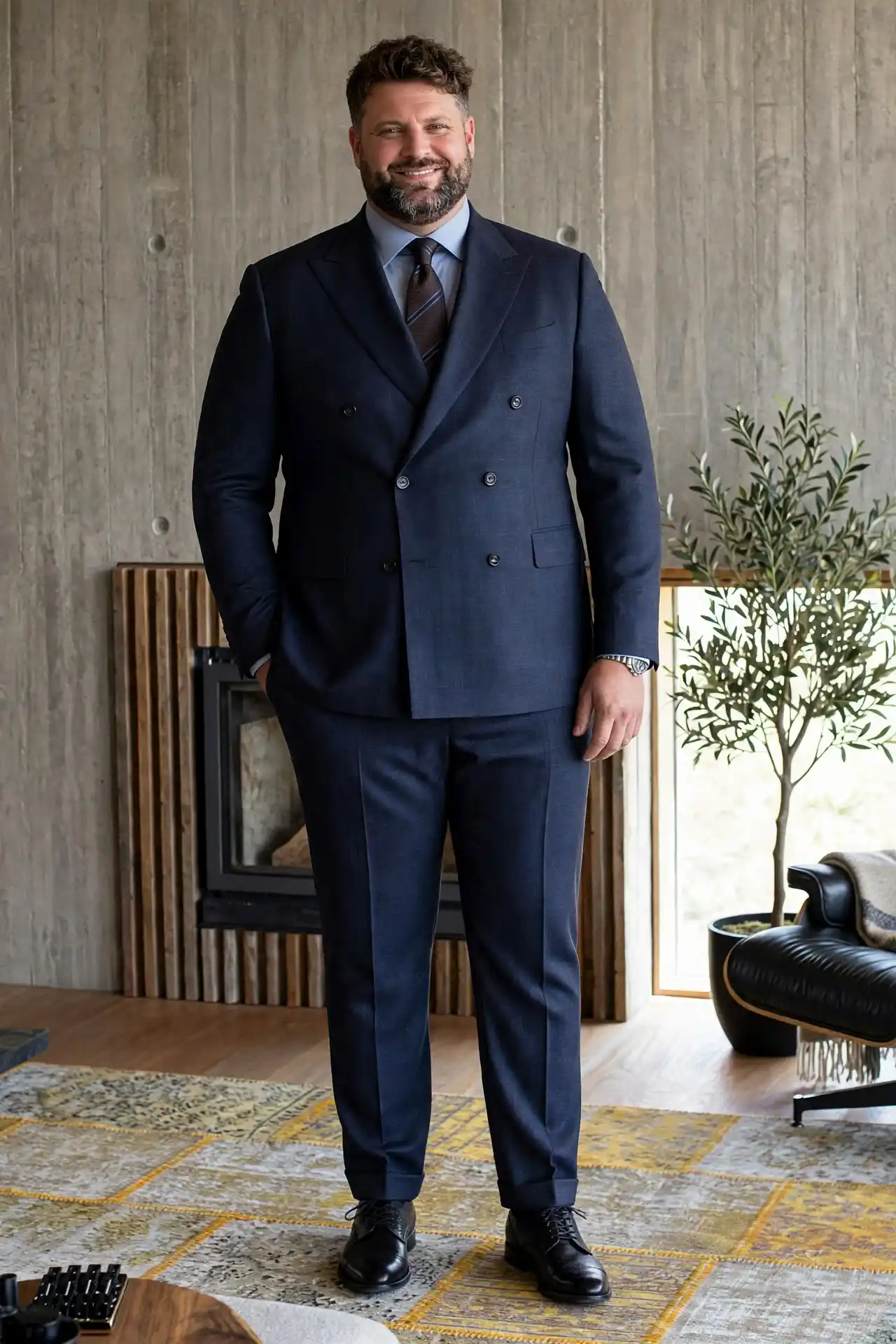
Standing at full length, this navy double breasted suit is a strong reference point for fit. The shoulders sit flat with no divots or pulling, the jacket closes smoothly across the chest, and the sleeve ends right at the wrist bone, showing just enough shirt cuff.
Every seam is doing exactly what it should, and that’s rare enough to point out directly.
Look at the trousers next. They sit at the natural waist with a single clean break at the shoe, and the slightly cuffed hem adds a small tailored detail without adding bulk.
A striped tie in the same navy and brown family as the suit ties the whole outfit together instead of introducing a new color to track.
Check that the shoulder seam lines up exactly with your natural shoulder edge.
Make sure the jacket closes without pulling across the chest button.
Confirm the sleeve ends at the wrist bone, not higher or lower.
14. This Closet Shot Proves Fit Beats Fabric Every Time
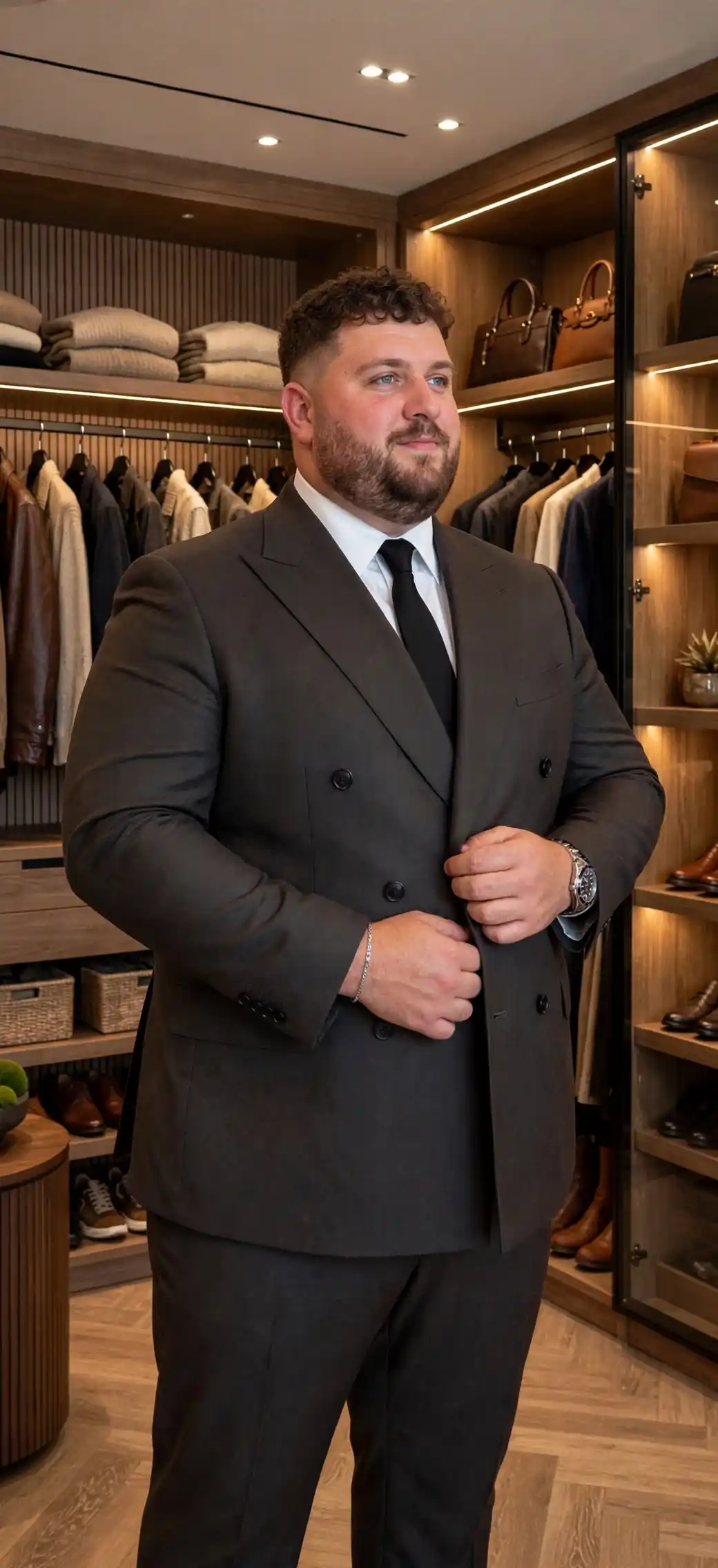
Charcoal double breasted, black tie, crisp white shirt, all set against a walk in closet that looks like a menswear showroom. But the real lesson isn’t the surroundings, it’s how the jacket handles a hand tucked into the front.
The double breasted front stays flat and closed even mid-motion, which tells you the wrap is cut generously enough to move without gapping.
A silver watch and a simple bracelet are the only jewelry here, and that restraint matters next to a suit this dark. Anything louder would compete with the black on charcoal color story instead of complementing it.
Choose a double breasted cut with enough ease to close comfortably.
Keep jewelry minimal against a dark, monochrome suit.
Sizing a double breasted jacket too tight through the wrap.
Stacking multiple bold accessories on an already dark outfit.
15. Tan Blazer, No Shirt Collar, Still Business Formal

Here’s proof that business formal does not require a dress shirt at all. A tan blazer goes right over a cream crewneck sweater, paired with charcoal trousers and suede penny loafers, and the whole thing reads modern office rather than casual Friday gone too far.
The absence of a collar underneath is the detail that makes this entry different from every layered look already covered.
Leaning against the desk with one ankle crossed shows the trouser fabric has enough stretch and drape to move naturally, not stiff or restrictive.
The tan and charcoal combination also keeps warm and cool tones balanced, so neither piece competes with the other for attention.
A blazer over a crewneck sweater skips the collar entirely and still reads sharp enough for a modern office.

