
I Retired at 63 and Lost My Sense of Purpose: 9 Things That Brought It Back

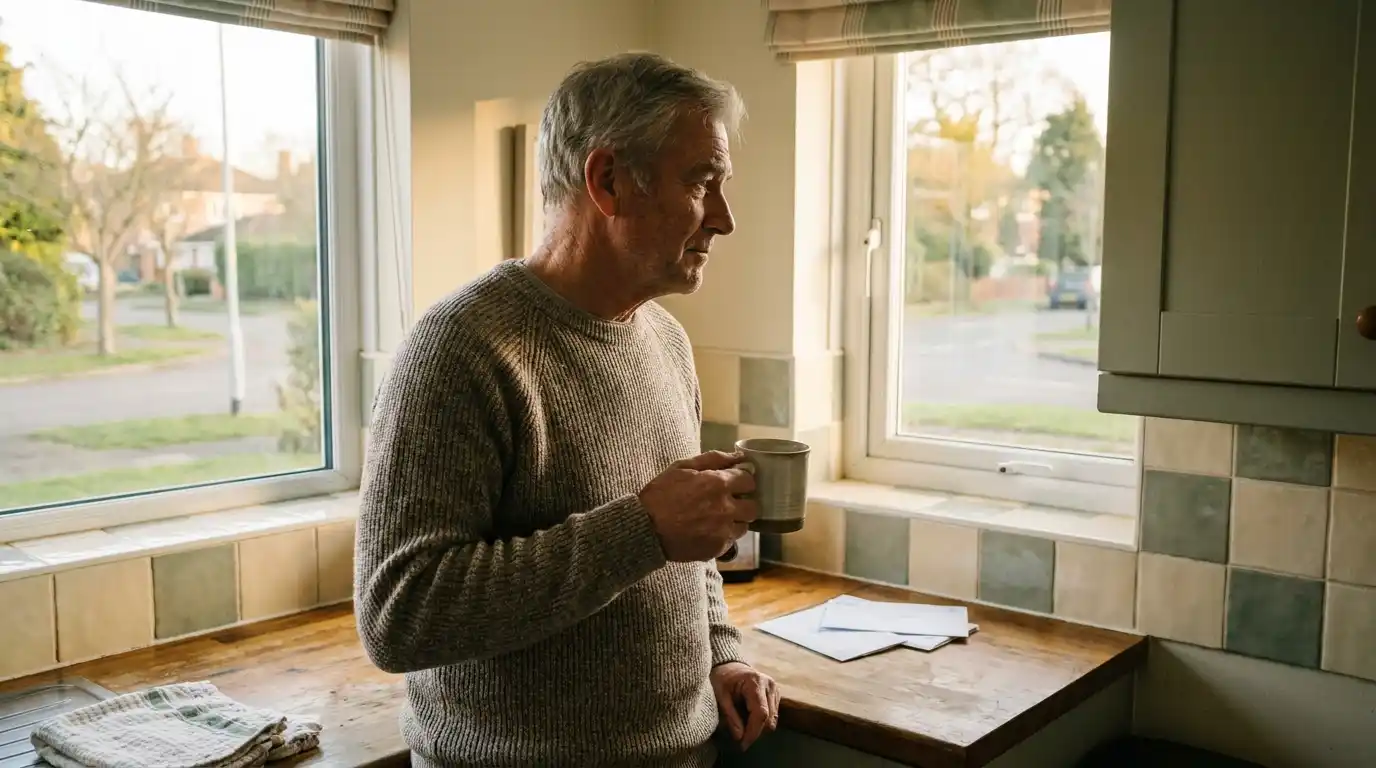
The first month of retirement felt like the best vacation of my life. By month six, I was checking the mail twice a day just to have somewhere to go.
I had worked for over 40 years. I had saved. I had a list of things I wanted to do. But nobody warned me about the quiet. No one needed me by 9 a.m. No one asked what I thought. The days just blurred together.
If you feel restless, a little invisible, or keep asking yourself “is this it?”, you are not broken. You are normal. Retired adults often report a lower sense of purpose than people their age who still work. And people with a stronger sense of purpose tend to have less depression and anxiety. So this is worth fixing.
Finding purpose in retirement took me about a year of trial and error. Some things failed. A few worked better than I expected.
In this guide, you’ll get the 9 things that helped me move past a lost sense of purpose after retirement. Each one comes with a small first step you can take this week. You’ll also learn how to tell a normal rough patch from something that needs a doctor.
Why Do You Feel So Lost After Retiring?
Here’s what I didn’t see while I was working: my job was doing a lot more for me than paying the bills.
Work quietly gave me five things:
- Structure: a reason to be somewhere at a set time
- Identity: an answer when people asked “what do you do?”
- Community: coworkers I saw every day without trying
- Challenge: problems to solve that kept my brain busy
- A reason to get up: people who counted on me
When I retired, I lost all five in one day. No wonder I felt off.
Many retirement coaches describe four phases most people go through. Seeing them written down helped me a lot:
- 01The Vacation PhaseSleeping in, travel and total freedom. For most people this lasts about a year.
- 02The Lost PhaseBoredom and “is this it?” creep in. This is completely normal, not a personal failure.
- 03Trial and ErrorYou test new activities and keep the ones that give you energy.
- 04Reinvent and RewireYou build a new routine and identity that truly feels like yours.
Now for the good news. When researchers followed retirees for several years, many saw their sense of purpose go up again. This was especially true for people who didn’t love their old jobs.
It also matters for your health. Large studies of adults over 50 found that people with a strong sense of purpose tend to live longer. Those studies can’t prove purpose is the cause. But the link is strong enough to take seriously.
The dip is real. So is the way out. Here’s what worked for me.
Things 1 to 3: How to Rebuild Your Days and Your People

Thing 1: I Wrote Down What Work Actually Gave Me
For months, I just felt “off.” I couldn’t say what was missing. So I sat down with a notebook and made two lists.
List 1: The top five things I love to do and know I do well.
List 2: What my job gave me that I miss now.
That second list surprised me. I didn’t miss the work itself. I missed being the person people came to with problems. I missed lunch with my team. I missed finishing something hard.
Then I matched each missing piece to a possible replacement:
- Being the go to problem solverMentoringThing 5
- Daily chats with coworkersA weekly club or groupThing 3
- A reason to leave the houseFixed weekly anchorsThing 2
- Feeling usefulScheduled volunteeringThing 4
- Learning new thingsA hard new skillThing 6
This table became my roadmap. You can’t replace what you haven’t named.
Try this week: Spend 20 minutes on both lists. Keep them honest and specific.
Thing 2: I Built a Weekly Rhythm With Fixed Anchors
Unlimited free time can feel like no time at all. A Tuesday with nothing planned used to sound great. In reality, it felt empty by noon.
What fixed it was “anchors.” An anchor is something that happens at a set time, with people who expect you to show up. That last part matters. If nobody notices when you skip it, it’s easy to skip.
I aimed for three or four anchors a week. Here’s what my week looks like now:
- MonOpen day
- Tue9 a.m.Volunteer shift
- WedOpen day
- Thu10 a.m.Class
- FriNoonLunch with a friend
- Sat8 a.m.Walking group
- SunEveningFamily call
Notice the open days. I kept them on purpose. Retirement should still feel like freedom. You just need enough structure that the week has a shape.
Try this week: Put one anchor on your calendar with a person who will notice if you don’t come.
Thing 3: I Replaced My Workmates With New Friends
At my retirement party, everyone promised to stay in touch. Three months later, I’d had coffee with exactly one of them.
That’s not anyone’s fault. Work friendships run on seeing each other every day. When that stops, most of them fade.
I’m not alone. About 4 in 10 adults over 45 say they feel lonely. Men report it a bit more than women. So if you feel this way, it’s common. It is not a personal failure.
One of the longest studies of adult life ever done found something simple. The happiest retirees were the ones who actively worked at replacing their workmates with new “playmates.” It didn’t happen by accident. They made it happen.
And it’s not too late. People in that study who thought they’d never have close friends found them in their 60s and 70s.
Here’s what worked for me:
- The 30 day yes challenge: For 30 days, say yes to every reasonable invite.
- Host once a month: Coffee, a potluck, a game night. Keep it simple.
- Join groups that meet often: A club that meets weekly builds friendships faster than a monthly event.
- Look for local events: AARP lists thousands of in person and online events on its website.
A note for men: Men often lean on work and a spouse for social contact. If that’s you, pick one activity that’s just yours, like a golf league, a workshop group, or a volunteer crew.
Try this week: Text two people you haven’t talked to in a while and suggest a specific day to meet.
Things 4 to 6: How to Feel Useful and Sharp Again

Thing 4: I Started Volunteering on a Schedule
My first volunteer shift at the food bank was awkward. I didn’t know where anything went. By week three, I knew everyone’s name.
The research on volunteering is strong. Older adults who volunteer tend to have better memory and fewer signs of depression than those who don’t. And you don’t need much. About 60 minutes a week can make a real difference in how you feel.
The key is doing it on a schedule. “I’ll help out sometime” rarely happens. “Every Tuesday at 9” does.
Where to find volunteer roles:
- AmeriCorps Seniors: Programs for people 55 and older. You choose how often you serve, from a few hours a week up to full time.
- Foster Grandparent Program: Work one on one with kids who need extra support. If you meet income rules, you may get a small stipend.
- VolunteerMatch and Idealist: Search by zip code and interest.
- Local spots: Food banks, hospitals, libraries, animal shelters, and Meals on Wheels.
Try this week: Pick one organization and email them today.
Thing 5: I Put My Career Skills Back to Work as a Mentor
Volunteering gave me something to do. Mentoring gave me back something deeper: the feeling of being good at something.
The first time a young business owner said “that actually solves my problem,” I felt like myself again.
Skills based volunteering matches what you did for years with someone who needs it now. A big example is SCORE, a nonprofit that pairs experienced people with small business owners. You don’t need to be a former executive. Anyone with business experience can apply. Many mentors give 3 or 4 hours a week and set their own schedule.
One honest note: SCORE’s funding has changed recently. Call your local chapter first to make sure it’s active.
Other places to use your skills:
- Tutoring at your local library or school
- Mentoring new hires at your old employer
- Helping through a trade or professional group
- Joining a nonprofit board
Try this week: Write down one skill people used to ask you for. Then find one place that needs it.
Thing 6: I Learned Something Hard (Not Just Something Fun)
At 63, I signed up for a digital photography class. I felt clumsy. The camera menus confused me. I almost quit after week two.
That frustration turned out to be the point.
In one study, adults over 60 spent three months learning digital photography or quilting. Another group just socialized or did easy tasks. Only the people learning a hard new skill saw their memory improve. Some of those gains lasted up to a year.
To be fair, those people practiced about 15 hours a week. You don’t need that much to benefit. But the lesson is clear: easy activities feel nice. Hard ones help your brain.
Where to learn something new:
- Osher Lifelong Learning Institutes: Low cost classes for people 50 and older at over 120 colleges in every state.
- Community colleges: Many states offer free or cheaper tuition for seniors. Check your state’s rules.
- Online courses: Many are free to audit.
- At home: A musical instrument, a new language, woodworking, or coding.
A simple rule: Pick something that makes you a little uncomfortable.
Try this week: Look up one class near you and sign up for the next session.
Things 7 to 9: How to Stay Active, Earn Wisely and Build Small Roles

Thing 7: I Made Exercise a Social Appointment
I joined a Saturday walking group to get my steps in. It turned into a coffee group. Then a friend group. That’s the magic of exercising with other people. It helps your body and your social life at the same time.
Here’s what health experts recommend for adults 65 and older each week:
- 150 minutes of moderate activity, like brisk walking. That’s about 22 minutes a day.
- 2 days of strength training, like light weights or resistance bands.
- Balance work, like standing on one foot or tai chi.
- 150 minModerate activityThat is about 22 minutes a day of brisk walking, swimming or dancing.
- 2 daysStrength trainingLight weights or resistance bands that work all your major muscles.
- BalanceA little each weekStand on one foot or try tai chi to lower your risk of falls.
That sounds like a lot at first. But broken into small pieces, it’s very doable.
Good group options:
- Walking or hiking groups
- Pickleball
- Water aerobics
- Strength classes at your community center or gym
- Dance or tai chi classes
I heard about a man who had no close friends at all. He joined a gym, found a regular group there, and they became his crew. It happens more than you’d think.
Safety first: Talk to your doctor before starting a new exercise routine, especially if you’ve been inactive.
Try this week: Find one group class or walking group and go once.
Thing 8: I Tried Part Time Work (and Learned the Money Rule at 63)
I’ll be honest. I thought about going back to work because I missed feeling needed. Money was only part of it.
I’m not alone. Plenty of retirees go back to work. Money is the top reason, but boredom and wanting to help others come up often too.
Part time work can bring back structure, people, and challenge. But at 63, there’s a money rule you must know first.
The Social Security earnings rule (in plain words):
“Full retirement age” is the age when you can get your full Social Security check. For anyone born in 1960 or later, it’s 67.
If you started collecting Social Security early and you still work, there’s a yearly earnings limit. Right now it’s a little over $24,000, and it goes up most years.
Here’s how it works:
- 1Under full retirement age all yearIf you earn over the yearly limit (a little over $24,000 right now), $1 is held back for every $2 above it.
- 2The year you reach full retirement ageThe limit is much higher, and only $1 is held back for every $3 above it.
- 3After full retirement ageNo limit at all. Earn as much as you like.
- 4Held back money is not lostYour monthly check is raised later to make up for the months that were held back.
Before you take a job, check this:
- Find your full retirement age on the Social Security website.
- Look up this year’s earnings limit.
- Use their Retirement Earnings Test Calculator.
- Estimate your yearly pay from the job.
- Decide if the trade off is worth it for you.
Be realistic about the job market. It can be tough for older job seekers right now. These options tend to work well:
- Part time work at your old employer
- Consulting in your field
- Seasonal jobs
- Per diem work (paid by the day)
This isn’t financial advice. Always check your own numbers with Social Security.
Try this week: Look up your full retirement age and this year’s earnings limit.
Thing 9: I Stopped Waiting for One Big Purpose
For a long time, I thought I had to find the answer. One big mission. Something grand.
That pressure kept me stuck.
What finally worked was building a few small roles instead. Today I’m a grandpa on Wednesdays, a Tuesday volunteer, a mentor twice a month, and the guy who organizes the Saturday walk. None of those alone is my “purpose.” Together, they are.
Purpose looks different for everyone. For some, it comes from family. For others, it comes from faith, kindness, community, or achievement. There’s no single right answer.
And remember the “trial and error” phase? You’re allowed to quit things that don’t fit. That’s not failure. That’s the process working.
Your 90 day experiment plan:
- 1Pick 2 or 3 new thingsChoose from volunteering, mentoring, a class, a group or part time work.
- 2Commit for 90 daysGive each one a fair chance. The first few weeks often feel awkward.
- 3Check in once a monthWrite down what gave you energy and what drained you.
- 4Keep what workedAt day 90, keep the winners and drop the rest without guilt.
- 5Start the next roundAdd one new thing to try and repeat the cycle.
Try this week: Choose your first 2 experiments and put them on your calendar.
When Is It More Than a Rough Patch?

Feeling a bit lost after retiring is normal. Depression is different. It’s common in older adults, but it is not a normal part of aging. And it can be treated.
See a doctor if these last two weeks or more:
- Feeling sad, empty, or hopeless most days
- Losing interest in things you used to enjoy
- Sleeping much more or much less than usual
- Changes in appetite or weight
- Feeling tired all the time
- Trouble focusing or making decisions
Start with your regular doctor. Some medicines and health problems can cause these symptoms, so a checkup is a smart first step. Talk therapy and other treatments work well for many people.
Your First Step This Week

Six months into retirement, I was checking the mail twice a day. Today, my week is full of things I chose. There’s the Tuesday shift, the Thursday class, the Saturday walk, and my Wednesday grandkid time.
If you feel lost right now, it means work was doing more for you than you realized. That’s okay. You can rebuild it, one piece at a time: structure, people, service, skills, challenge, movement, and small roles that matter.
Don’t try all nine at once. This week, do just one thing. Write your two lists from Thing 1. Then put one anchor on next Tuesday’s calendar.
Finding purpose in retirement isn’t a single discovery. It’s a weekly practice.
FAQs
1. How long does it take to find purpose after retirement?
For many people, it takes one to two years. The first year often feels like a vacation. The lost feeling usually shows up after that. With steady effort, most people start to feel settled within a year of trying new things.
2. Is it normal to feel depressed after retiring?
Feeling low, bored, or restless for a while is very common. But if sadness, poor sleep, or loss of interest lasts more than two weeks, talk to your doctor. Depression is treatable at any age.
3. Can I work part time at 63 while getting Social Security?
Yes. But if you’re under full retirement age, part of your check may be held back if you earn over the yearly limit. That money is credited back once you reach full retirement age. Check the Social Security website for this year’s limit.
4. What’s the fastest way to feel useful again?
Volunteer on a fixed schedule, even just one hour a week. Having people who expect you to show up brings back structure and a sense of being needed quickly.
5. What if I don’t know what I’m passionate about?
That’s okay. You don’t need a passion to start. Pick two small experiments, try them for 90 days, and pay attention to what gives you energy. Purpose often shows up while you’re doing things, not before.

