26 Men’s Slicked Back Hair Styles That Work on Real Hair

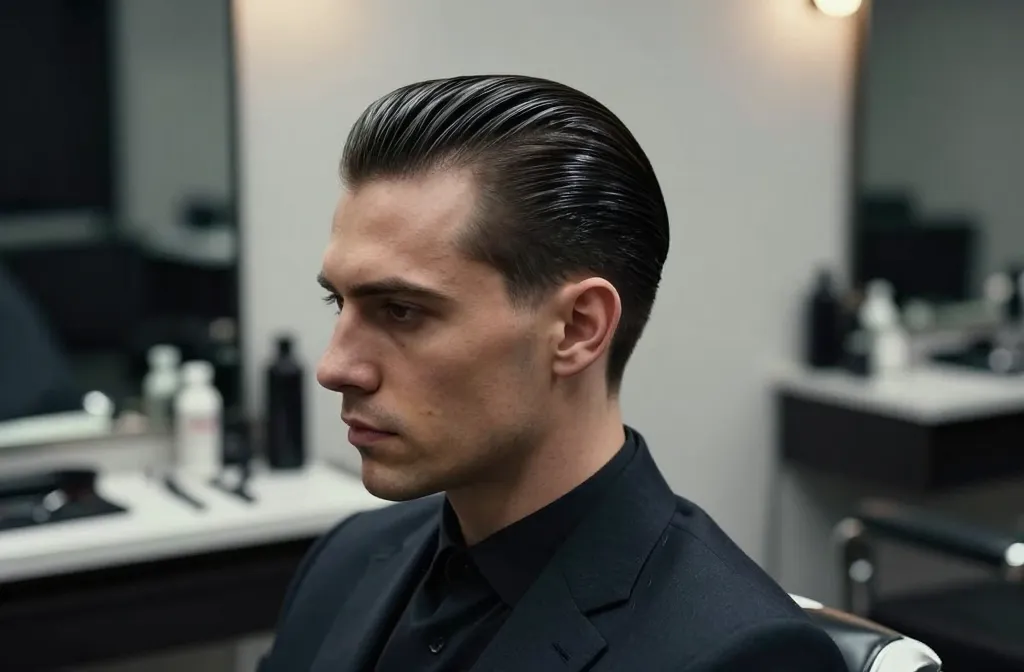
Getting your hair off your face sounds simple until you try it. The hair springs forward by ten in the morning, or the product makes everything look wet and flat, or the shape works from the front and falls apart from the side.
Most slicked back roundups skip that part. They show you 20 photos and tell you nothing about the length you need, the product that holds, or whether the style works on your hair at all.
This one goes the other way. These 26 men’s slicked back hair styles cover fine hair and thick hair, receding hairlines and full heads, three inch crops and shoulder length grow outs.
Under each look you get the cut to ask for, the product that gets that exact finish, and an honest note on who the style suits.
Some take four minutes on a weekday morning. Others need a barber every two weeks and real effort with a comb.
Both kinds are here, clearly labelled, so you can pick one that fits your actual routine instead of an aspirational one.
1. The High Shine Executive Slick Back
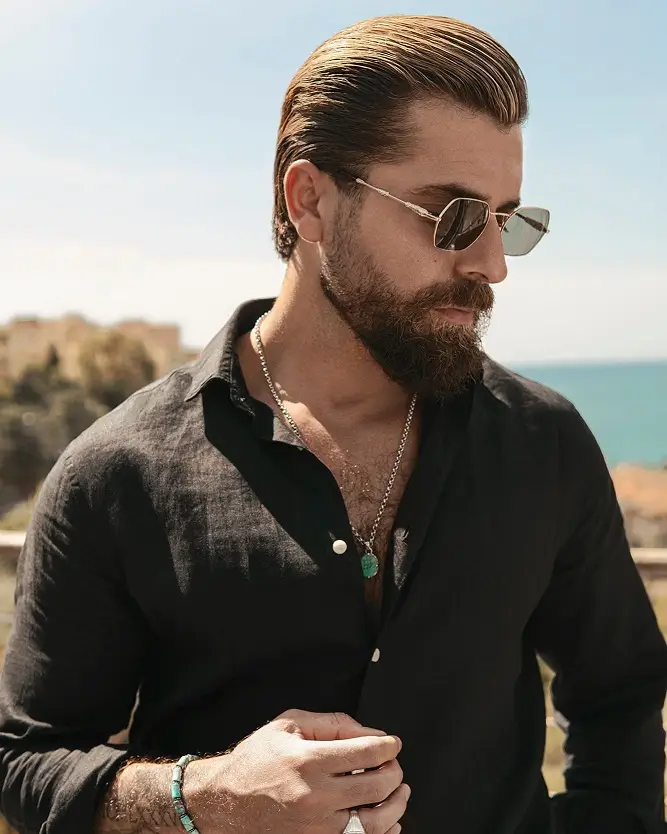
Full shine, combed tight to the skull, every strand going the same direction. This is the sharpest version on the list and the one that photographs best, which is why you see it at weddings and on nights out far more than on an average Tuesday.
Look at where the length sits. It is longer than it first appears, gathering into a small bulk at the back of the neck rather than being faded away.
The sides are tapered close but not shaved, so the shape stays smooth from front to back with no hard break.
A dense, well shaped beard is carrying half of this look. The dark hair against the tanned skin and black shirt keeps the whole thing balanced.
For the shine, use a water based pomade rather than an oil based one. It gives the same gloss but washes out with plain water, so you are not scrubbing your scalp every night.
| Water Based Pomade | Oil Based Pomade |
|---|---|
| Rinses out with water alone | Needs a clarifying shampoo to shift |
| Firms up as it dries, holds shape all evening | Stays pliable, easy to recomb through the day |
| Less likely to mark your pillow or collar | Can build up on the scalp over time |
| Best pick for this exact glossy finish | Better suited to vintage pompadour shapes |
2. The Comb Track Slick Back with a Side Part and Skin Fade
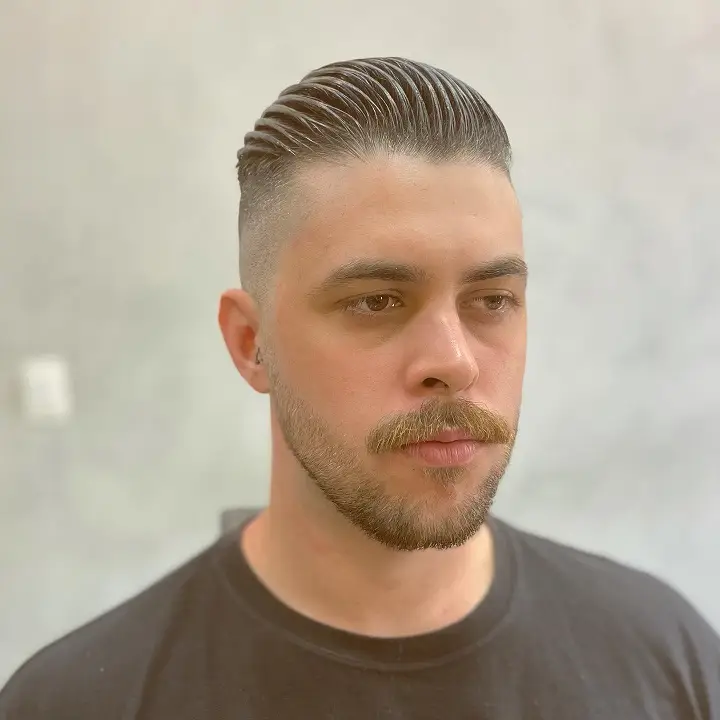
Those ridges running through the hair are the whole style. They come from a fine tooth comb pulled through firm pomade in one pass, and they are the closest thing men’s hair has to a signature finish.
The part is razored in on the left and sits low, just above where the skin fade begins. Below that line the sides drop to bare skin fast. Above it, every strand runs in the same direction with nothing broken up or textured.
Straight, medium thick hair is close to required here. Wave will fight the comb tracks and break them up halfway through the day.
Keep in mind this is a high maintenance look. The fade needs refreshing every two weeks and the styling takes real care each morning, so it earns its place for events and workdays rather than weekends.
3. The Black Tie Slick Back with a Full Beard
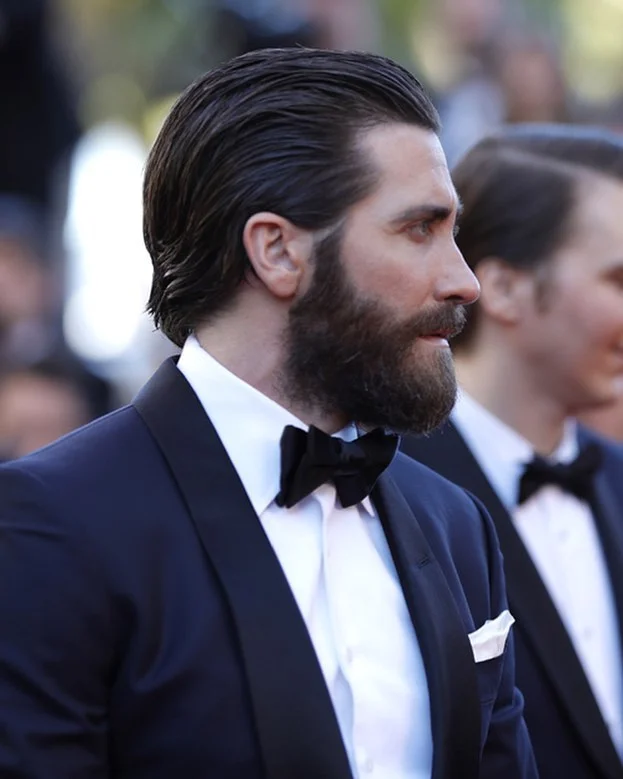
Formal events ask more of your hair than a normal day does. Long night, warm rooms, photographs from every angle, and no chance to fix anything once you are in the room.
This version handles all of that. The hair is medium length, combed straight back with a low shine that reads as groomed rather than wet, and the sides are left natural so nothing looks freshly buzzed against a tuxedo collar. The full beard is neatened along the cheek and left dense below.
A few practical notes for wearing a slicked back style to an event:
Event day checklist
4. The Hard Part Slick Back with a Skin Fade
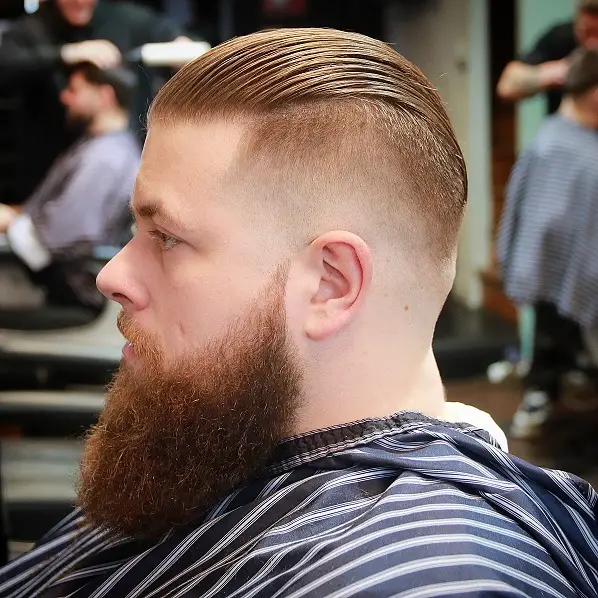
That shaved line above the temple is doing a specific job. It gives the eye a clean stopping point between the faded sides and the swept top, so the two sections look intentional rather than blended together by accident.
The fade here climbs high and goes down to skin around the ear, then meets a beard that has been left full and dense. That contrast is the whole point. Tight and bare up top, heavy and textured below.
The comb marks on top tell you a firm product went in while the hair was still damp, then got combed in one direction and left alone. No finger work, no messing about afterwards.
Ask your barber for a high skin fade, a razored hard part on your natural parting side, and enough length on top to reach the crown when combed back.
If you have a receding hairline, this style is friendly to it, because the strong side line pulls attention away from the front.
Towel dry until hair is damp, not dripping. Wet hair dilutes product and kills hold.
Warm a coin sized amount of firm hold pomade between your palms until it turns clear.
Rake it through from front to back, roots first, so the base holds the shape.
Comb straight back in one clean pass with a fine tooth comb to get those visible lines.
Hands off. Touching it after the comb pass is what ruins the finish by midday.
5. The Grown Out Slick Back with Natural Sides
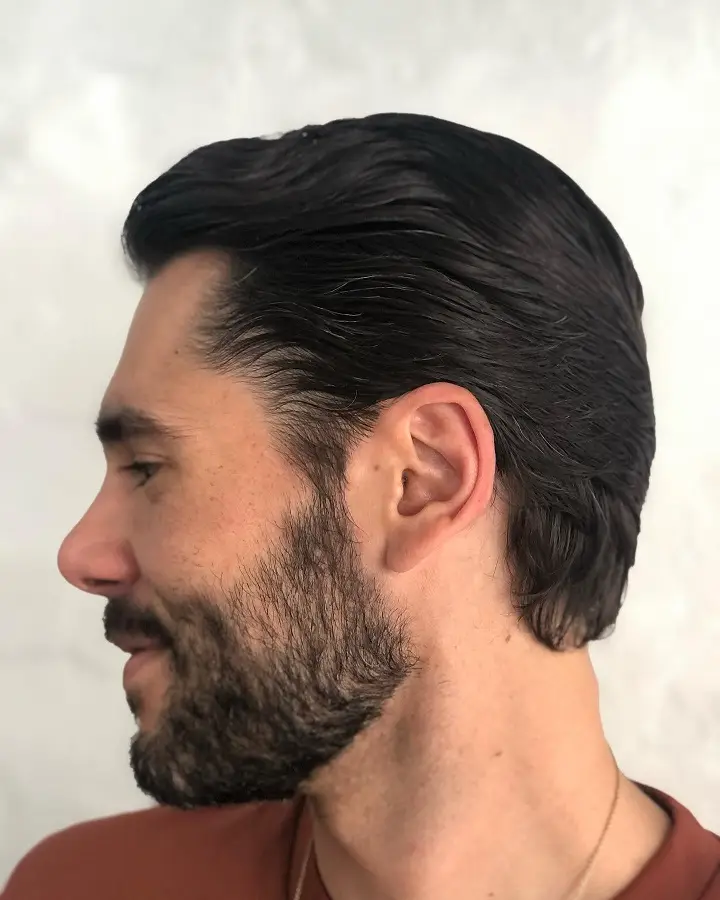
Length is doing all the work in this one. There is no fade anywhere, no shaved line, no tapered neckline. The hair simply gets swept back and allowed to sit past the ears and down toward the nape.
So which version is right for you? A faded slick back gives sharper contrast and needs a barber visit every two or three weeks.
This grown out version stretches to six or eight weeks between cuts, and it forgives a bit of mess on the days you skip styling.
The finish here is low shine, closer to a matte cream than a glossy pomade. You can see individual strands and a soft ridge where the hair lifts off the crown, which reads more relaxed than the mirror shine looks.
One honest warning. Hair at this length will fall forward by the afternoon if it is fine or thin. A sea salt spray under your styling cream adds grip at the roots and buys you a few more hours.
Grow it past the ears before you attempt this shape, or it will flare out at the sides.
Blow dry backward on low heat for five minutes. It sets the direction before any product goes in.
Book a light trim on the ends every six weeks to keep the bottom edge tidy.
Heavy wet look gel. At this length it clumps the hair into strips and looks greasy.
Combing it back while bone dry. You will get static and flyaways instead of a smooth sweep.
Asking for a fade halfway through growing out. It resets your timeline by months.
6. The Silver Slick Back with a Low Fade and Full Beard
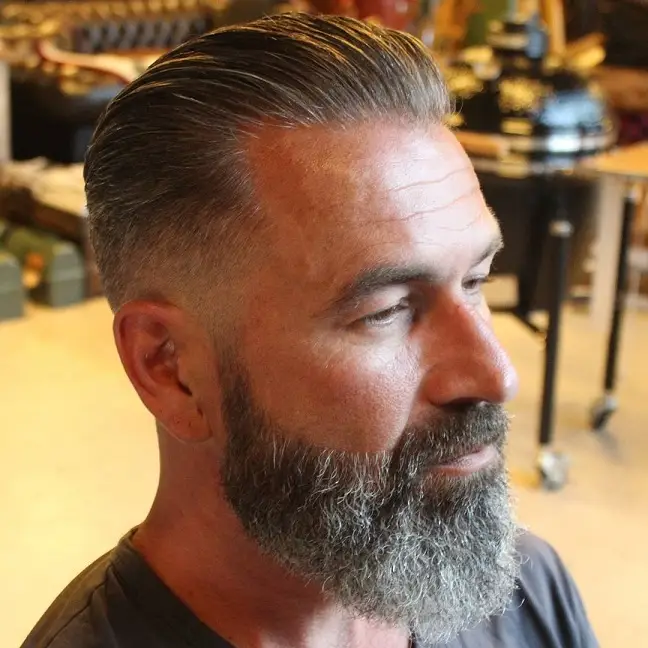
Grey hair behaves differently. It is often coarser, drier, and it reflects light in a way that makes any product look shinier than it does on dark hair, so a lighter hand goes a long way here.
The cut itself is simple and smart. A low fade keeps the sides tidy without going bare, the top is combed straight back with no part, and the length has been kept short enough that thinning near the crown is not on show.
That last detail is why this works so well after 40.
The beard is the anchor. Full, shaped along the cheek line, and left long enough at the chin to balance the short hair above it. Without it, the whole look would sit off centre.
Use a medium hold cream instead of a heavy pomade. Coarse grey hair grips product harder than you expect.
Keeping the top long to cover thinning at the crown. It separates and shows more scalp, not less.
Trimming the beard short to match the short hair, which leaves the face looking top heavy.
Cut the top shorter so it lies flat and even. Density reads better than length.
Grow the beard fuller to carry the weight, then shape a clean cheek line so it still looks sharp.
7. The Side Swept Slick Back for a Receding Hairline
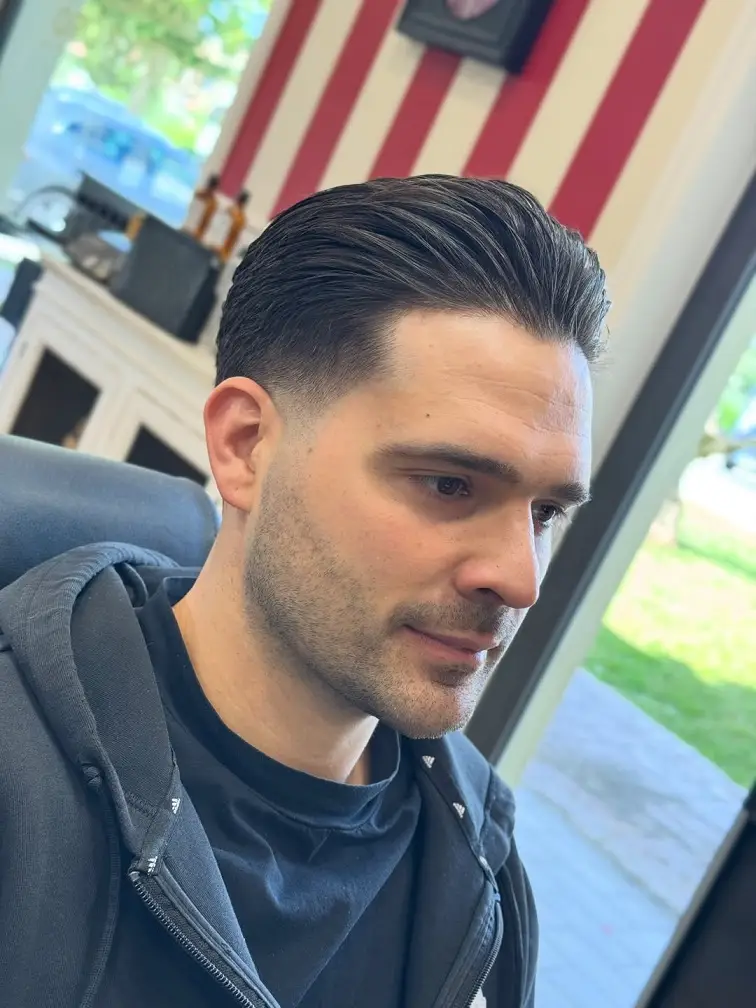
Hairlines move. This cut is built around that instead of pretending otherwise, and it is one of the most useful styles on this list for guys in their thirties.
Rather than combing everything straight back, the hair travels back and slightly across, which lays a thin veil of hair over the recession at the temple.
The corners still show, and that is fine. They look intentional here.
A few details worth copying:
- The sides are tapered short and tight, so the eye reads the whole head as neat rather than scanning for thin spots.
- The top is only moderately long, roughly three to four inches, keeping the hair light enough to stay in place.
- The finish is satin, not glossy. High shine makes scalp show through, so a medium shine product is the safer pick.
- Light stubble along the jaw adds contrast and pulls attention toward the lower half of the face.
- No hard part line, which would only draw a straight arrow toward the thinner area.
Tell your barber you want it swept back with a slight diagonal, not a straight back sweep. It is a small direction change that makes a real difference.
8. The Glossy Disconnected Slick Back
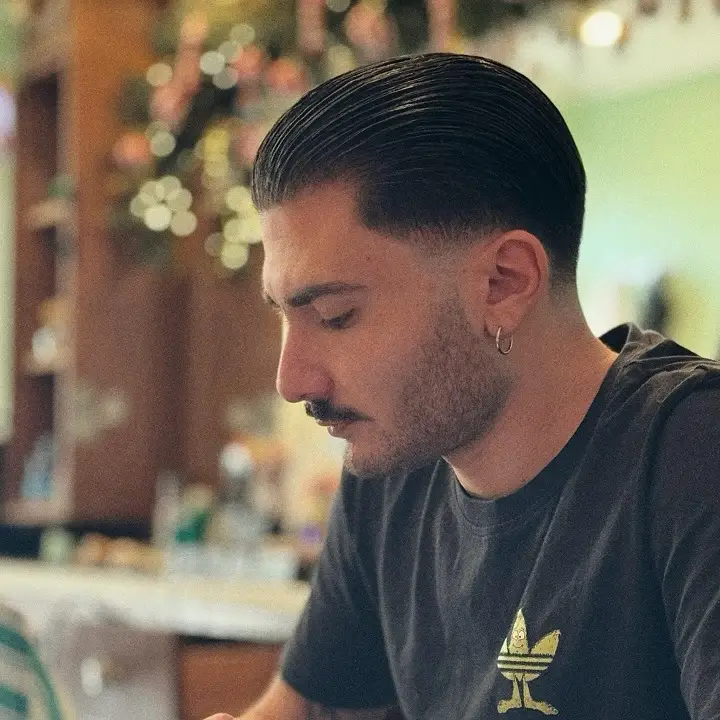
No part line. No texture. Just thick dark hair pulled straight back and laid flat against the head with a shine you can see from across the room.
What separates this from the shorter versions above is the disconnection. The sides are tapered close and stop abruptly, while the top keeps its full length and sweeps well past the crown.
There is no blend between the two, and that hard change of length is what gives the shape its edge.
Thick, straight, dark hair is doing a lot of the work. On finer hair the same product amount would look flat and greasy instead of glossy.
Amount matters more than brand. Start with a pea sized scoop of high shine pomade, add more only if the ends still lift. Too much is the difference between polished and oily.
Start at the hairline and comb back in long strokes, so the roots set the direction first.
Emulsify the pomade fully in your palms before it touches your hair. Clumps of product cause the greasy patches.
Wash with a clarifying shampoo once a week to clear buildup from daily high shine product.
Loading product into dry hair. It sits on the surface and never coats the strand evenly.
Trying this on fine or thinning hair, where flat and shiny will show scalp instead of hiding it.
Letting the sides grow out. The disconnection only reads sharp when the taper stays tight.
9. The Long Slick Back with Tapered Temples
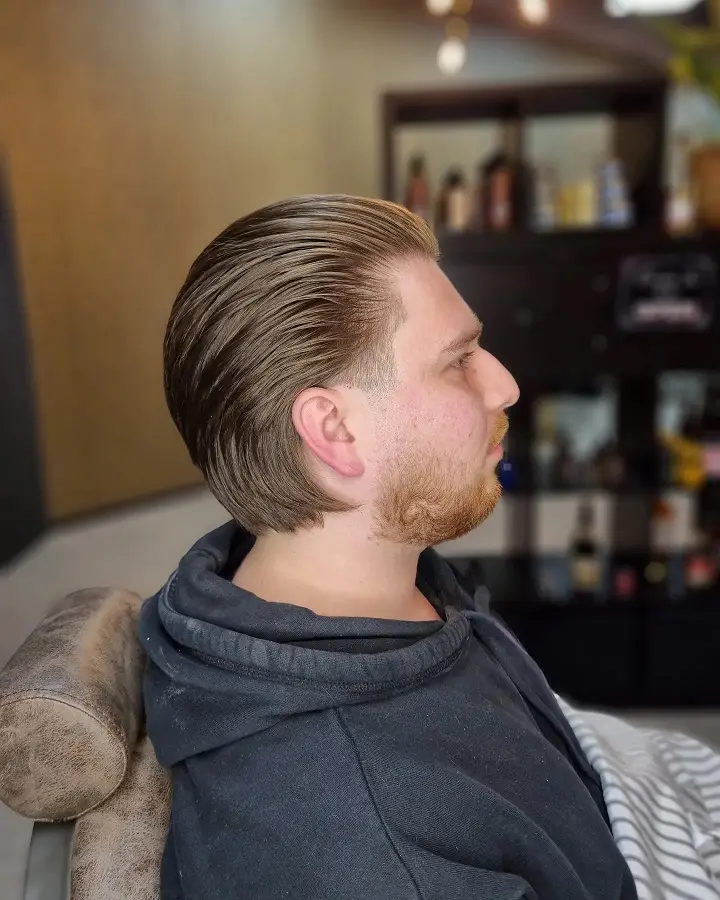
Length at the back, tight at the temples. That combination is what keeps this from reading as simply unbrushed long hair.
Look closely at the sideburn area. It has been tapered short and tucked in behind the ear, which removes the bulk that usually makes long slicked hair puff out sideways.
Everything above that line is left long and combed back into a rounded shape that finishes just below the collar.
You can see the comb tracks running through it, so a medium hold product went in on damp hair and stayed there.
This one takes commitment. You are looking at roughly six to nine months of growing out, and the awkward middle phase where the hair sits on your ears is real. A hat and patience get you through it.
What to ask your barber for
10. The Textured Spiky Slick Back on Short Hair
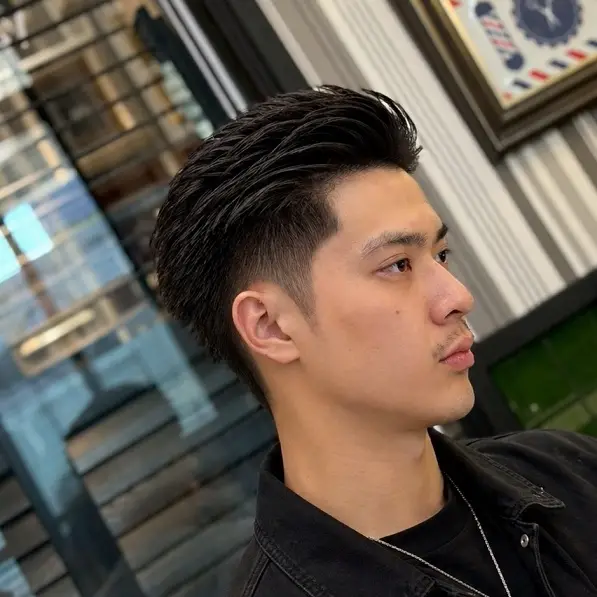
Slicking back does not require long hair. This cut proves it with maybe three inches on top, pushed backward and separated into visible spikes rather than smoothed into a sheet.
The sides use a low fade that stays soft, blending into short sideburns without a hard line. Straight, coarse hair holds this shape naturally, which is why the spikes stand up without much help.
The finish is matte. No shine, no wet look, just dry texture with clear separation between the pieces.
Best part for most guys: it grows out well. At this length you can push a week or two past your usual appointment and it still looks deliberate.
For the styling, work matte clay through dry hair with your fingertips, pushing back and slightly up. Skip the comb entirely, since a comb is what removes the separation you want.
11. The Loose Wavy Slick Back with a Soft Taper
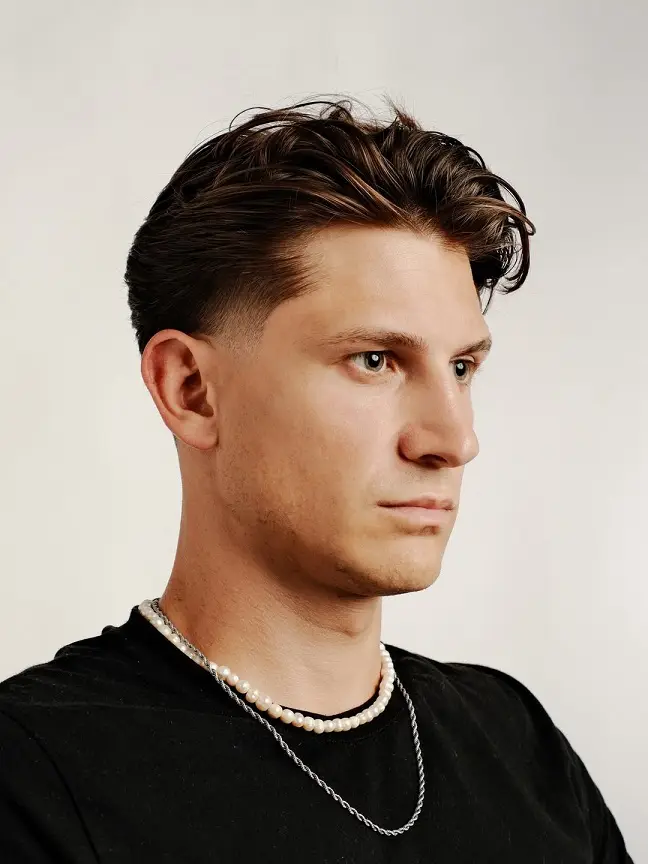
Some mornings you have four minutes. This is the style for those mornings, and it still looks intentional from the front, which is the angle everyone actually sees you from.
Everything is swept off the forehead in one loose motion, but a section of wave has been left to fall forward near the temple.
That falling piece is the trick. It softens the whole shape and keeps the style from looking like you tried too hard.
The sides are tapered short and tight around the ear, which frames the face and gives the loose top something clean to sit against. No fade lines, no shaved parts.
There is almost no shine in the finish, which suits guys who want a slicked back shape without looking greasy at the office.
💡 Quick Tip
Style this one on hair that is about 80 percent dry. Soaking wet hair goes flat and fully dry hair will not move. Rake a light styling cream through with your fingers, push everything back, then pull one section forward at the temple on purpose. Placing that loose piece yourself looks better than hoping it falls right.
12. The Classic Slick Back
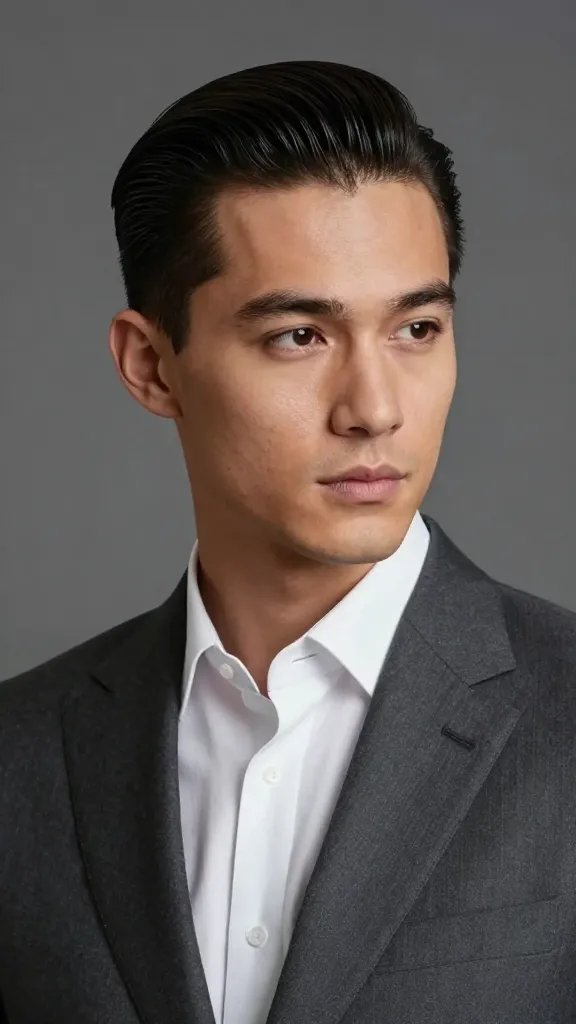
The one every barber knows by name. No fade, no hard part, no shine gimmick, just hair combed straight back and kept neat at the sides.
Medium length on top does the work here, roughly three to five inches. Anything shorter will not reach the crown, and anything longer starts asking for a different style entirely.
The sides get scissor cut rather than clipped, which leaves a soft edge instead of a hard line.
Water based pomade on damp hair, comb back from the hairline, then smooth the top with your palm. That last palm pass is what takes it from stiff to natural.
It suits interviews, first dates, and any day where looking like you made an effort matters more than looking like you made a statement.
13. The Glossed Side Part Slick Back with a Mid Fade
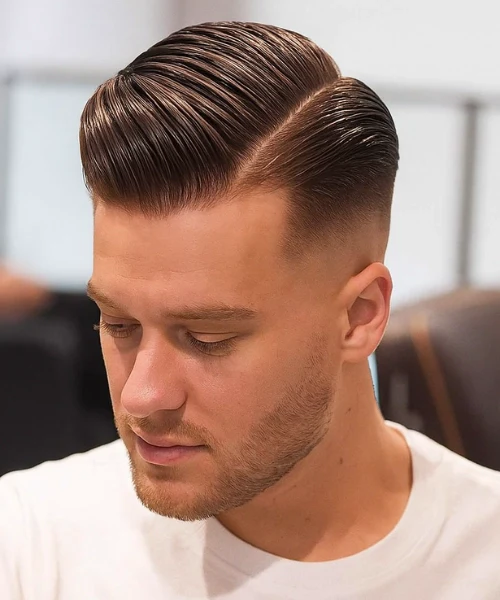
Wet look shine, thick hair, and a part that has been combed rather than shaved. That last detail is what makes this version wearable for guys who want polish without a razor line on their scalp.
The part sits where the hair naturally wants to split, which is why it looks so clean. Find yours by pushing damp hair straight back with your palm, then running a comb down from the crown until it drops into a groove on its own.
Everything behind the part sweeps back and slightly out, building a rounded shape over the crown. The sides drop into a mid fade that starts around the temple and stays soft.
The gloss here comes from applying product on wet hair, not damp. Wet hair spreads pomade further and dries into that hard shine, though you lose some volume in exchange.
Find your natural part with a comb before any product goes in. Fighting it is why side parts drift by noon.
Work high shine pomade through soaking wet hair so it coats every strand evenly.
Comb the small side across first, then sweep the larger section back and away from it.
Let it air dry for ten minutes without touching it. That is when the shine sets hard.
14. The Slick Back Pompadour with a Low Drop Fade
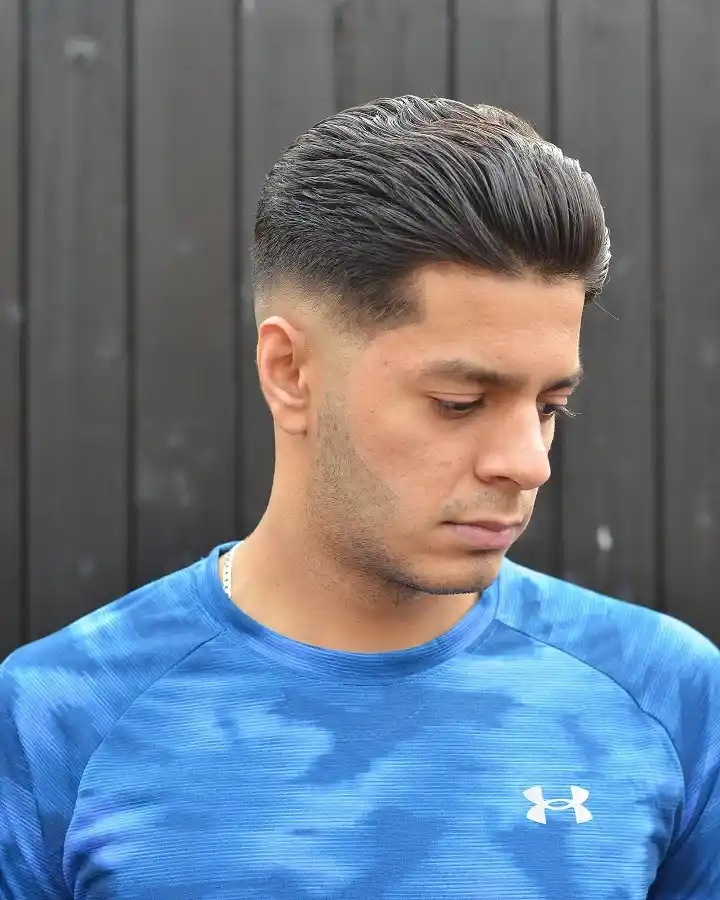
Height at the front, sweep at the back. This sits between two classic shapes and borrows the best part of each, which is why it suits guys who find a flat slick back too severe.
The front section is lifted and rolled upward before it travels back, creating a soft mound above the forehead instead of a hard pompadour wall. Behind that, the hair lies down and runs to the crown in one direction.
The fade drops low behind the ear and blends into short stubble on the sides, keeping the focus on the height up top.
Round or square faces get the most from this. The extra vertical inch stretches the face and gives the jaw more definition.
15. The Natural Finish Slick Back on Thick Dark Hair
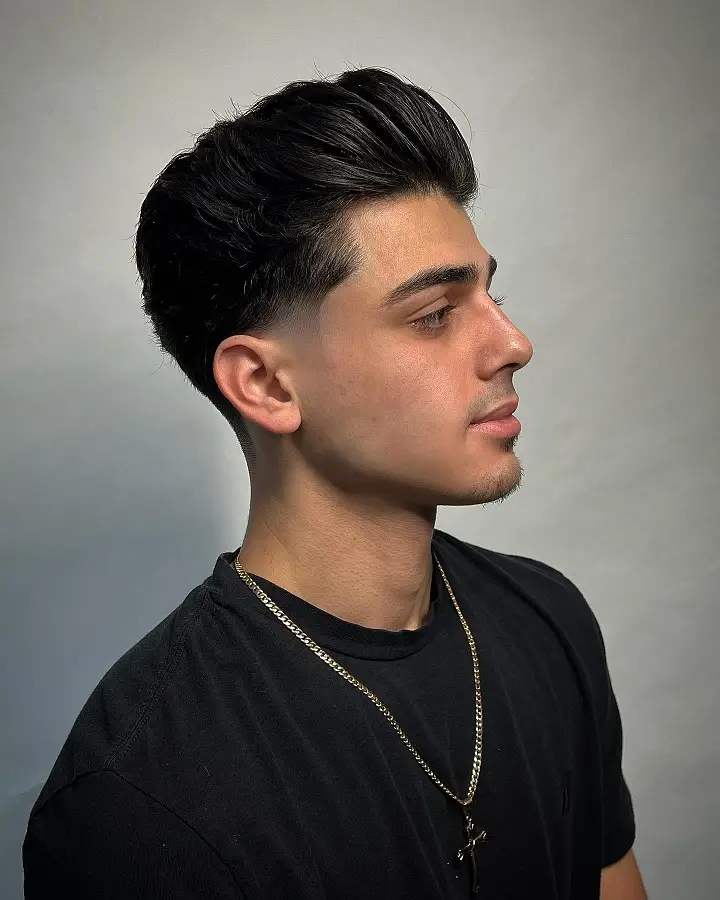
Zero shine. That is unusual on a list like this, and it is what makes this one work for guys who hate the polished look but still want their hair off their face.
Thick dark hair with a slight wave has been swept back and left to hold its own shape.
You can see individual strands and a soft ridge where the crown lifts, which is what stops it flattening against the head.
Around the ear, a low taper fade keeps the sides close so the length on top reads as intentional rather than overgrown. The taper runs down the neck too, which is a detail most people miss.
📌 Good To Know
Thick hair usually needs weight removing from underneath, not off the top. Ask your barber to thin the interior while keeping the surface length. You get the same sweep without the hair puffing out at the sides by day two.
The move here is a matte paste worked through with your fingers only. One pass backward, then leave it alone.
16. The Classic All Back Slick with No Fade
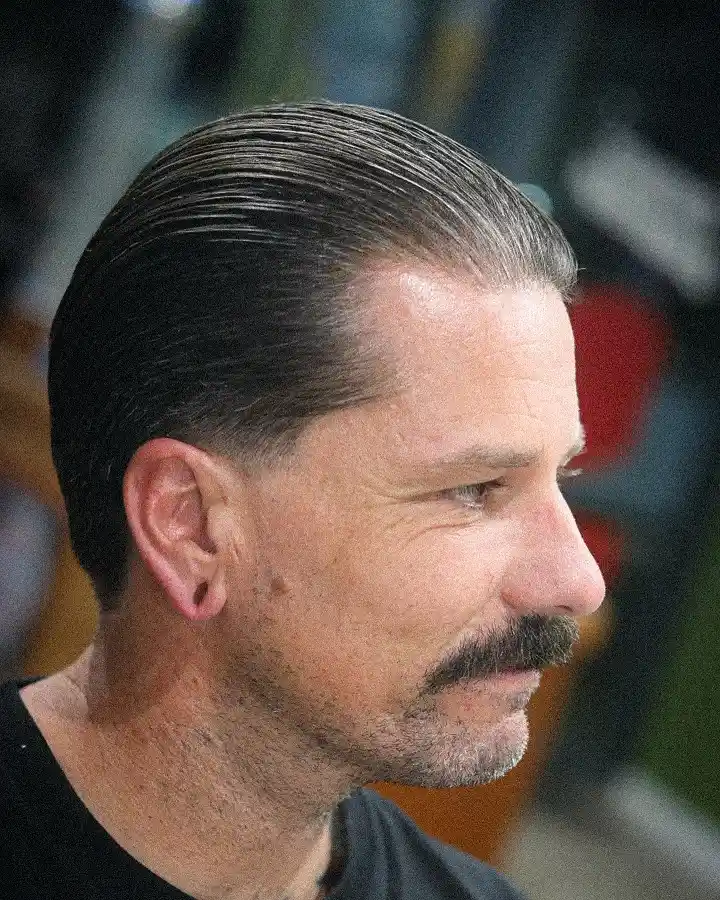
Old school in the best sense. Hair combed straight back from the forehead, sides left long enough to lie flat behind the ear, and no fade or taper line anywhere on the head.
Two things make this survive a high hairline. The hair travels back in a single sheet rather than being parted, so there is nothing drawing a line across the thinning area, and the length carries far enough back to keep the coverage even.
So how does it compare with a faded version?
| Classic All Back, No Fade | Faded Slick Back |
|---|---|
| Trim every 6 to 8 weeks | Barber visit every 2 to 3 weeks |
| Softer, more mature look | Sharper, more modern contrast |
| Forgiving on a receding hairline | Exposes the temples more |
| Grey blends in naturally at the temples | Grey shows as a sharp edge against the fade |
A trimmed mustache and light stubble finish it off without competing with the hair.
17. The Office Ready Slick Back for Fine Blonde Hair
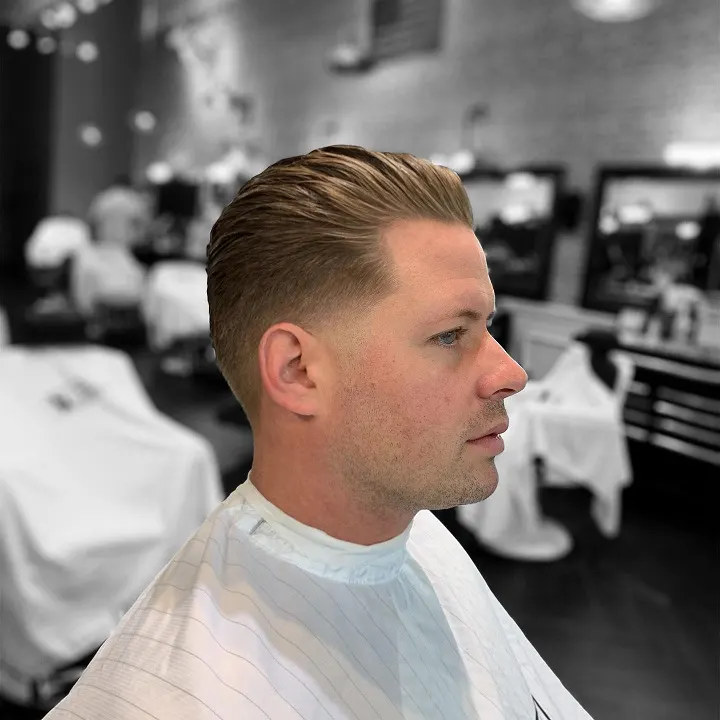
Fine hair is the hardest type to slick back, because the weight of most products drags it flat against the scalp and shows every gap. This cut solves that by staying short and keeping the shape low.
Notice how the top is only moderately long. Roughly two to three inches, swept back with a slight lift at the front and no attempt at height or gloss. Less hair means less to weigh down.
The sides use a taper fade that stays short around the ear without going to skin, so the contrast between top and sides is gentle.
On fine hair, a harsh skin fade would only highlight how little density there is above it.
Blonde hair also hides shine poorly, so a matte or low shine product is the safer pick every time.
On fine hair, shorter always looks thicker than longer. Cutting the top down and skipping heavy shine keeps the hair standing away from the scalp, which is what creates the look of density.
18. The Voluminous Blowout Slick Back
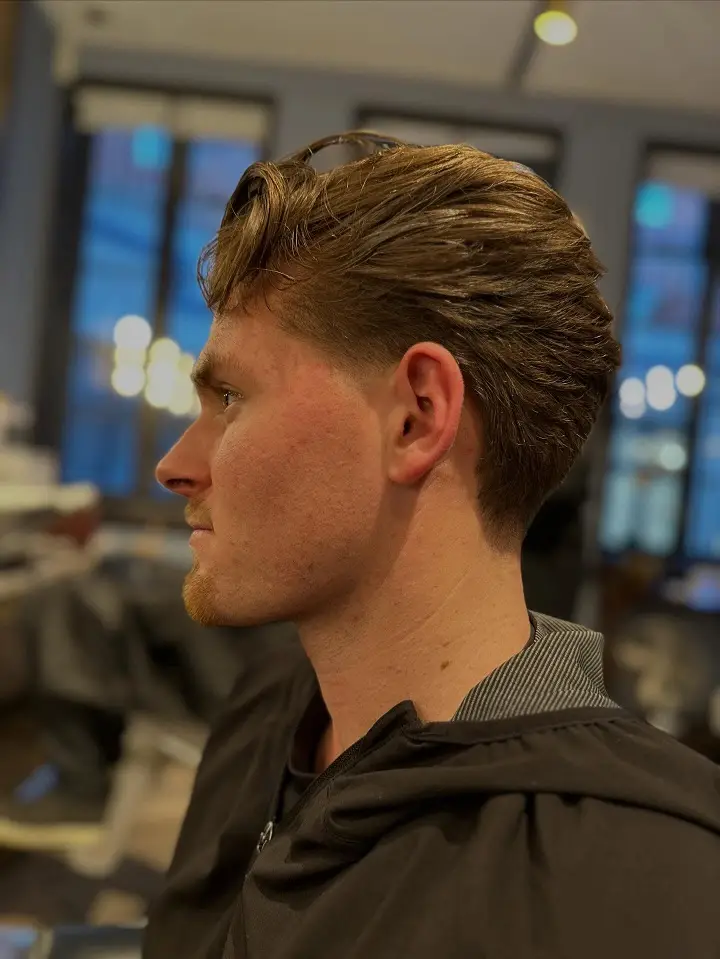
Thick wavy hair fights a flat finish, so this cut leans into that instead of fighting back.
The top is swept backward but lifted at the root, which builds height across the crown and lets the ends flick out slightly at the back.
The sides tell you what to ask for. A low taper sits behind the ear and stops well short of skin, leaving enough weight that the hair curls over the top of the ear. Nothing is buzzed. It is a soft cut all the way round.
Getting the lift is a blow dryer job, not a product job. Dry the front section backward while pulling upward with a vent brush, then set it with a light cream once the hair is nearly dry.
Firm pomade would flatten everything you just built.
Best on medium to thick hair with a natural wave. Fine hair will not hold this shape past lunchtime.
Height at the roots makes your face look longer and your jaw look stronger. That is why a slick back with lift flatters round and square faces far better than one combed flat to the skull.
19. Slicked Back With Hard Part
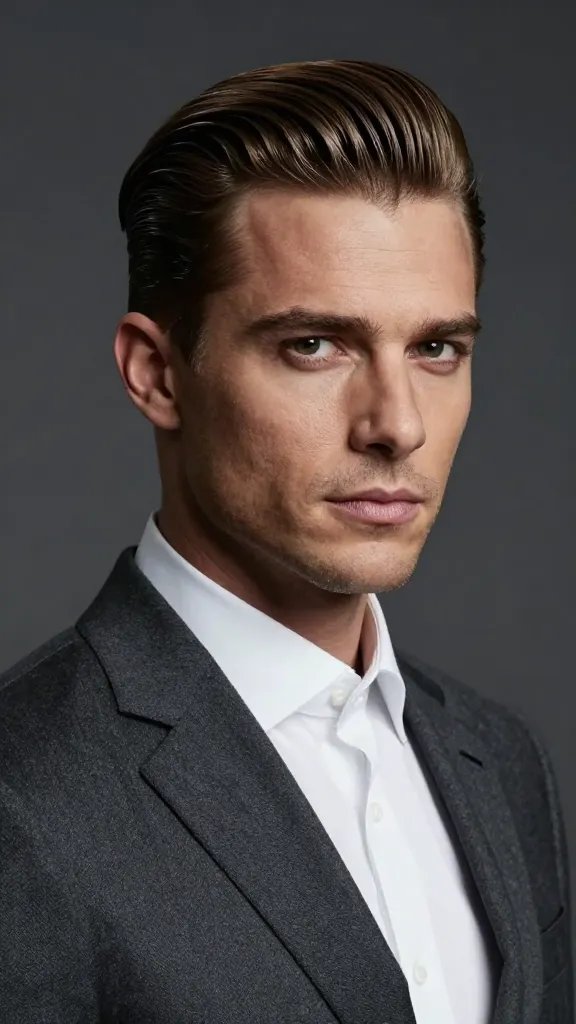
The line is drawn with a razor, not a comb, and that is exactly why it holds all day while a combed part slides around by noon.
Placement is the part most guys get wrong. It belongs where your hair already splits, not where you think it looks best. Push wet hair back with your palm and watch where it breaks on its own.
That groove is your line, and a barber cutting somewhere else will fight your growth pattern every morning.
Once the line is in, the styling is almost too simple. Medium hold pomade, guide the hair back and slightly across from the part, one clean comb pass. Stop there.
Over combing flattens the ridge either side of the line and the whole effect disappears.
Grown out, the line goes fuzzy after about ten days, so this is a style with a visit built into it.
Before you commit to a hard part
20. Textured Slick Back
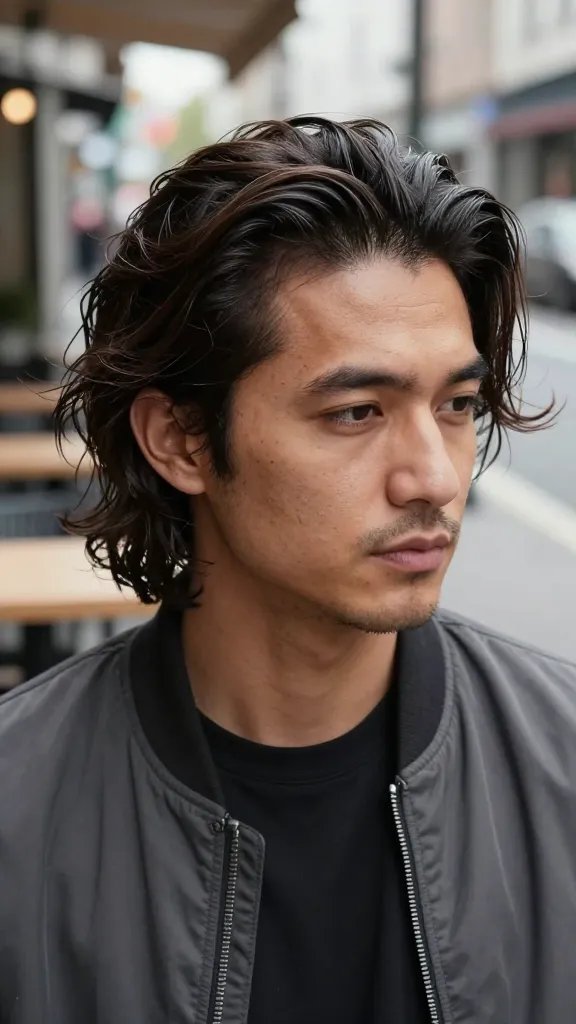
Glassy shine is not for everyone. Some guys want the direction of a slicked back style without looking like they just stepped out of a pool, and texture is how you get there.
The difference is entirely in the product. Clay and fiber grip the hair without coating it, so strands stay visible and separated instead of merging into one smooth sheet. You end up with a piecey, slightly rough finish that moves when you do.
Where it shines is on wavy or thick hair, the two types that resist lying flat anyway. Instead of forcing them down with heavy pomade, you let the natural bend show and simply point it backward.
Blow dry first with a sea salt spray for lift, then rub clay between your palms until it warms and work it back with your fingers.
Fingers only. A comb will smooth out the texture you just spent five minutes building.
21. Slicked Back Quiff
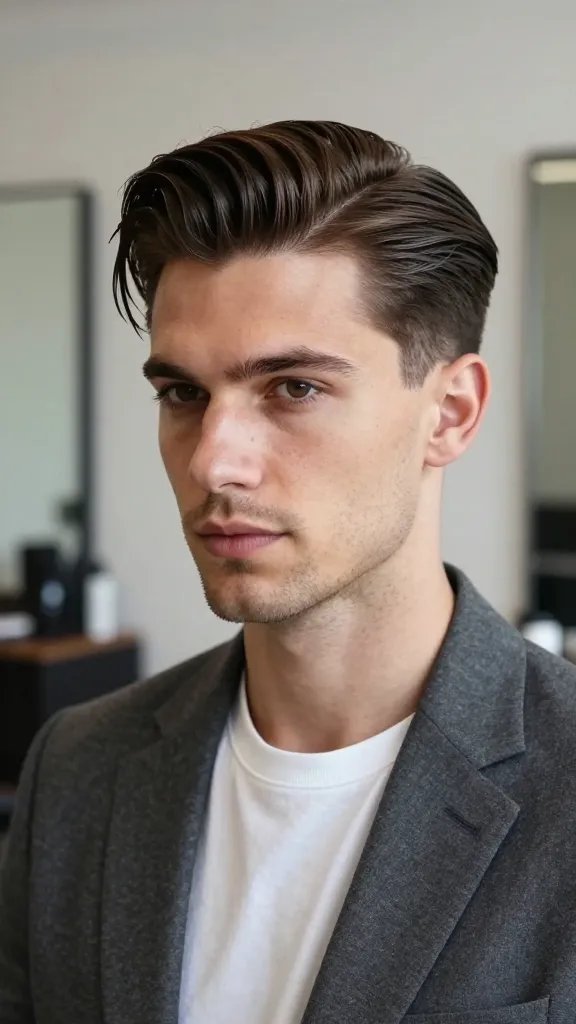
Sitting between a flat slick back and a full pompadour, the quiff lifts the front and lets everything behind it lie down. Less height than a pomp, more presence than a straight comb back.
The build order matters more than the products:
Blow dry the front upward with a round brush while the hair is still quite damp. This is the only step that creates real height.
Hit the roots with cool air for ten seconds to lock the lift before it drops.
Work medium hold mousse through the front section, then a small dab of pomade over the top for control.
Comb the sides back, then break up the quiff with your fingertips so it does not look moulded.
Three inches at the front is the minimum. Below that the hair will not stand on its own no matter how much product you load in.
22. Slicked Back With Taper Fade
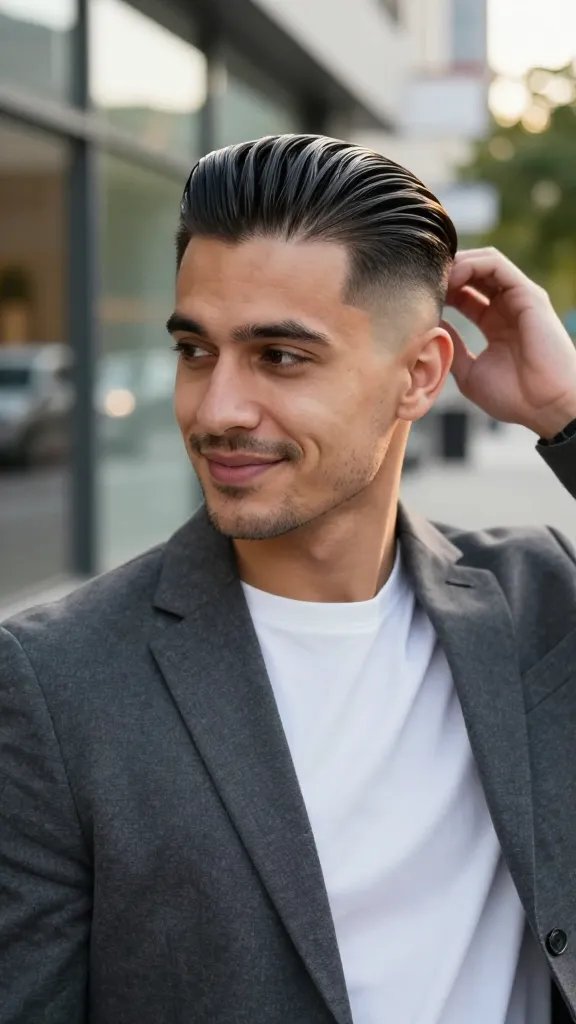
The daily driver of this list. Nothing dramatic happening, which is exactly why it works five days a week.
A taper fade keeps the sides and neckline short without going to skin, so the cut ages well between appointments. That single difference is worth understanding before you book anything:
| Taper Fade | Skin Fade |
|---|---|
| Grows out evenly, still looks tidy at week five | Shows a fuzzy line within 10 days |
| Softer contrast, easier in conservative offices | High contrast, reads bolder |
| Leaves weight at the sides, kinder to thin hair | Removes weight, best on dense hair |
| Suits almost every face shape | Can widen a round face |
Style it with a light cream instead of pomade so you can restyle at lunchtime with damp hands. Push a little volume into the crown as you comb back, and it holds shape under a cap too.
23. Slicked Back For Curly And Wavy Hair
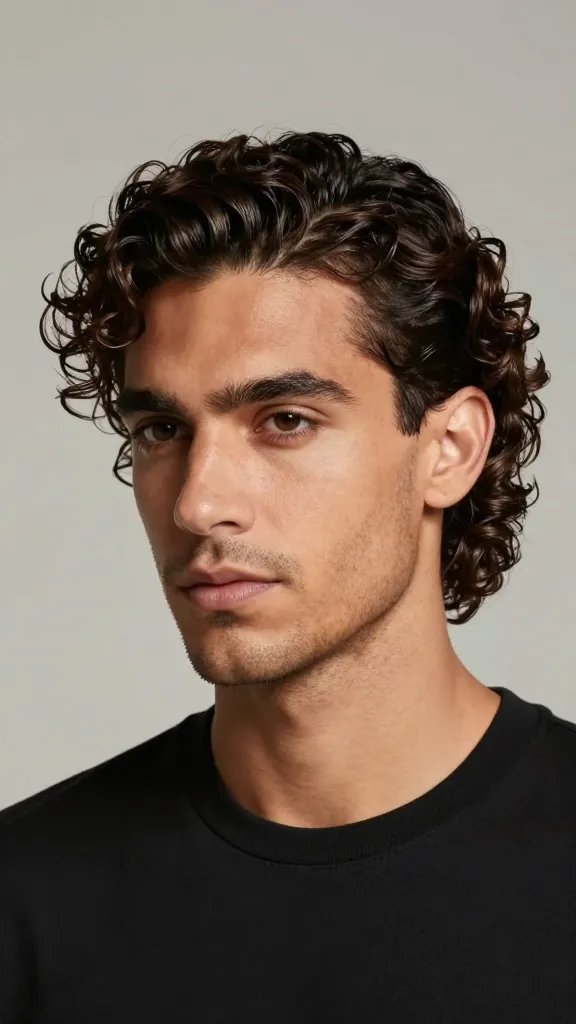
Curls do not need straightening to go back. They need direction, and there is a real difference between the two.
Start on soaking wet hair with a curl cream or leave in conditioner, because dry curls will not take direction at all.
Rake it through with your fingers, pushing everything away from the forehead, then follow with a medium hold gel to set the shape.
Air dry or use a diffuser on low. Once the hair is fully dry, rub a drop of light oil between your palms and scrunch gently to break the gel cast.
That last step is the one people skip, and skipping it is why gelled curls look crunchy.
The result keeps definition and shine in the curl while the overall shape reads clean and backward. You are not hiding the texture, you are aiming it.
Apply everything to soaking wet hair. Curls only take direction while they are heavy with water.
Keep some length at the back so the curls have weight to hold them down.
Break the gel cast with oil once dry, so the finish looks soft instead of hard.
Brushing curls back while dry. You get frizz and lose the curl pattern completely.
Heavy wax or clay, which weighs curls down into a shapeless mass.
Expecting it to lie flat. Curly slicked back has volume built in, and that is the point.
24. Slicked Back Pompadour
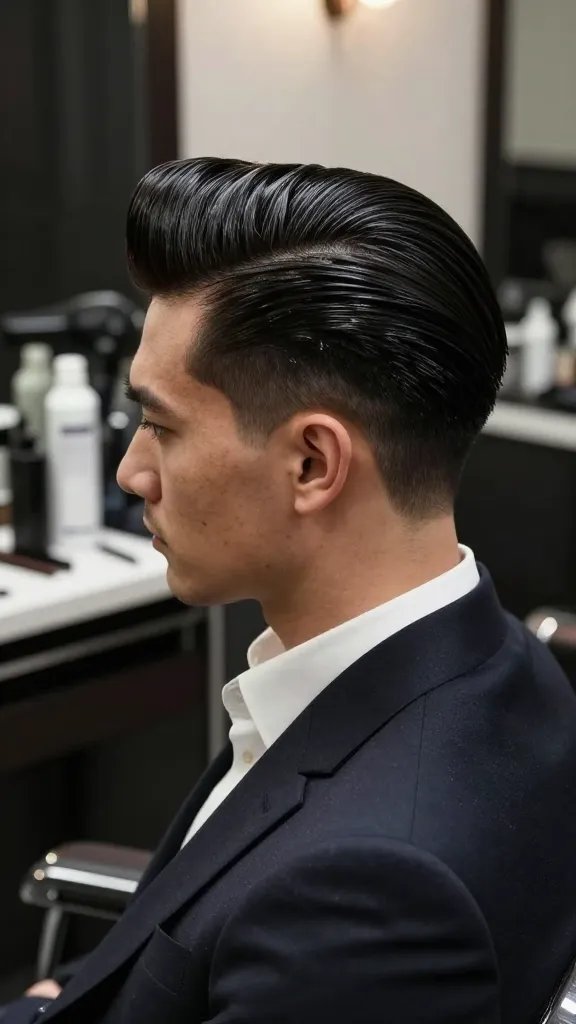
More height, more shape, more of a statement. The pomp pulls hair up and forward at the front, rolls it over, then sends it back into a tight slick behind the crown.
That roll is what separates it from a quiff. A quiff lifts and sweeps. A pompadour curves the front section over itself, creating a rounded wall above the forehead that keeps its shape from every angle.
Pomade goes straight onto damp hair, hair gets combed up, and the front collapses within the hour.
The shape ends up flat on one side because it was never dried into position first.
Volumizing spray, then blow dry up and back until the front stands on its own with no product in it.
Strong hold pomade added last, sculpted with a fine tooth comb, then pinched at the front to set the roll.
You need four inches at the front minimum, and thick hair makes it far easier. Save it for weddings and events rather than the school run.
25. Slick Back With Beard Balance
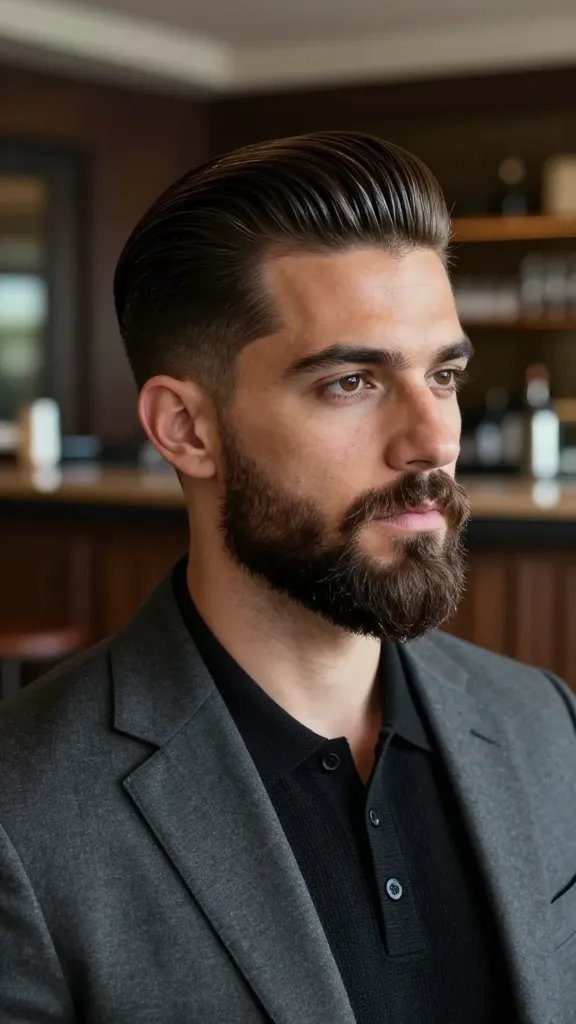
Two grooming choices, one face. When the polish levels match, the whole look holds together. When they clash, something looks off even if you cannot say what.
The rule is simple. Matte hair pairs with a natural, softer beard. High shine hair pairs with a beard that has crisp lines along the cheek and neck.
Glossy hair above a wild beard reads as half finished, and a razor sharp beard under dry, textured hair looks like two different days.
Sideburns are the join between them. Ask your barber to blend the sideburn into both the fade and the beard, so there is no visible step where one ends and the other starts.
💡 Quick Tip
Beard length should roughly match the length on top. Short hair with a long beard makes the face look bottom heavy, and long hair with stubble makes it look top heavy. Keep them within a couple of inches of each other and the balance takes care of itself.
A few drops of beard oil at the end stops the beard looking dry next to the polish above it.
26. The Textured Wet Look Slick Back with a Low Taper
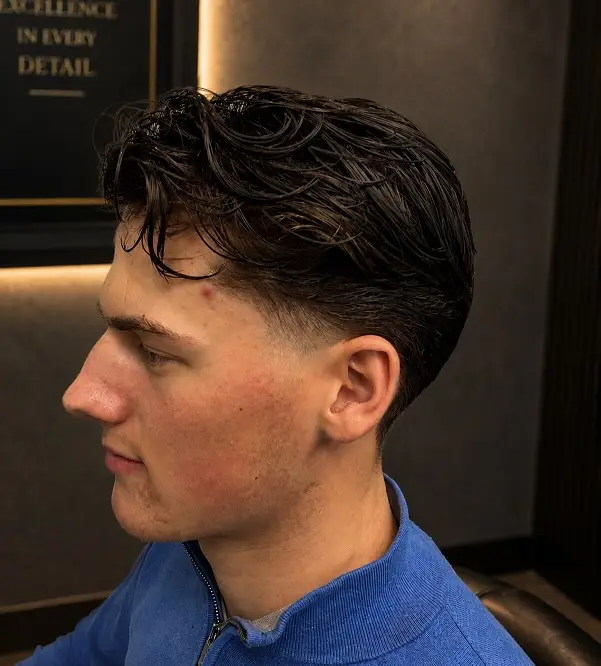
Not every slick back needs to lie flat. This one keeps the wave and lets a few loose pieces break over the forehead, which is what stops it looking stiff.
Here is what is actually going on in the cut. The sides drop into a low taper that stays soft near the ear instead of going bare, so the weight on top still reads as a full head of hair.
The length up front looks close to four inches, which is the minimum you need before hair will hold a backward sweep without springing forward.
Product choice matters more than technique here. A wet look pomade or a strong gel gives you that glossy separation between strands.
Apply it to damp hair, comb straight back, then break up the front with your fingers so it does not look painted on.
Worth knowing: this style suits wavy or slightly curly hair better than poker straight hair, because the natural bend gives the texture something to hold onto.

