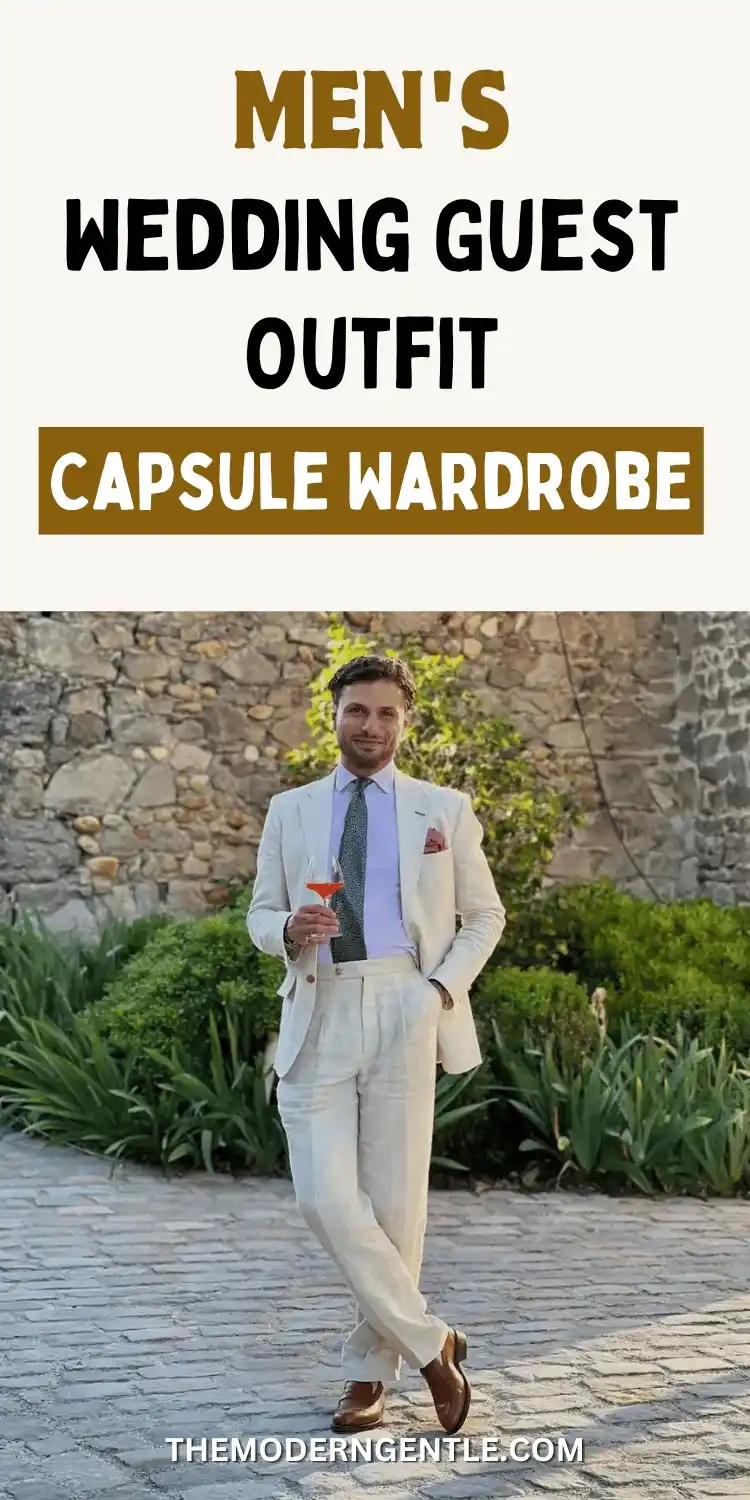
Men’s Wedding Guest Outfit Capsule Wardrobe Pieces That Mix and Match

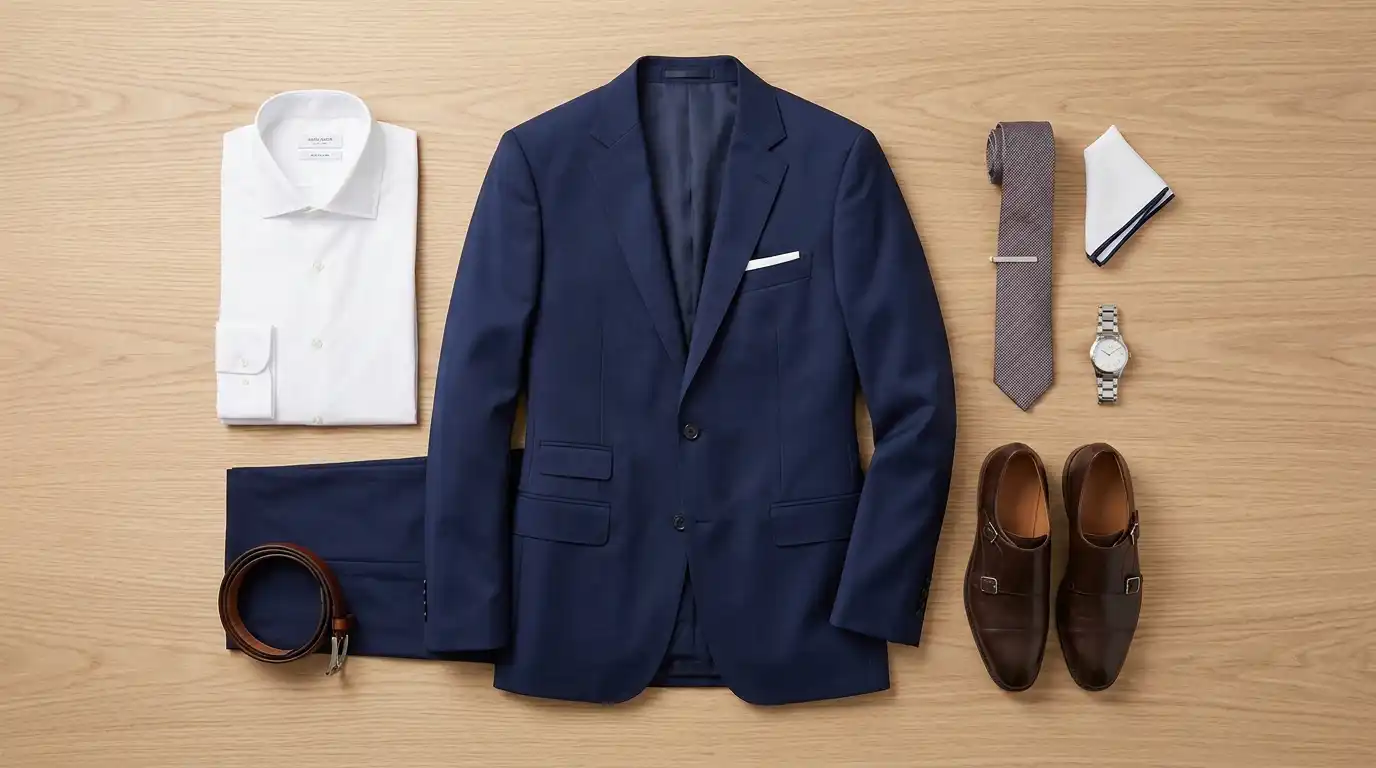
Your closet is full, but you still feel like you have nothing to wear to the next wedding.
Sound familiar? Most guys deal with the same problem every wedding season.
You get an invite, check the dress code, then panic buy something new because nothing in your closet quite fits the vibe.
Do this three or four times a year and you end up with a pile of clothes you wore once.
A men’s wedding guest outfit capsule wardrobe fixes this.
Instead of buying a new outfit for every wedding, you build a small set of pieces that mix and match into different looks.
One suit, a few shirts, two pairs of shoes, and some accessories can cover a casual backyard wedding, a semi formal dinner, and a black tie optional gala.
You buy less. You look better. And you stop stressing every time an invite shows up.
Here is how to build that capsule, piece by piece.
What Is a Wedding Guest Capsule Wardrobe (And Why It Works)
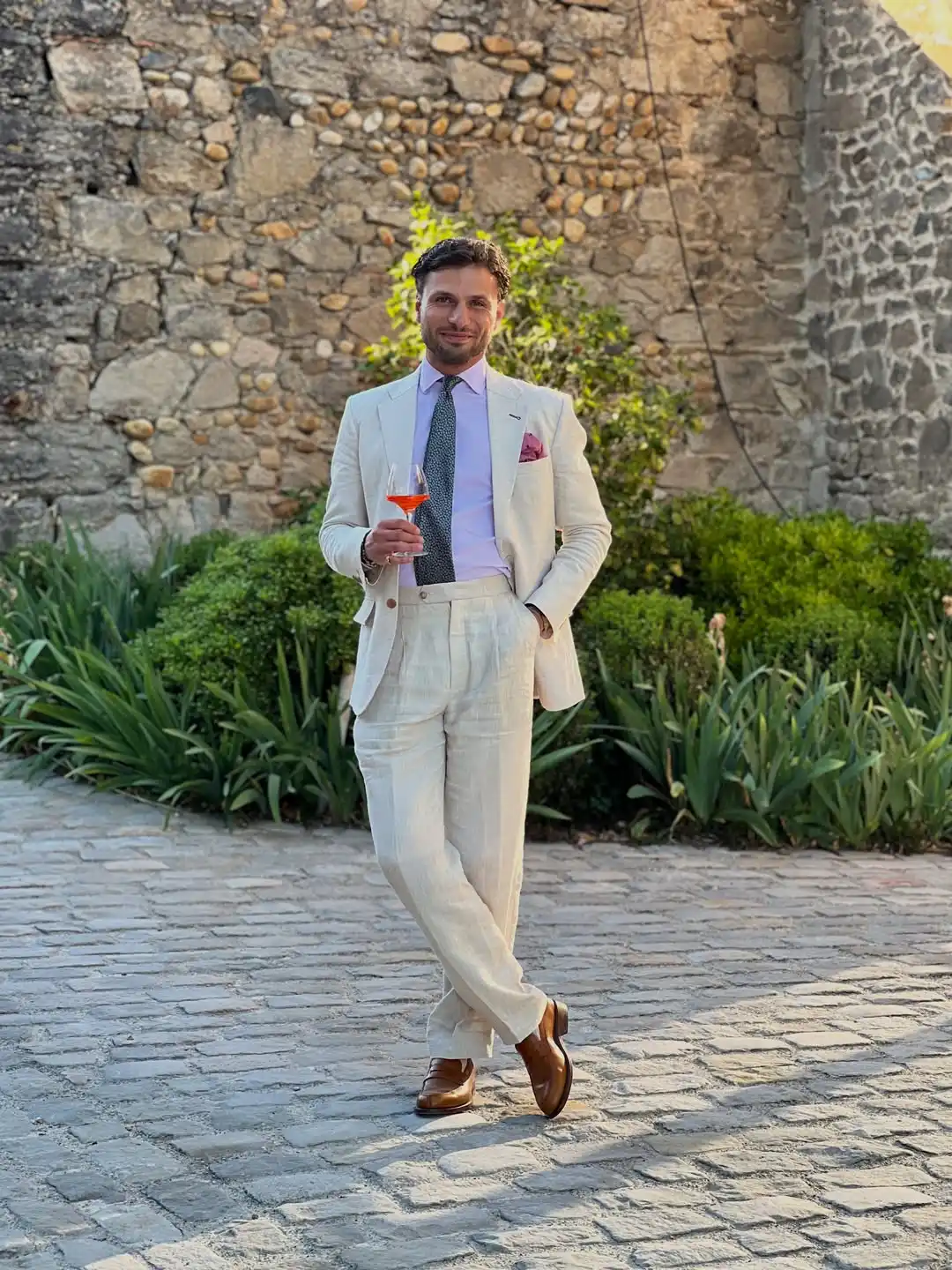
A capsule wardrobe is a small set of clothes that all work together.
Every piece pairs with several others. Nothing sits in your closet doing nothing.
For weddings, this means picking a handful of core items instead of buying a full outfit each time you get invited somewhere.
Fewer pieces. Better quality. More ways to wear them.
Here’s why that matters for your wallet too.
A higher priced item worn a hundred times costs less per wear than a cheap item you wear eight times before it falls apart.
Buy fewer things, but buy them well, and you save money over the long run.
There’s also a mental side to this.
A majority of millennial men now say quality matters more than brand name when they buy clothes.
That shift lines up with a bigger idea: fewer choices in your closet means fewer decisions in your morning.
Some well known figures built entire routines around this. They picked one look and stuck with it so they didn’t waste energy deciding what to wear.
You don’t need to go that far. But the same logic applies.
A tight capsule means you spend less time staring at your closet and more time actually getting ready. World Metrics
Once you understand why fewer pieces work better, the next question is how many you actually need.
How Many Pieces You Actually Need
Ten to twelve pieces is enough. That’s it. No walk in closet required.
Here’s the math that makes this work. Say you own two jackets, two pairs of trousers, and three shirts that all pair with each other.
That’s twelve different outfit combinations from just seven items. Add two pairs of shoes and a couple of ties, and you’re well past twenty looks.
This is the whole point of mixing and matching. You are not buying more clothes. You are buying clothes that talk to each other.
There’s an order to building this out, too.
Start with the big anchor pieces first: your suit, your main dress shirt, and your everyday dress shoe. These three items alone will get you through most weddings.
After that, add a second shirt and a second shoe option so you can shift between formal and casual.
Save the fun stuff, like a statement tie or a lapel pin, for last. Those pieces add personality, but they don’t hold the outfit together on their own.
Here’s exactly what those pieces are.
The Core Capsule Pieces
Every item below earns its spot because it pairs with several other pieces in the list. Nothing here is a one time outfit.
Suit and Blazer
Your suit is the anchor of every formal look you own.
- A navy suit. It works as a full suit, and the jacket and trousers also work apart, so you get two items out of one purchase.
- A charcoal or grey suit as a backup for winter weddings or stricter dress codes.
Navy stays the safe, sharp pick across nearly every season and setting, and it pairs with almost any shirt color you own.
Trousers
Bottoms give your outfits structure without stealing attention.
- One pair of neutral dress trousers that don’t exactly match your jacket. This lets you wear the jacket and trousers separately, which doubles your outfit options right away.
Shirts
Shirts do most of the visual work in any outfit, so pick these carefully.
- A crisp white dress shirt. This is your formal anchor and it goes with every suit color you own.
- A light blue or subtly patterned shirt for daytime or semi formal events.
- A knit polo or Oxford shirt for casual or outdoor weddings where a full suit feels like too much.
Knitwear
- A fine wool or merino rollneck sweater. Wear it under a blazer instead of a shirt and tie, and you get a totally different look from the same jacket.
Shoes
Shoes finish the outfit, and the right pair changes how formal you look without changing anything else.
- A black Oxford shoe for formal events.
- A brown or tan loafer for smart casual settings. With relaxed suits and wider trousers now common at weddings, the loafer has become one of the hardest working shoes in a man’s closet.
- A clean white leather sneaker for very casual weddings, like beach or barn venues, but only if the dress code allows it.
Accessories
Accessories are where you show personality without breaking the system.
- A silk tie and pocket square in matching or related colors.
- A belt that matches your shoe color.
- One statement piece, like a lapel pin. These have shown up on plenty of red carpets lately, worn by actors like Michael B. Jordan, Pedro Pascal, and Adrien Brody, and they’re an easy way to stand out without changing your whole outfit.
That’s the full list. Every piece earns its spot because it pairs with at least three others.
Matching Pieces to Dress Codes
The invitation says “semi formal.” Now what?
Good news: you don’t need new clothes for this. You just need to know which pieces from your capsule to combine.
- Casual weddings: Knit polo or Oxford shirt, no tie, loafers or clean sneakers if allowed. Skip the jacket entirely if it’s an outdoor daytime event.
- Semi formal weddings: Suit jacket with the neutral trousers (not a matched suit), light blue or patterned shirt, no tie needed but a pocket square helps.
- Black tie optional weddings: Full navy or charcoal suit, white dress shirt, tie, black Oxford shoes.
If the invite doesn’t say anything about dress code, look at the time and place instead.
An evening event at a nice hotel calls for more structure than an afternoon wedding at a park or backyard.
When in doubt, dress slightly sharper rather than slightly more casual.
The same ten to twelve pieces flex across all three of these. You are not buying new clothes for each event. You are recombining what you already own.
2026 Trends Worth Building Into Your Capsule

The pieces above are the foundation, and they don’t go out of style. But a few shifts happening right now are worth knowing about.
Suits are getting looser. Wider lapels, a slightly dropped shoulder, and a fuller cut through the leg are replacing the tight, slim fit suits from a few years back.
This cut is more comfortable and works well for outdoor or creative wedding venues.
Monochrome outfits are having a moment too.
Wearing one color family from head to toe, like all beige or all grey, but mixing textures such as a matte wool jacket with a silk shirt, creates a clean, put together look that photographs well.
Fabric choice still depends on the season.
Heavier wool works best for winter weddings, since it holds structure and keeps you warm.
Linen or light cotton is the better call for summer, since it breathes and won’t leave you soaked by the reception.
These trends should adjust how you style the pieces above. They shouldn’t replace the foundation.
Cost Per Wear: Why Fewer, Better Pieces Save Money
Here’s a simple formula: cost divided by number of wears equals cost per wear.
Say you buy a $300 wool sweater and wear it a hundred times over a few years.
That’s $3 per wear. Now say you buy a $30 sweater that pills and stretches out after eight wears.
That’s about $3.75 per wear. The expensive item is actually the cheaper choice, once you look at it this way.
This isn’t just a theory. Men in their late twenties and early thirties who buy fewer, higher quality pieces spend around $624 a year on about nine items, and they report being happier with how those clothes fit and last.
Compare that to men who buy the most items each year, around sixteen, but who report lower satisfaction with fit and durability because cheaper clothes wear out faster and get replaced more often.
Across the board, a majority of men now say they’d rather pay more for something that lasts than save money upfront on something that won’t.
This is the real reason a capsule saves you money over time. Not because you buy less. Because you buy smarter.
Conclusion
A men’s wedding guest outfit capsule wardrobe isn’t about owning fewer clothes just to be a minimalist.
It’s about owning ten to twelve pieces built to mix and match into different looks, so you’re covered no matter what the invitation says.
Before your next wedding invite lands in your inbox, go through your closet and check it against the list above.
Buy only what’s missing. You’ll spend less over the year, and you’ll stop standing in front of your closet feeling like you have nothing to wear.