How to Choose Shirt Lengths for Tall Men

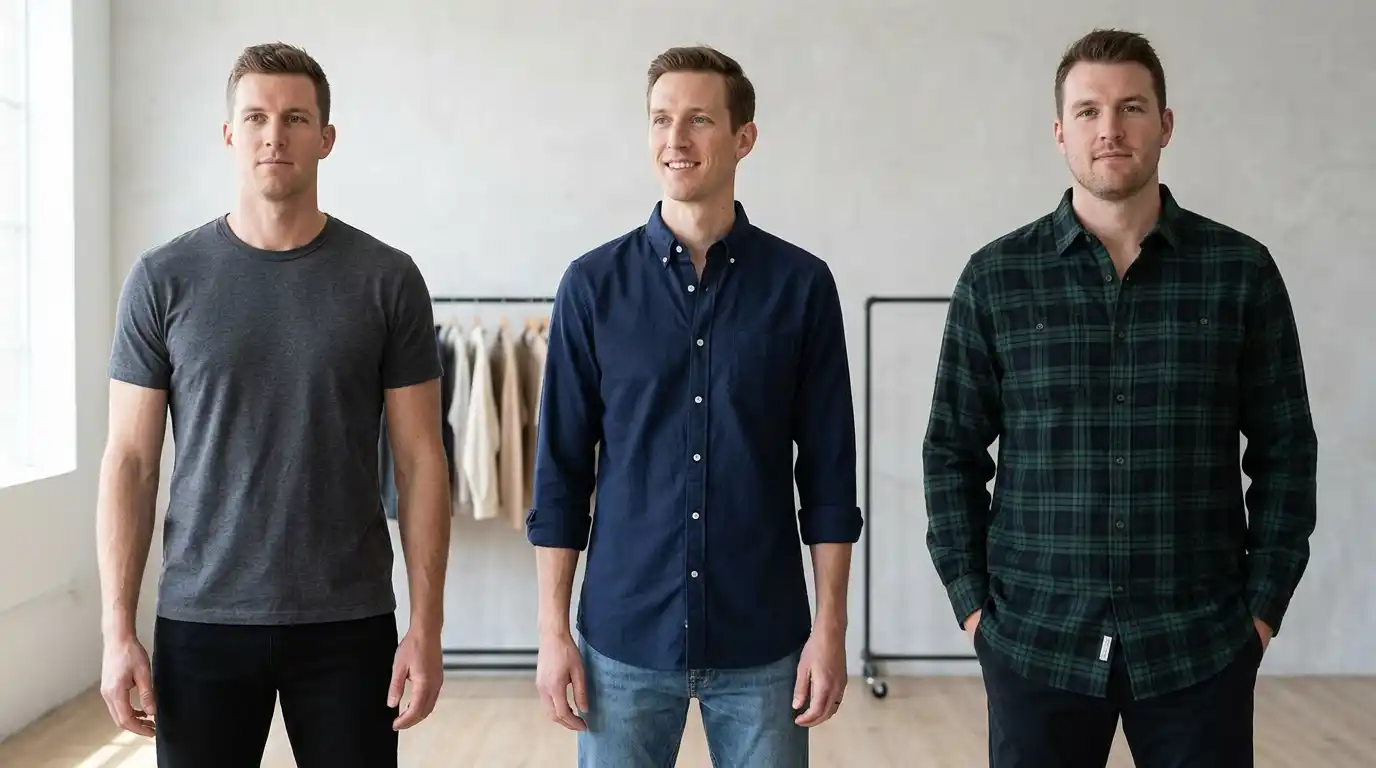
For tall men, buying a standard shirt is a massive gamble. A single reach for a top shelf can instantly turn an ordinary button-down into an accidental crop top.
The real problem is how traditional retail works. Standard off-the-rack sizing scales horizontally instead of vertically.
When tall guys buy an XL or XXL just to get the necessary length, they end up with a billowing, tent-like fit around the waist.
Worse, the shirt tail still risks slipping out of the waistband the moment you sit down.
You do not have to settle for clothes that do not fit your frame. This tall men shirt length guide provides concrete anatomical measurements and style rules.
You will learn exactly how to choose shirt lengths for tall men based on your unique proportions.
Here is how to find the best fitting shirts for tall men without the guesswork.
A Guide to Styling Different Tall Body Shapes
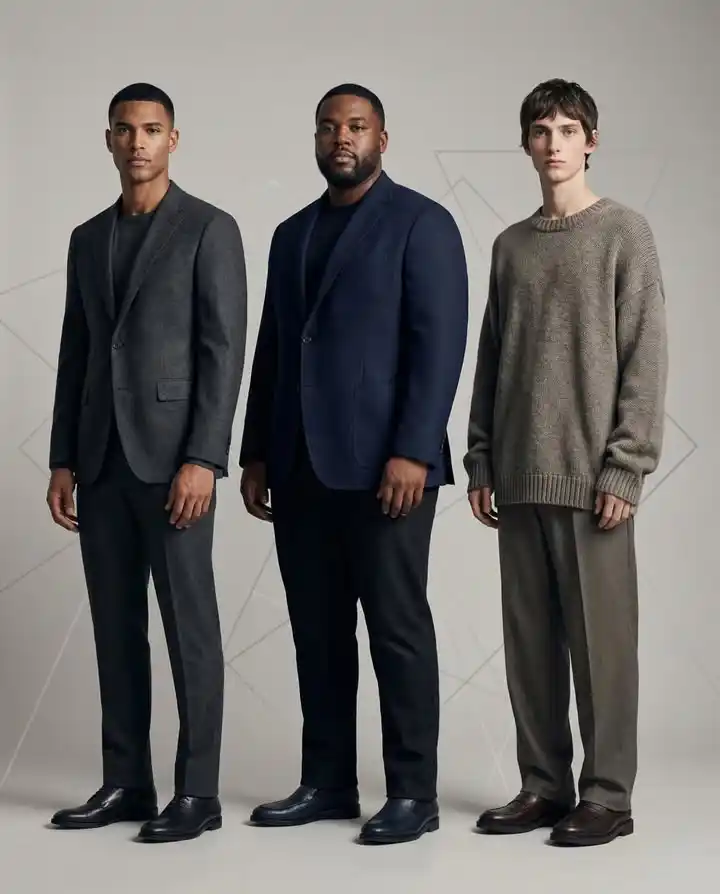
Height is a deceptive metric in menswear. You cannot buy a well-fitting shirt based on your total height alone.
Instead, your unique torso-to-inseam ratio dictates your vertical length requirements.
Every tall body is built differently. For example, two men can both stand 6 feet 4 inches tall but have completely different builds.
One guy might have a short torso and incredibly long legs. He can often wear standard lengths if he pairs them with long-rise pants.
The other guy might have a long torso and shorter legs. This body type absolutely requires specialized tall sizing to cover the midsection.
Standard shirt lengths usually work fine. Pair with long-rise pants for balance.
Needs specialized Tall sizing to fully cover the midsection — regular XL just adds width.
Data shows that traditional factory sizing systems completely ignore these vertical variations. Ready-to-wear garments are built for average body averages.
When a brand wants to make a shirt longer, they automatically make it wider too. This leaves taller individuals with a boxy, poorly scaled fit.
You must look at your upper body length as its own separate measurement.
Traditional brands assume that extra height means you need a wider torso, which is rarely true.
This mismatch creates the need for a modern, specialized fit guide built around your actual proportions.
Casual vs. Dress Shirts: The Hard Rules for Hemlines
Not all hemlines are engineered for the same purpose. A major styling mistake is wearing a shirt cut at the wrong length for its style.
Covers your belt fully, still leaves pant pockets accessible. Too long = your legs look short.
For casual shirts like T-shirts, polos, and untucked button-downs, follow the untucked shirt length for tall guys rule.
The hem should hit right at the mid-zip or mid-fly of your trousers.
This means the fabric covers your belt completely but still leaves your pant pockets accessible.
If the shirt covers your entire crotch, it is too long and makes your legs look short.
Dress shirts play by completely different rules because they are meant to stay tucked inside your pants.
A proper dress shirt requires an extra 2 to 3 inches of fabric with curved tails.
The hem must extend fully past your glutes. This extra material acts as an anchor below your hip line.
It stops the shirt from pulling out during daily movements like sitting or bending over.
Your shirt hem acts as a powerful visual anchor point. If an untucked shirt is too short, it ruins your silhouette balance and makes your torso look blocky.
If a dress shirt lacks length, it will inevitably bunch up at your waist throughout the day. Choosing the wrong length for either style completely ruins your presentation.
Stop Guessing: The 3-Step Home Measurement Guide
Stop guessing your size on retail apps. You can find your perfect fit in less than five minutes by measuring a shirt that already fits you well, or by measuring your own body.
Follow these three steps to get your baseline center-back length:
Keep fabric types in mind when looking at size charts online.
Shirts made from 100 percent cotton will shrink after a few trips through the laundry.
Synthetic blends hold their shape much better.
If you buy pure cotton, always add a half-inch to your target measurement to account for this shrinkage.
Write these exact numbers down and save them in your phone.
Having your specific center-back length ready makes online shopping fast and foolproof.
What to Look For: Smart Details in Specialty Tall Brands

When shopping for the best fitting shirts for tall men, look past the front design and inspect the construction. Mainstream brands are rarely built to handle long frames.
Always look for a dedicated “T” or “Tall” designation on the size tag. A Large Tall (LT) size is not just a regular Extra Large.
Dedicated tall sizes generally add 2 inches to the body length and 1.5 inches to the sleeve length.
Crucially, they do this without widening the chest or waist area. This keeps the silhouette clean and slim.
Check the fabric tag for performance blends before you buy. A little bit of stretch fabric gives you a better range of motion.
This prevents the hem from pulling upward whenever you move your arms.
Quick Reference: Garment Length Benchmarks
Summary: Upgrade Your Wardrobe with Precision Fits
Finding the right shirt length is not about guessing your size on a generic retail chart.
It is about matching the hemline of the garment to your actual anatomy and how you plan to wear it.
Do not spend another day pulling down short shirts or swimming in baggy fabrics.
Grab a flexible tape measure, map out your personal center-back length, and swap out bad mainstream fits for specialized tall options.
Your wardrobe will look better instantly.