Taper Fade Curly Hair — 15 Cuts That Actually Work on Curls

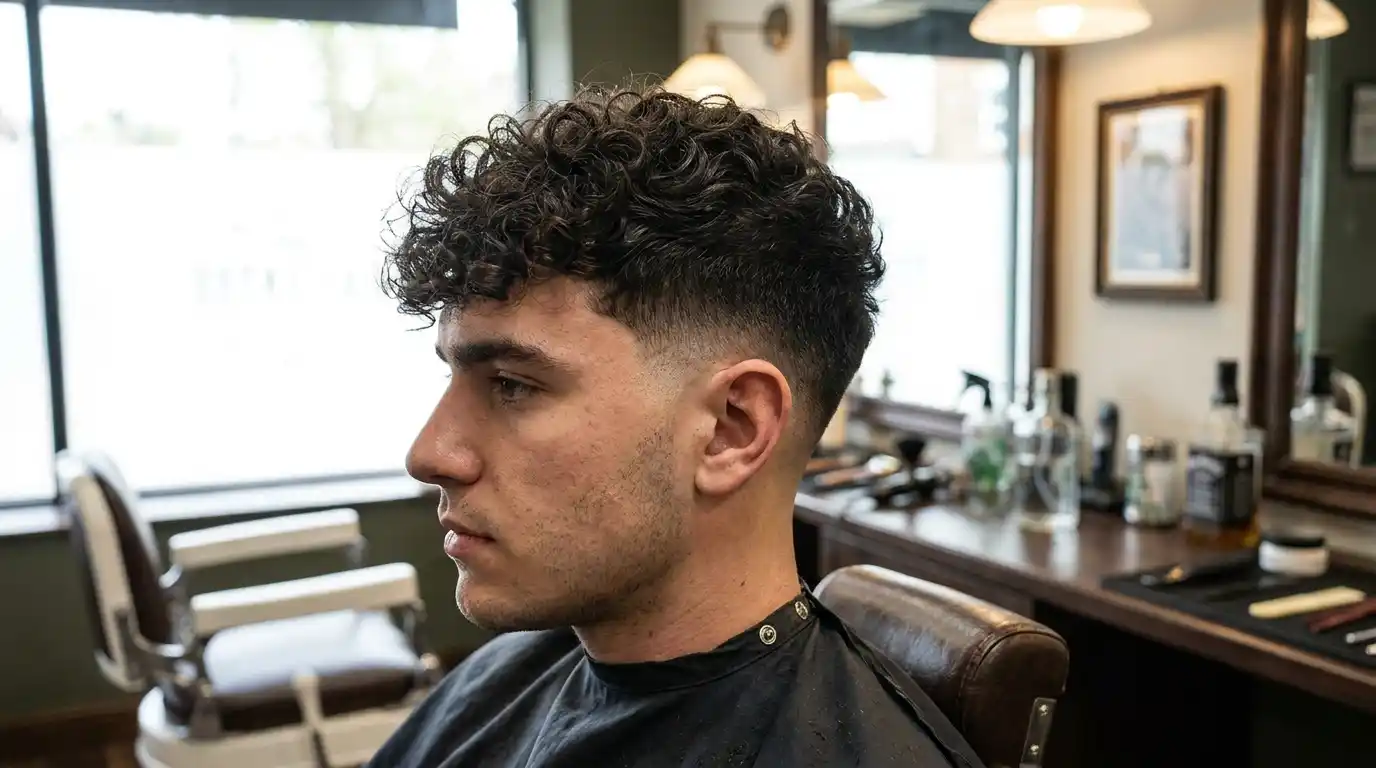
A lot of guys with curly hair steer clear of fades because they think all that contrast will wreck their curl definition. It does the opposite.
A good taper fade curly hair men can trust actually makes the curl on top look fuller and more defined, since the clean lines underneath give your eye something to compare it to.
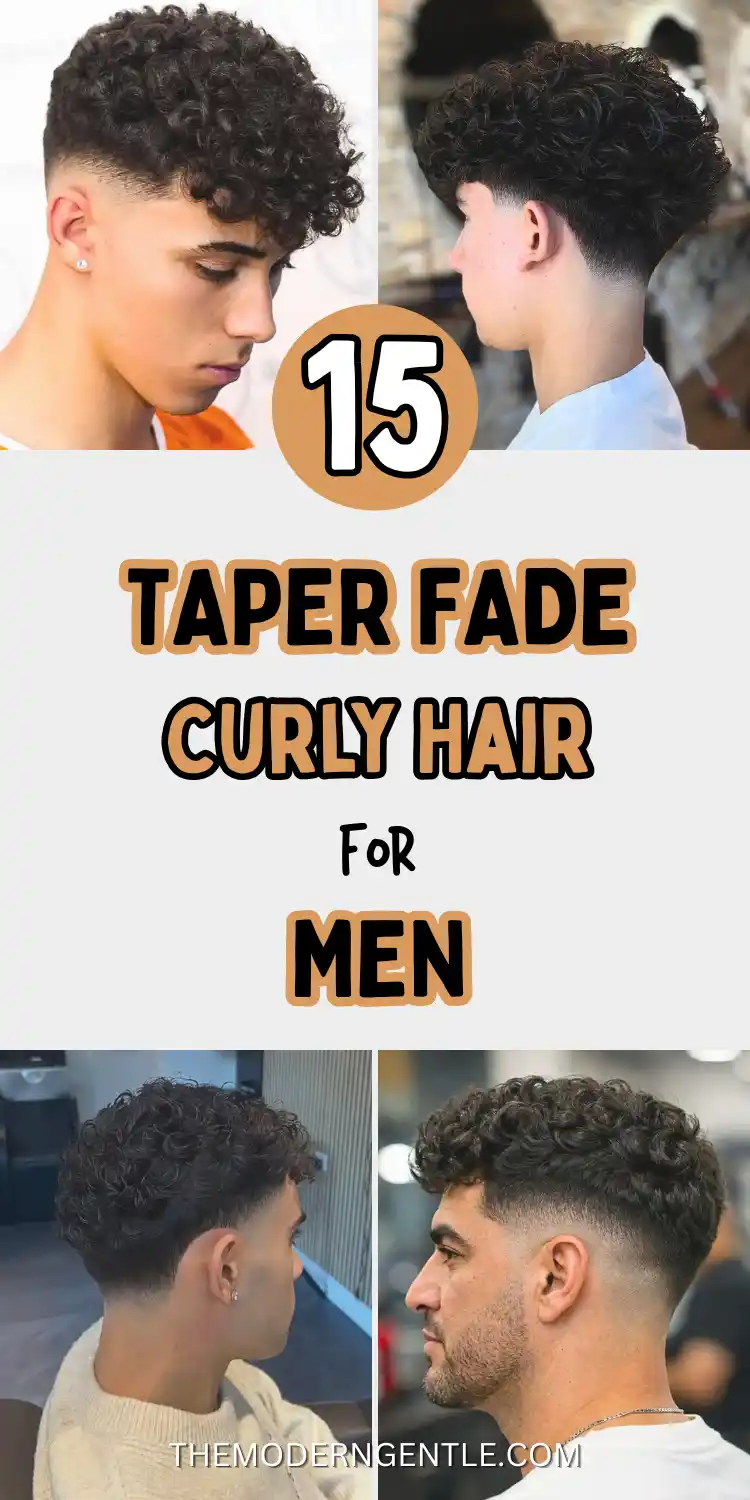
That is the whole idea behind this roundup. Fifteen real cuts, all different, showing just how much range one curl pattern can have once a skilled barber gets involved.
You will see low tapers that barely touch the curl, skin fades pushed high enough to show real contrast, tight coily cuts next to loose bouncy spirals, and a few styles that pair the fade straight into a full beard.
Some lean polished and glossy. Others go for that undone, matte texture look.
None of them need the same amount of daily effort, so whatever your morning routine looks like, there is a version here that fits it.
Scroll through and save whatever catches your eye.
1. The Low Taper That Lets Your Curls Do All the Talking
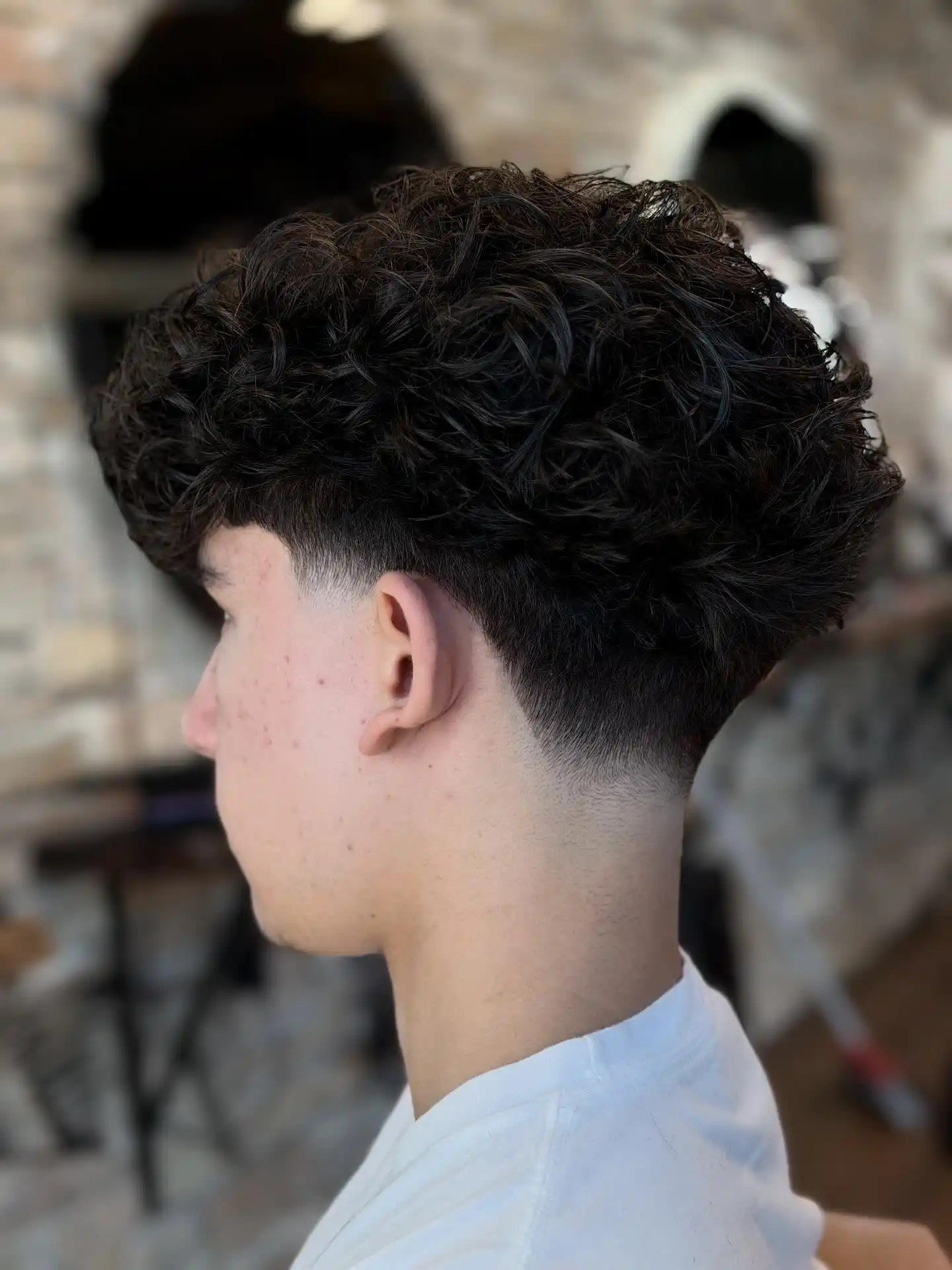
This one proves you do not need to touch the curl to get a sharp cut. The fade stays low, right above the ear and nape, so almost all your natural texture stays put on top.
A few things worth noticing here:
- The fade line sits low and tight against the skin, not high on the head
- Curls are left long and full on top, piled up with real volume instead of trimmed short
- The neckline is shaved clean and tapers smoothly into the skin
- Hair looks styled damp, which is what makes those curl clusters hold their shape
This is the move if you want people to notice the fade only when they look closely. From a few feet away, it just reads as a full head of healthy curls with a clean finish underneath.
2. A Skin Fade Sharp Enough to Frame Every Curl
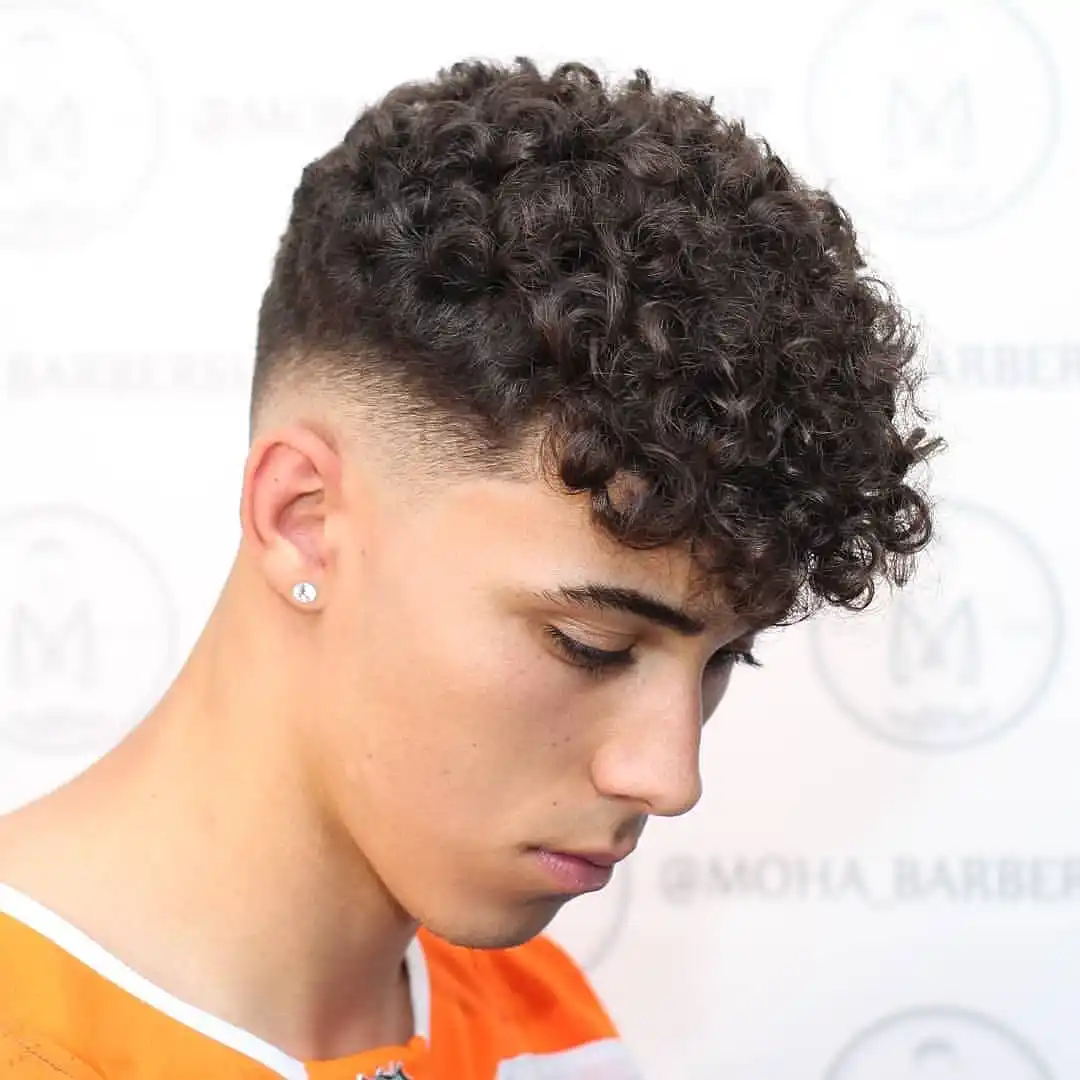
High fades scare off a lot of curly haired guys because they worry the curl will look messy against that much bare skin.
This cut is proof it works the opposite way. The higher the contrast, the more defined each ringlet looks up top.
What makes this one photograph so well:
The fade goes all the way to skin at the temple and climbs high before it blends into the curl line, so there is a real gap between “shaved” and “curly.”
The fringe is swept forward across the forehead instead of pushed back, and each curl holds a tight, separated shape, which usually means a curl cream or gel was worked through while the hair was damp.
How to get this at your next appointment:
Ask for a high fade or skin fade, not a mid or low, so the contrast against the curls actually shows.
Have the barber leave enough length on top to keep full curl shape, at least two to three inches.
Finish with a curl cream on damp hair to keep each ringlet defined instead of frizzy by midday.
Just know a fade this high needs a touch up every two to three weeks or the line starts to grow out fast.
3. Tight Ringlets Up Top, Skin Clean Everywhere Else
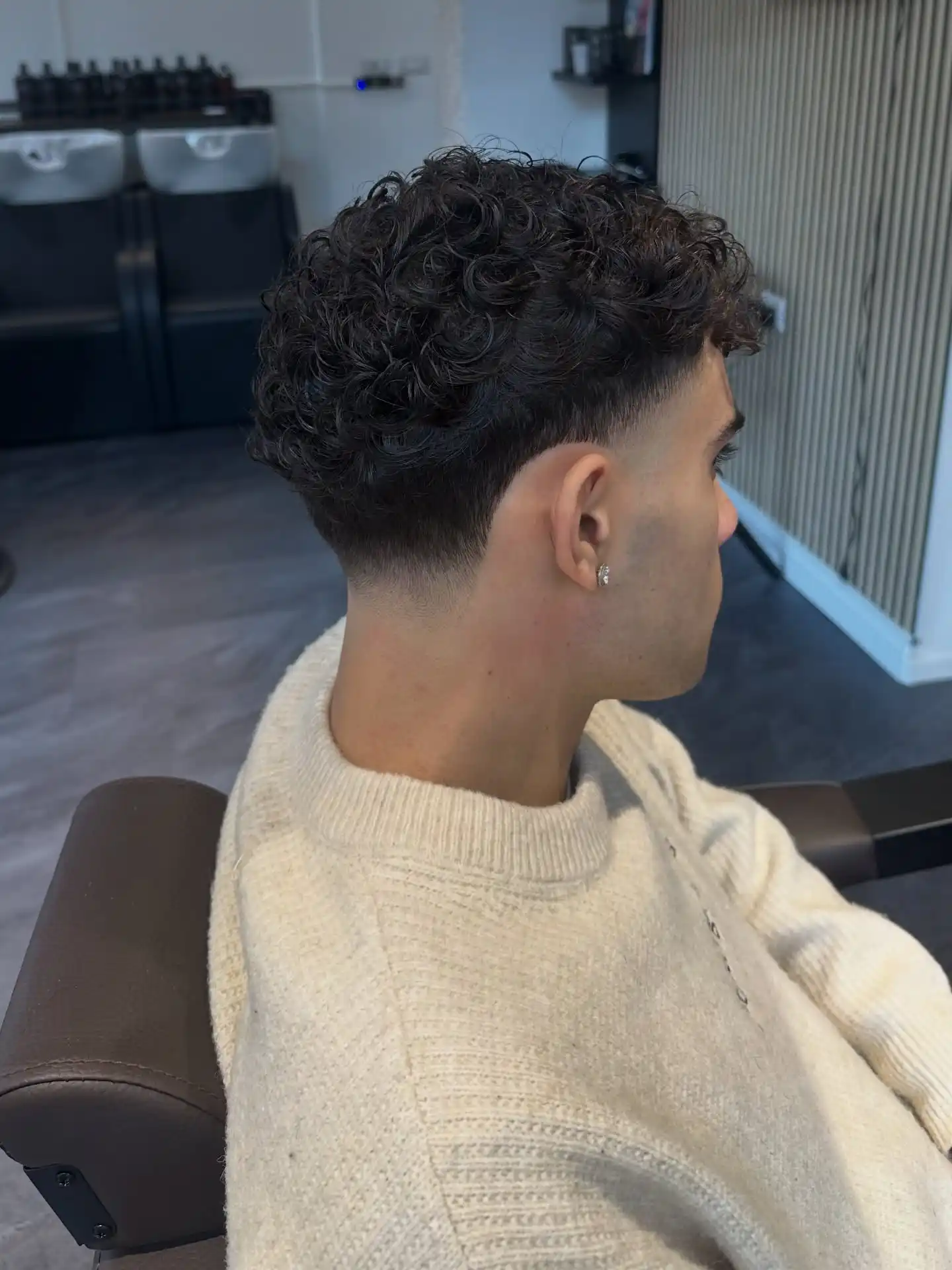
Notice how much shorter and tighter these curls sit compared to the last two cuts.
Instead of loose, elongated spirals, this guy is working with dense, compact ringlets that stack close to the scalp, and the barber cut with that in mind instead of fighting it.
What works here: the fade starts low, right behind the ear, and disappears into bare skin at the nape in one clean sweep.
Because the curls up top are shorter and tighter, they hold their shape without any real styling effort, which makes this a good option if you do not want to fuss with product every morning.
| Shorter Ringlets (this cut) | Longer Curls |
|---|---|
| Holds shape with little to no product. | Needs cream or gel daily to stay defined. |
| Grows out fast, cuts needed every few weeks. | Grows out slower before it looks unkempt. |
| Lower maintenance day to day. | More styling time but more volume on top. |
If your curls are naturally tight and dense, ask for this instead of forcing length you will just have to style every day.
4. Symmetrical Curls in an Even, Rounded Dome
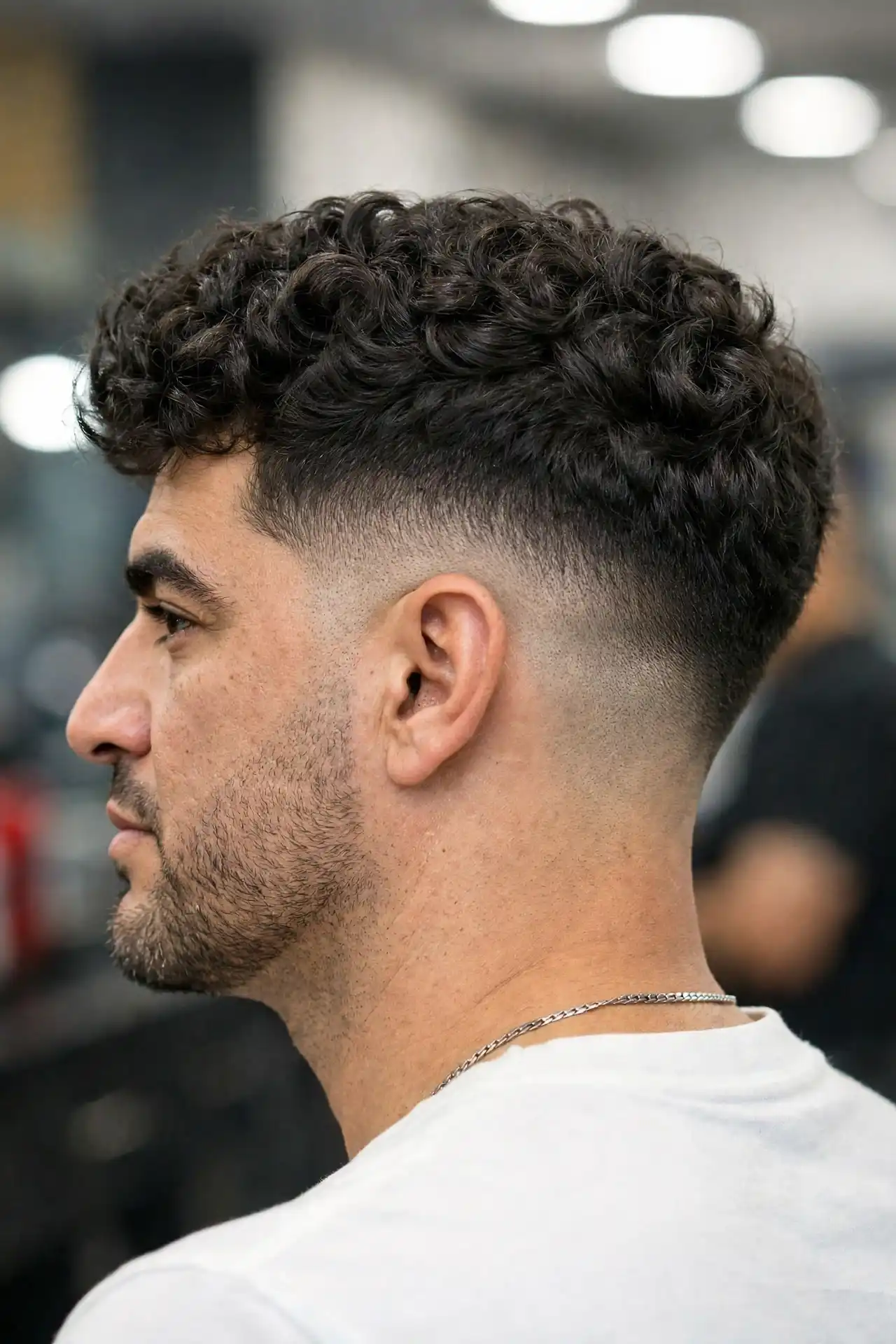
Notice how balanced this one looks from every angle. The curls stack up evenly across the crown instead of leaning heavier on one side, building a rounded, dome shaped silhouette that looks tidy even without much product.
A low taper fade wraps cleanly around the ear and blends into bare skin at the nape, keeping the transition smooth with no harsh lines.
That evenness is not an accident. It usually means the barber cut the curls dry first to see exactly where the natural pattern falls before cleaning up the perimeter, rather than cutting wet and hoping it settles right.
Mention a dry cut specifically if your curls shrink up a lot once they dry, since a wet cut alone can leave you shorter than expected.
5. A Sharp Side Part Cut Straight Through the Curl
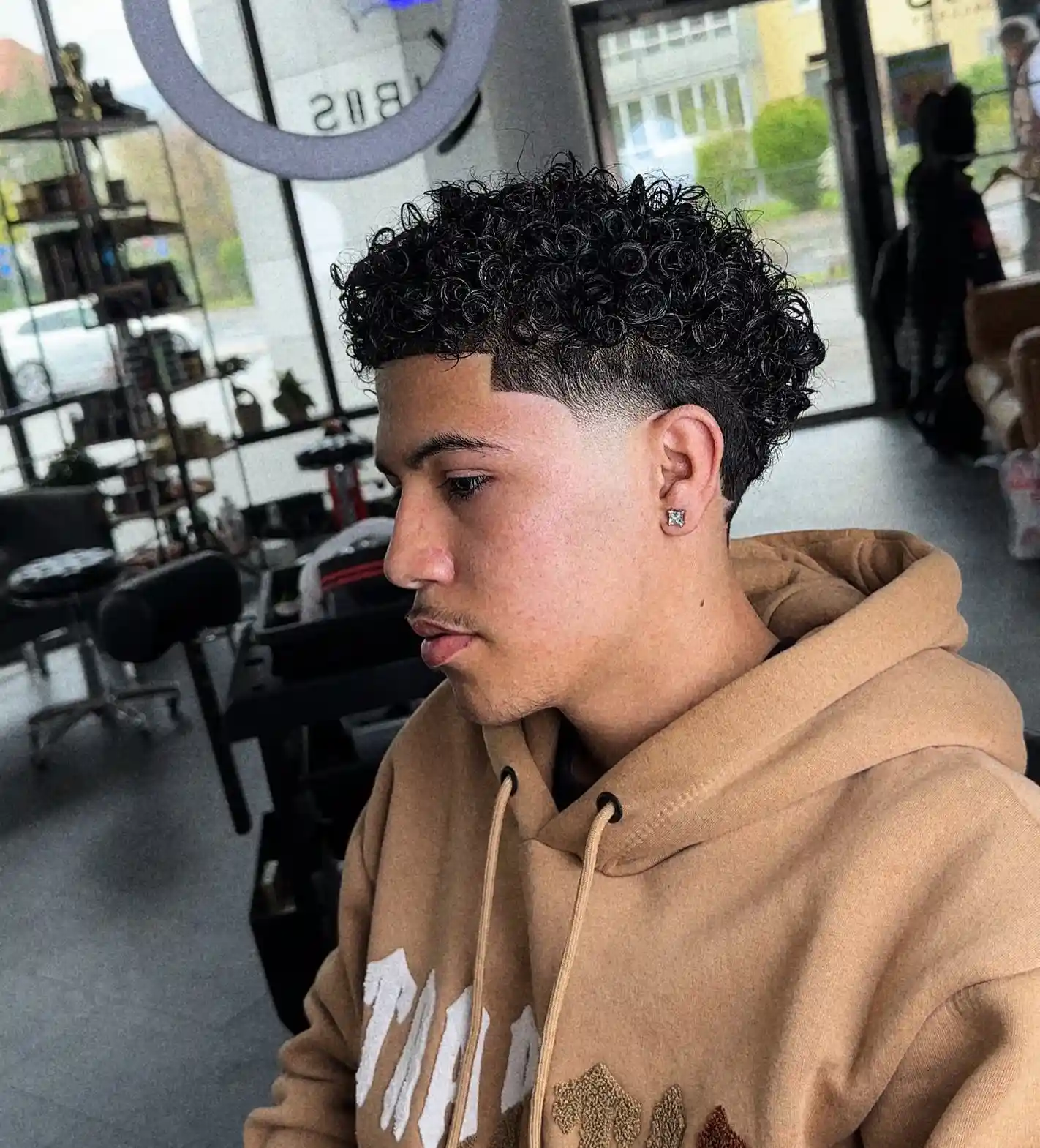
That crisp line above the ear is not an accident. Someone took a straight razor or clipper and carved a hard part through the curls before the fade even started, which gives this cut a much more structured look than a fade alone.
The curls stay piled up and voluminous on top, almost stacked, while the part line and the fade underneath keep everything looking deliberate instead of just grown out.
A mid fade runs from that part down to the ear, tight enough to show real skin near the temple, and the curls up top are left long enough to bounce and hold their spiral shape without falling flat.
Ask your barber for
Just be ready to touch up that part line often, since new growth fills it in fast.
6. The Rounded Curl Shape That Skips the Fringe Sweep
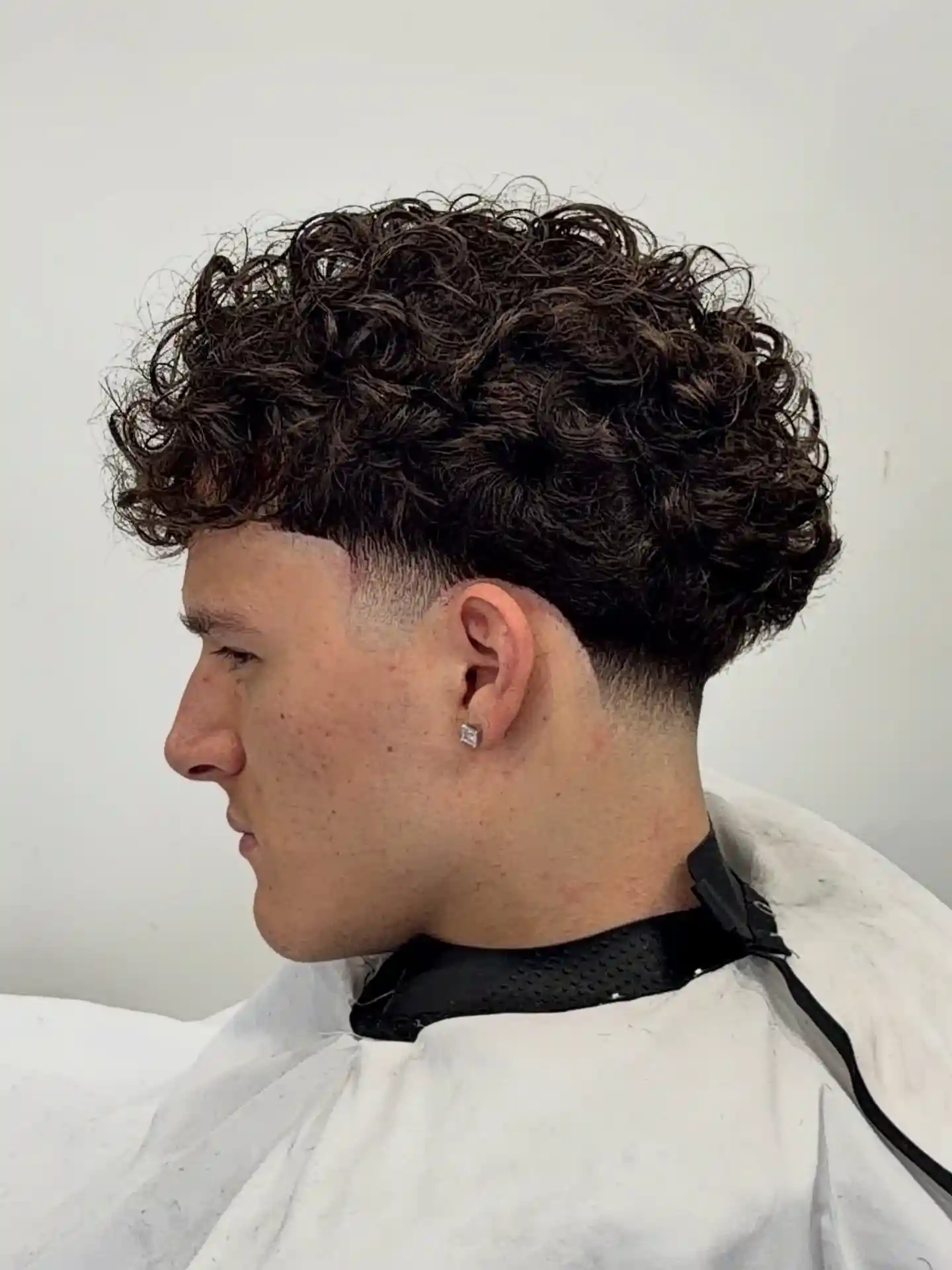
Not every curly cut has to push hair back off the forehead. This one goes the other way, keeping a full curtain of curls hanging low across the brow while the sides stay dense and round like a soft helmet shape.
What makes this work:
The shape: Curls are cut to build outward and round at the sides instead of stacking tall on top, giving the whole head a fuller, more compact silhouette.
The fade: Kept low and subtle, fading in gradually behind the ear instead of cutting a hard line, so the curl mass up top stays the clear focal point.
The fringe: Left long enough to fall forward over the forehead, adding a softer, less structured finish than a swept back style.
⚠️ Watch Out
This much volume can look bulky if the curls are cut too blunt underneath. Ask for the interior thinned out so it rounds instead of poofs.
7. Loose Curls With a Lived In, Undone Finish
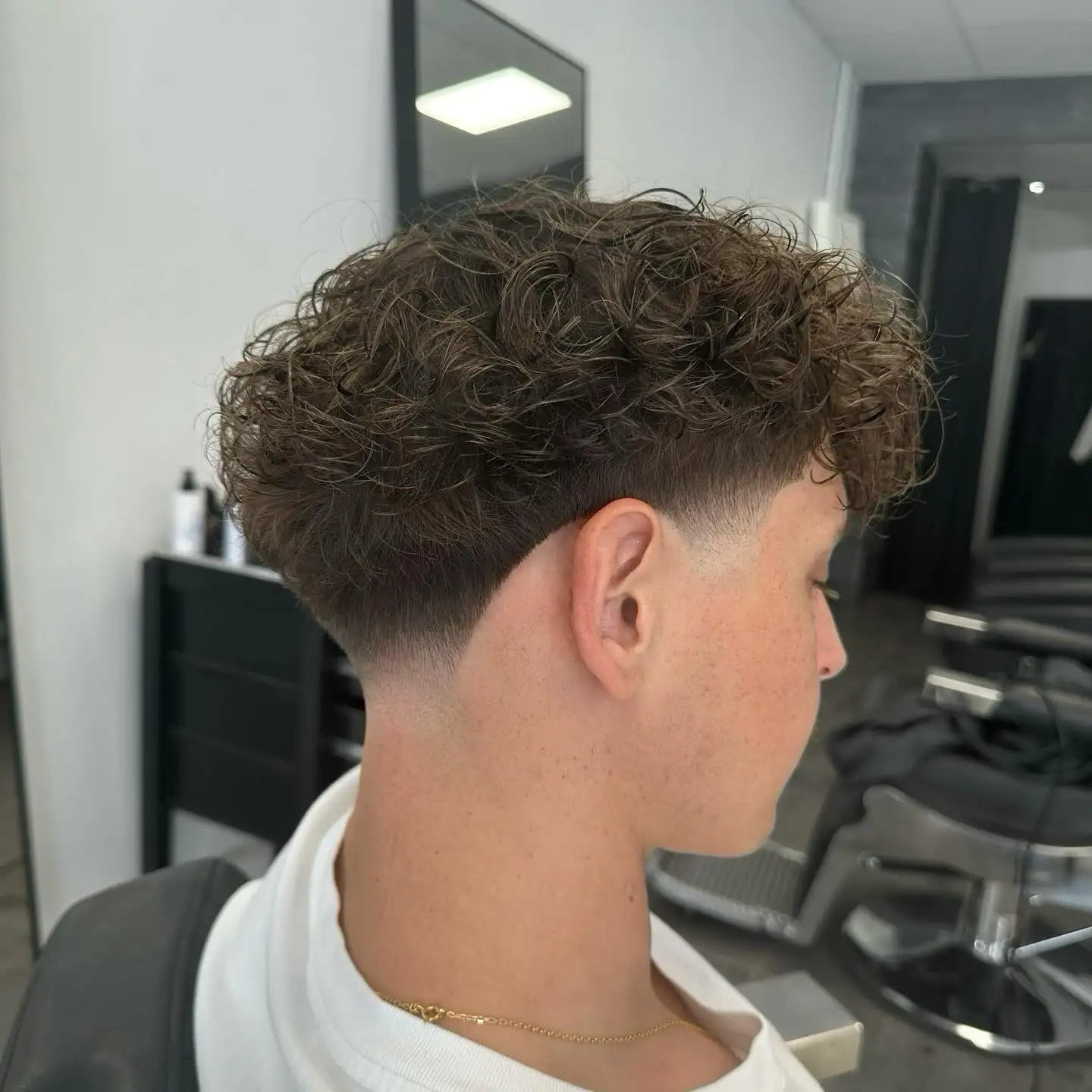
Not every good curl cut needs to look freshly done. This one leans into texture that looks a little undone on purpose, with pieces falling in different directions instead of every curl sitting in a tight, matching spiral.
The lighter, sun kissed tone through the curls adds even more depth to that messy, textured look.
Underneath, the fade stays low and quiet, tapering to skin right at the nape without climbing high up the sides.
That keeps all the attention on the curl texture up top instead of competing with a sharp, high contrast fade line.
Ask for a low taper so the curl stays the main focus.
Let curls dry naturally for that piecey, undone texture.
Heavy gel that clumps curls into stiff, uniform spirals.
A high contrast fade that pulls focus off the top.
Great pick if you want a wash and go cut that still looks pulled together on a bad hair day.
8. Where the Fade Meets a Full Beard
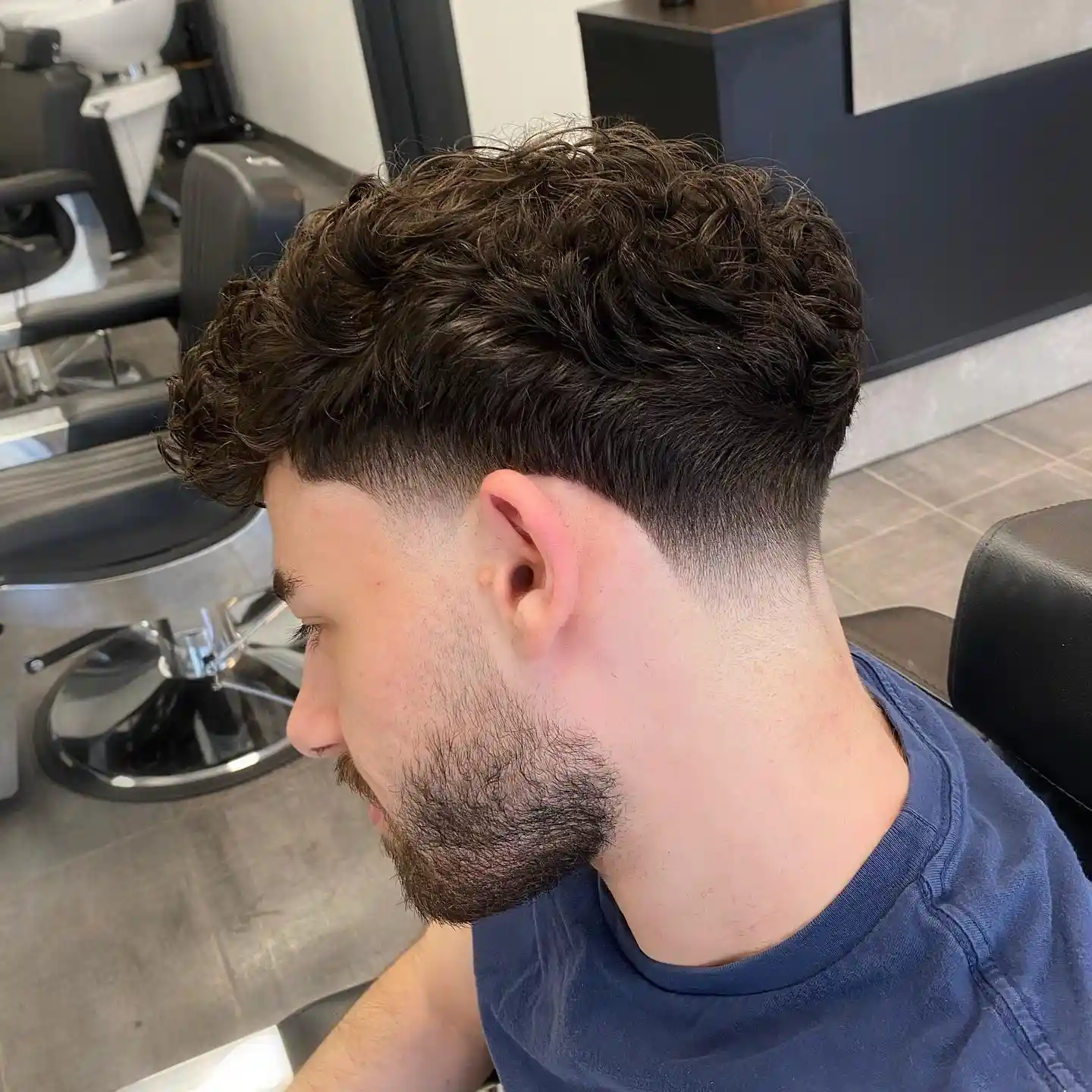
This is the pairing a lot of curly haired guys forget about: cutting the fade so it flows straight into a full beard instead of stopping at the jaw.
The taper runs mid height along the side and blends right down past the ear into the beard line, so there is no obvious break between hair and facial hair.
Up top, the curl pattern here reads looser and wavier than a tight spiral, more rolling texture than defined ringlets, which gives the whole cut a slightly rougher, more lived in finish next to that groomed beard line.
Mention the beard connection specifically when you book, since not every barber blends the two the same way by default.
9. Clean Taper, Tighter Curls, Barely Any Fuss
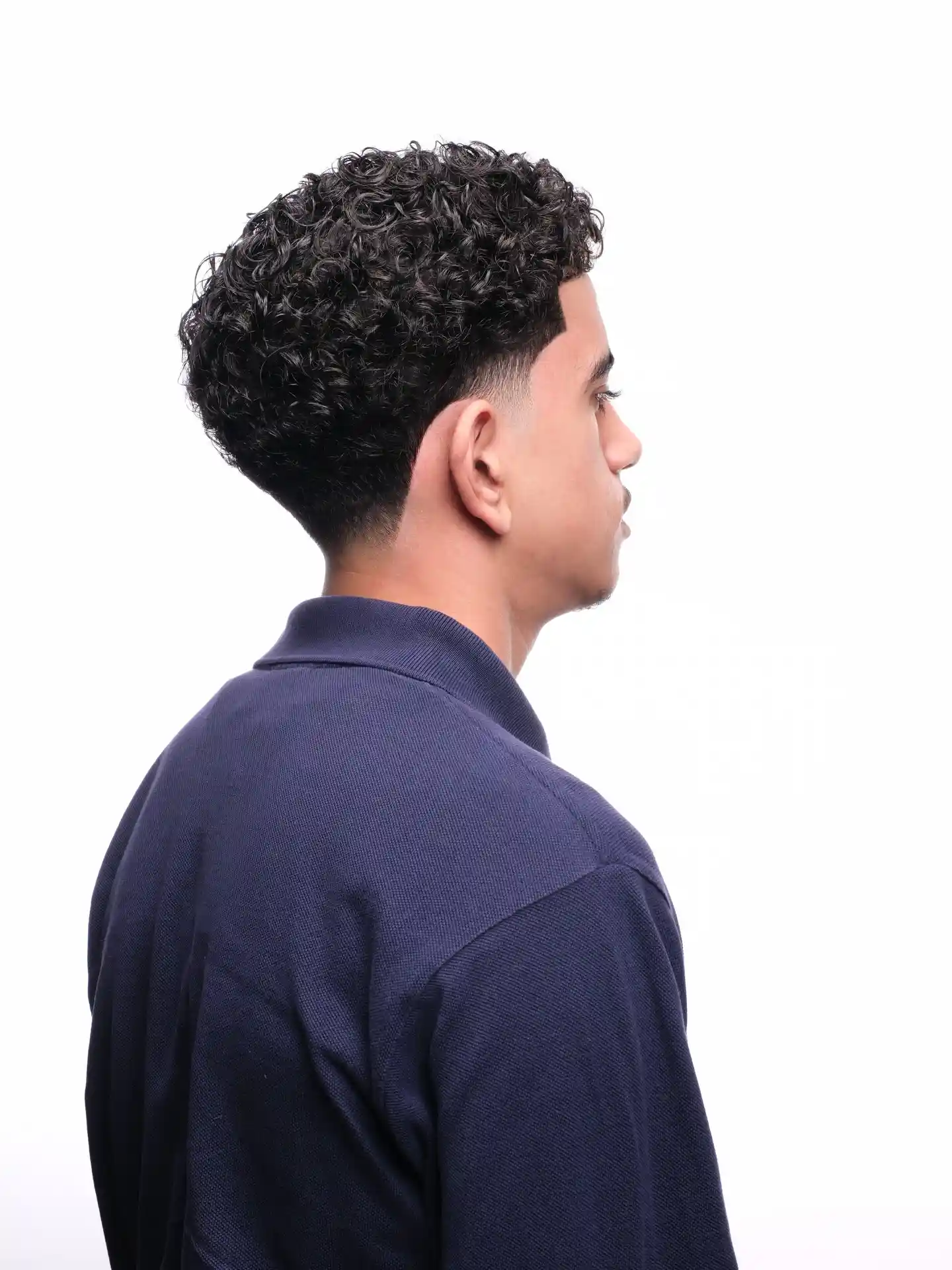
This is the cut for guys who want their curls to look done without spending fifteen minutes styling them every morning.
The curl pattern here is smaller and more compact than a lot of the looser, bouncier styles, which means it naturally sits close to the head and holds its shape on its own.
The taper stays low and precise, with a sharp part line carved right above the temple before it fades down to skin at the neckline.
Everything about this cut reads controlled and intentional, from the crisp edge up front to the tight blend in back.
Smaller, tighter curls hold their shape with almost no daily styling, so the sharp taper does the heavy lifting for a polished look.
If your curl pattern runs tight and small, lean into it instead of trying to stretch it into something looser. It photographs cleaner every time.
10. High Burst Fade That Frames a Full Beard
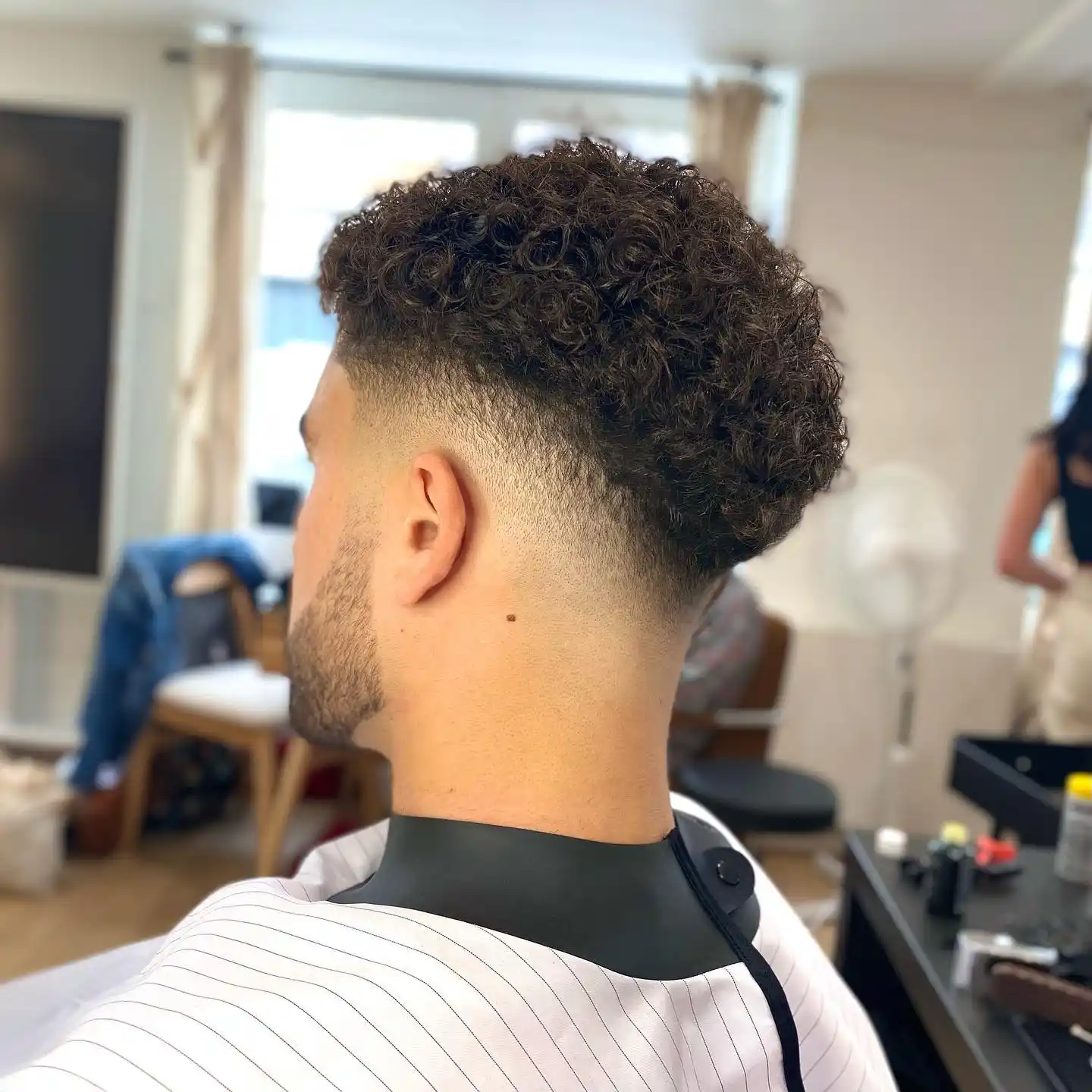
Glossy, well defined curls up top pair with a fade that climbs fast and hard near the temple, almost burst style, before leveling out toward the crown.
A little shine product is doing real work here too, giving the curls that wet look sheen instead of a matte, dry finish.
Down at the jaw, the fade tapers straight into a full connected beard, so the hairline and the beard line read as one continuous shape instead of two separate grooming choices.
- Fade climbs quickly near the temple for a bursty, high contrast look.
- Curls stay glossy and defined thanks to a shine or curl gel finish.
- Fade connects seamlessly into a full, well kept beard.
This works best on thicker beard growth. Thin patches at the jaw will make that connection look uneven instead of intentional.
11. Mid Taper With a Sharp, Defined Curl Edge
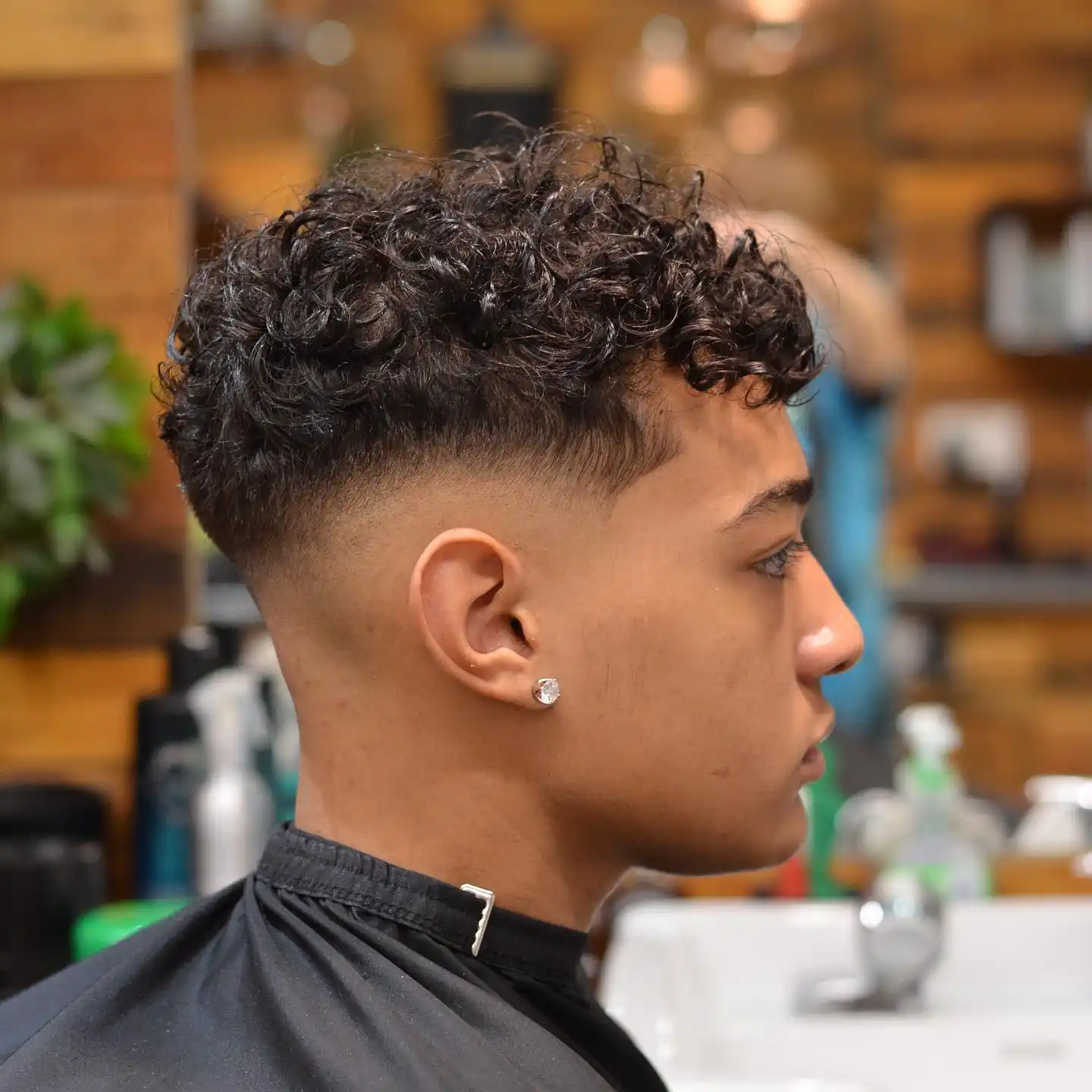
Freckled highlights running through these curls next to a clean mid fade prove this is not a lazy wash and go look.
Each ringlet holds a tight, separated curl instead of clumping together, and the fade below stays smooth from bare skin at the temple all the way up into the curl line with no rough transition spots.
What works here:
The curl definition up top comes from product worked through damp hair, not just natural texture.
The fade sits at mid height, higher than a low taper but not as aggressive as a skin burst, which keeps the whole look versatile enough for both a barbershop photo and an everyday cut.
Curls clump together and lose definition, edges look soft and undone.
Each curl separates and holds shape, paired with a crisp fade line.
Skip the towel dry after your shower and scrunch curl cream in with your hands instead. Rubbing curls with a towel is what breaks up that definition in the first place.
12. Soft Waves Swept to the Side Instead of Piled Up
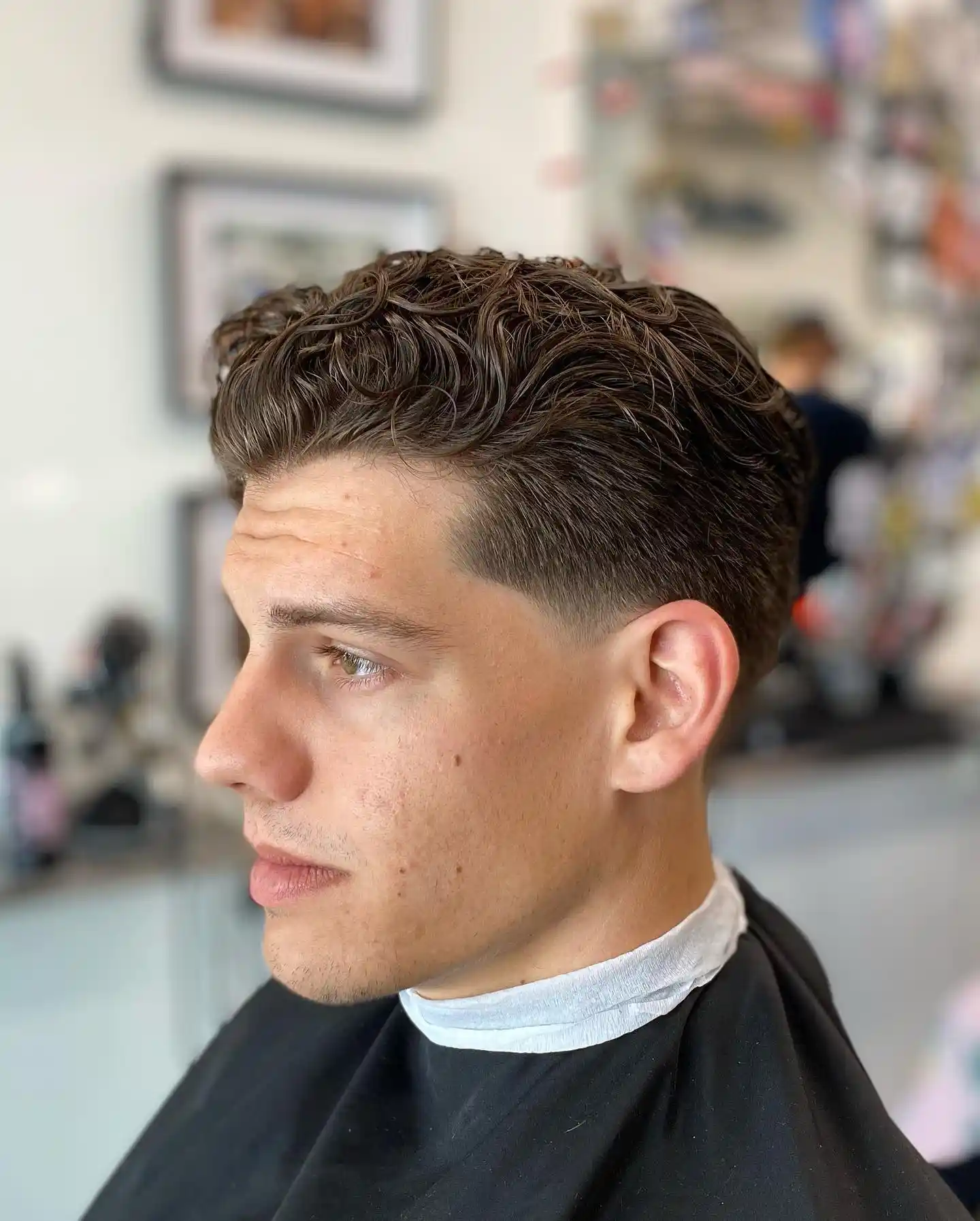
Loose, wavy curls that lean more textured than tightly coiled get swept to one side here instead of left to fall forward or stacked on top.
It is a softer, more polished take on the curly cut, closer to a classic side sweep than a full curl explosion.
What works here:
- The curl pattern reads looser and wavier, which makes it easier to comb and direct to one side
- A low skin fade runs along the temple and blends into a short, tapered side, keeping the focus on the swept top
- A light pomade or cream gives the ends a soft sheen without weighing the wave down flat
Good pick if your curls are naturally looser and you want something that reads more classic than curly cool.
13. The Textured Crop Take on Curly Hair
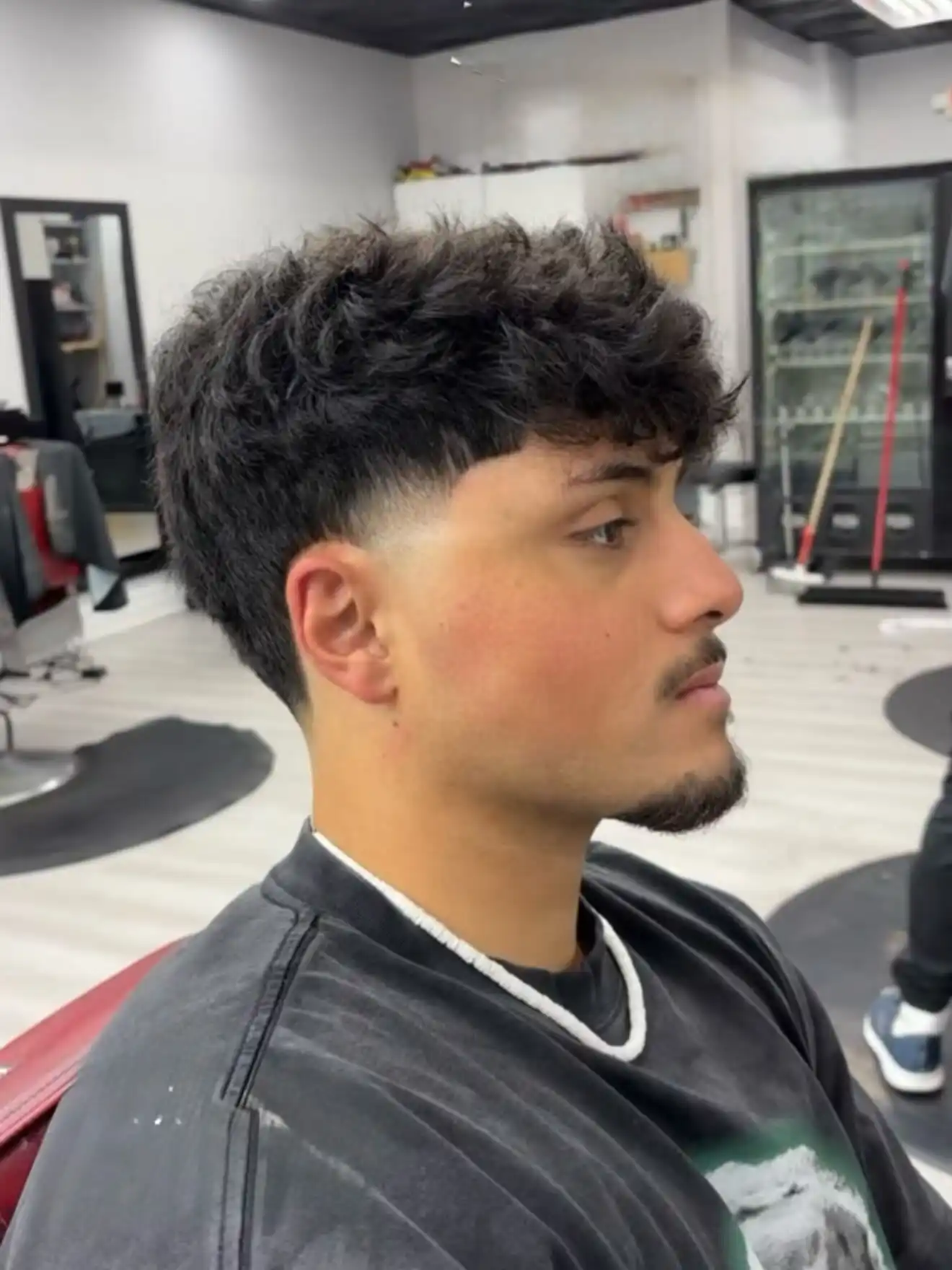
Matte, choppy, and a little undone on purpose, this one skips the slick or wet look entirely.
Instead of separated ringlets, the curl here reads more like heavy texture, short pieces pointing in different directions across the top with a blunt fringe grazing the brow.
A quick breakdown:
- Fade: low and soft, fading out just above the ear without much contrast Fringe: cut blunt and left long enough to sit low on the forehead
- Finish: dry, matte texture with zero shine, giving it a rougher, everyday feel
- Facial hair: a thin connected mustache and chin strip that keeps the whole look grounded.
📌 Good To Know
A matte clay or paste works better here than gel or cream. You want texture and grip, not shine or hold that flattens the crop.
If your curls tend to frizz more than coil, this rougher, textured approach hides that better than a cut chasing perfect definition.
14. A Sharp Edge Up for Tighter, Coilier Curl Types
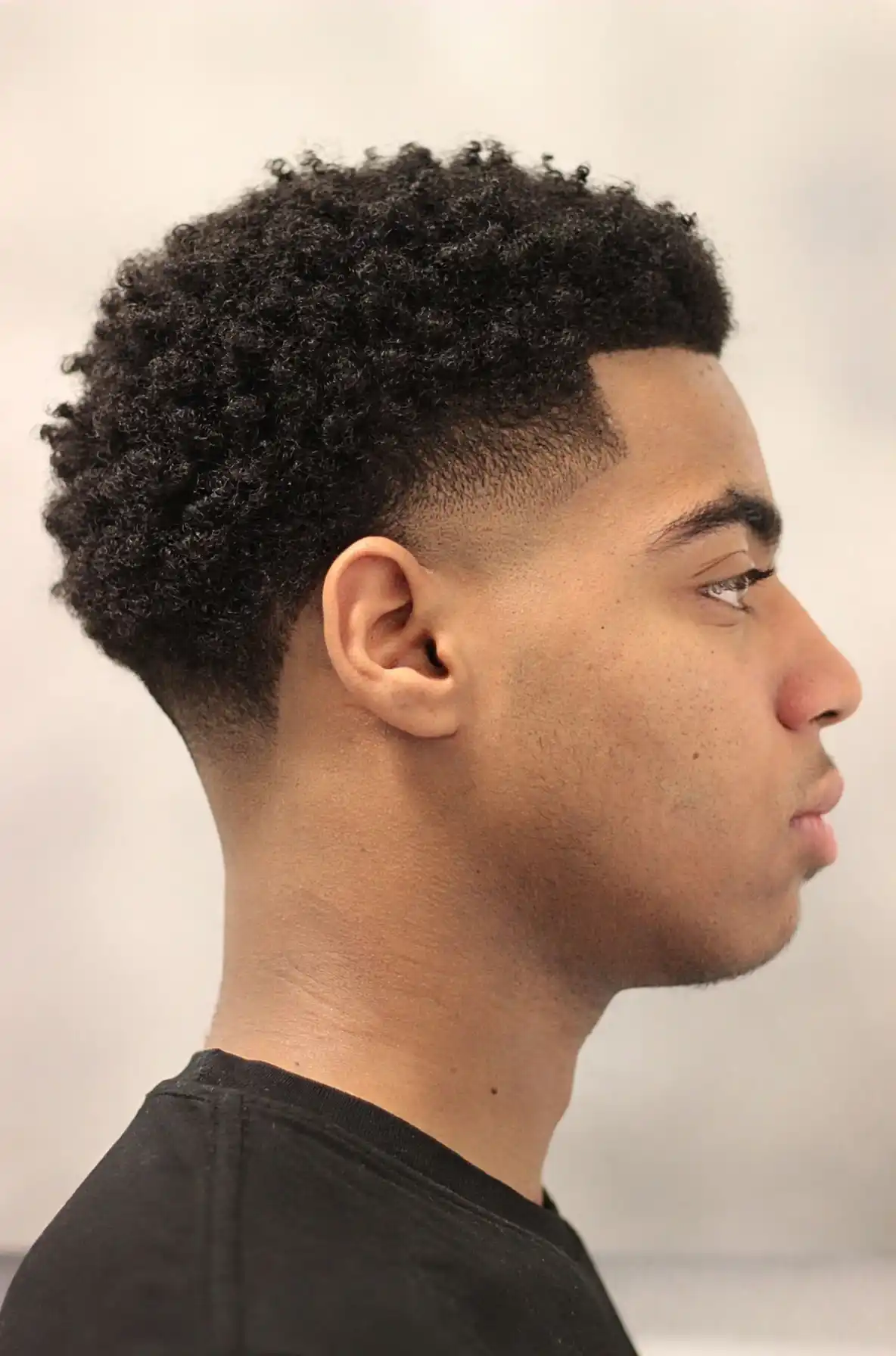
Kinkier, more tightly coiled hair needs a different approach than the looser spiral curls in earlier entries, and this cut shows exactly how.
The curl pattern here is dense and compact, springing up and out from the scalp rather than hanging in long ringlets, so the barber leaned into volume on top instead of length.
The real standout is that razor sharp line at the temple. It is cut crisp and straight before the fade even starts, giving the whole style a much more geometric, precise look next to all that natural texture on top.
The fade itself drops low and fast toward the nape, disappearing into bare skin with barely any transition zone.
What to request for this look
That line up needs a refresh every one to two weeks to keep looking this sharp, since new growth softens the edge fast.
15. What This Curl Pattern Looks Like in Natural Daylight
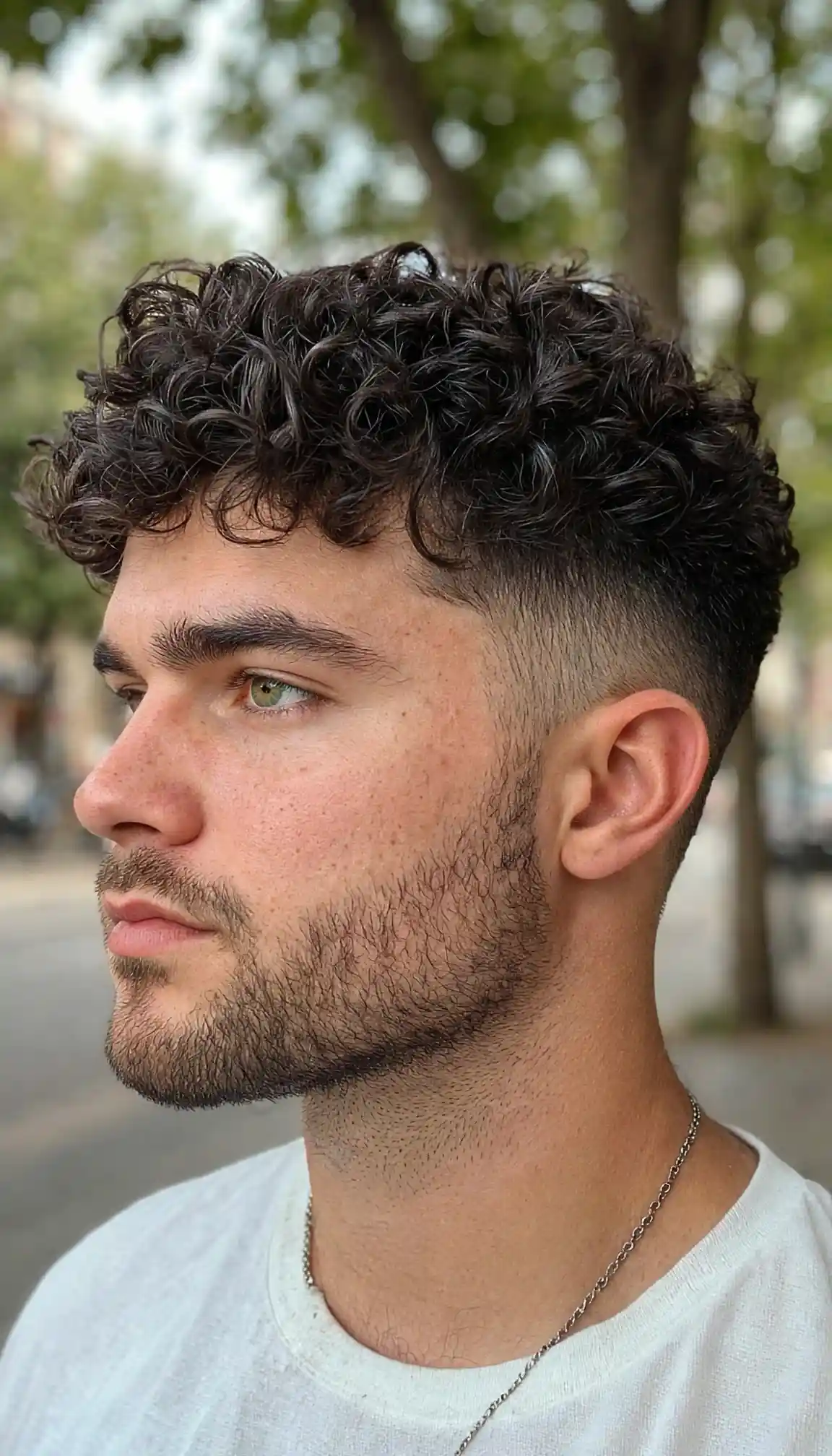
Every entry so far has come from inside a barbershop under studio lighting, so it’s worth ending on one shot outside in the sun.
Natural light shows something artificial lighting tends to flatten: how much depth and dimension a well cut curl actually has, with shadows falling between each ringlet instead of the whole head reading as one solid mass.
The cut itself sits in that sweet spot between the tight coils and the loose spirals covered earlier.
Curls are full and rounded on top, cut with enough length to bounce, and a fade runs from mid height down to the ear before disappearing into light stubble at the jaw.
Ask for a mid fade that blends into light stubble instead of stopping short at bare skin.
Keep enough length on top so the curl has real bounce and shadow between coils.
Skip heavy shine products outdoors, since sunlight already brings out plenty of natural dimension.
A good rule of thumb: if a cut looks this good without a barbershop mirror behind it, it’s a cut worth saving.
Final Thoughts
However your curls fall, natural, tight, loose, or somewhere in between, there is a fade height and a finish on this list built for it.
The cuts that photograph best all share one thing in common: the barber worked with the curl pattern instead of trying to force it into something it is not.
💡 Quick Tip
Bring one or two of these photos to your next appointment. Barbers work faster and more accurately from a picture than a verbal description.
Save this for the next time you need a fresh cut to show your barber.

