17 Classic Medium Length Mens Haircuts and Exactly What to Ask Your Barber


Growing your hair out sounds simple until you are eight weeks in, stuck with a shape that will not sit right, wondering if you should just cut it all off again.
That awkward stage is where most guys quit. It is also where the right cut makes all the difference, because medium length hair needs shaping to work. Left alone it goes flat, or heavy, or wide at the ears.
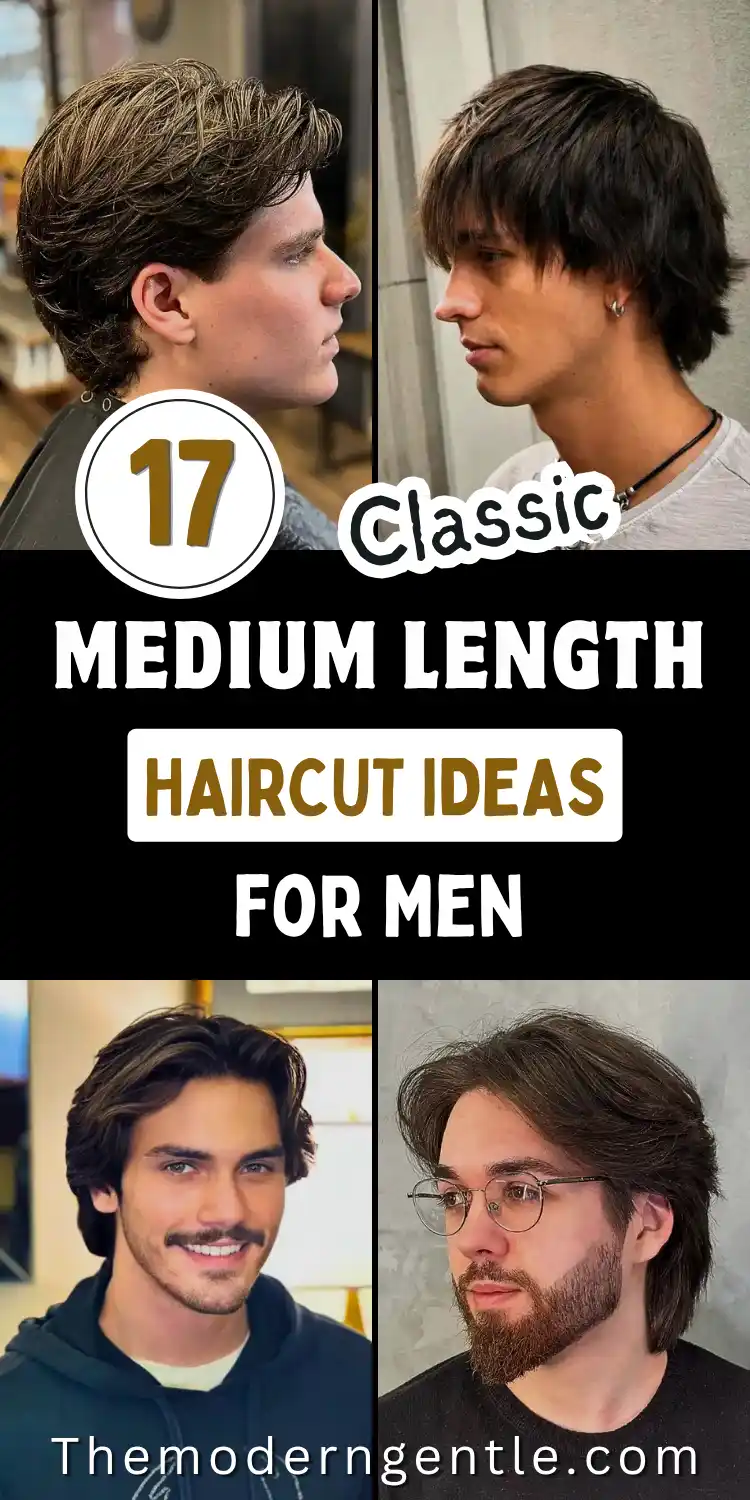
The 17 classic medium length mens haircuts here have all been around long enough to prove they last. Side parts, curtains, shags, brushed back flow, and a few longer shapes that reach the collar or past it.
What has changed is how barbers cut them now, with softer layers, less product, and shapes that grow out well instead of falling apart in three weeks.
Every entry tells you what to ask for at the chair, which hair texture it suits, and how long styling actually takes in the morning. Some need four minutes with a dryer. Some need nothing at all.
Find the one that matches your hair.
1. Feathered Layers That Flick Out at the Ends
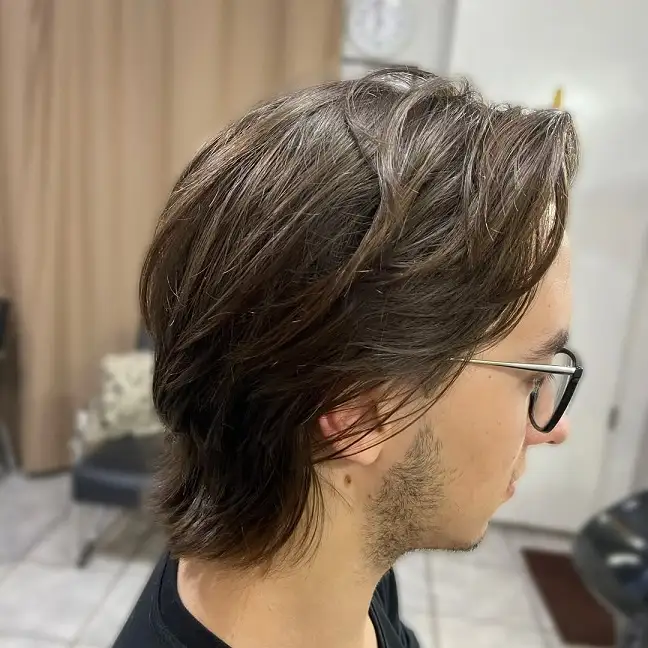
Long layers cut into the top and sides let the hair fall in soft, separated pieces instead of one heavy curtain.
- Length sits just past the jaw, with the shortest layers landing near the cheekbone
- Ends flick outward at the neck, which keeps the shape from going flat and helmet like
- Sides are long enough to tuck behind the ear on one side only, which stops it looking too symmetrical
- Finish looks air dried with a light cream, not waxed or shiny
Ask your barber for point cut layers through the interior, not blunt ends. Blunt ends on hair this length turn into a triangle within three weeks. Feathering is also what makes the grow out easy, since the shape softens instead of collapsing.
2. The Wet Finish Middle Part for Heavy, Straight Hair
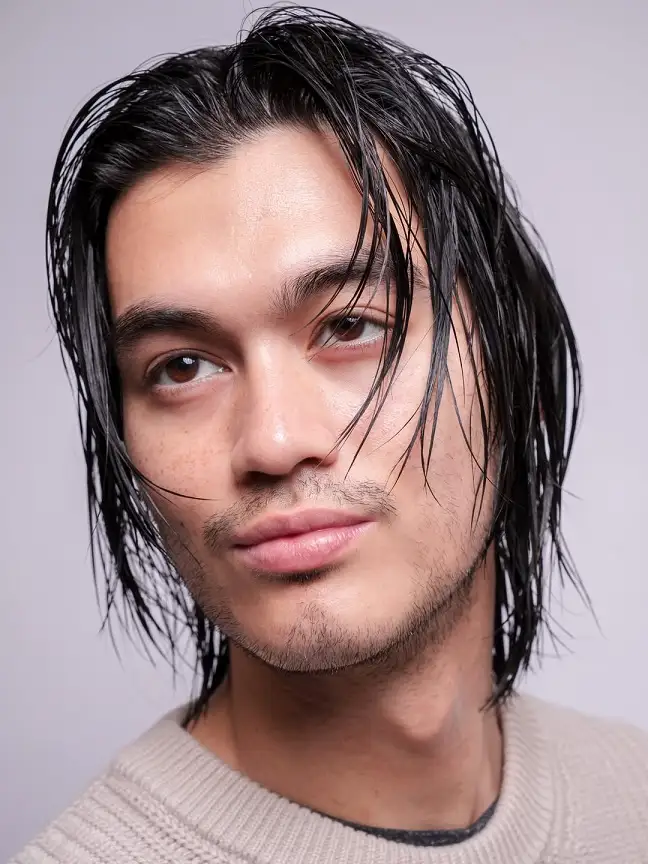
Straight hair with real weight to it fights most styling. Rather than force volume that will not hold, this cut leans the other way and uses a damp, piecey finish as the whole point.
The part sits center, the front pieces fall past the cheekbones, and the back reaches the collar. Nothing is layered short enough to stick up.
How the finish is built:
- Towel dry until hair is damp, not dripping
- Work a coin sized amount of gel or a wet look cream from mid length down
- Rake it back with your fingers, then pull two or three pieces forward across the forehead
- Leave it to set on its own, no dryer
Skip the comb entirely. A comb makes this look wet and neat, which reads dated. Fingers keep the strands separated, and that separation is what makes the finish look intentional.
📌 Good To Know
A wet finish only holds if the hair is actually damp when you apply product. On dry hair the same gel goes crunchy and flat. If you style in the evening, mist the front with water first.
3. The Choppy Shag With a Blunt Front Fringe
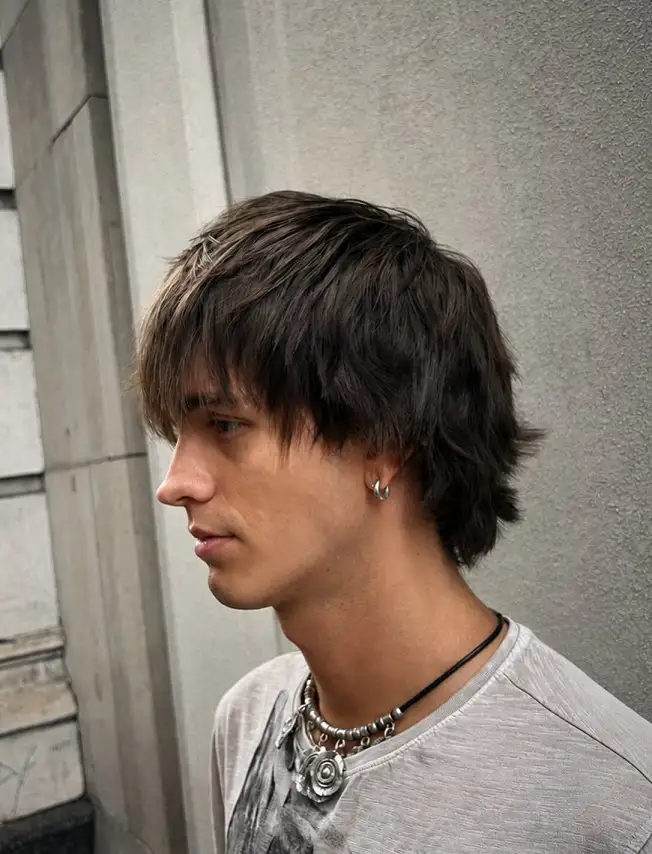
What works here: the layers are cut short and stacked through the crown, then get progressively longer down the back until they sit on the neck. That stacking is what gives the shape its lift without any product.
The fringe: cut straight across at eyebrow level, then broken up at the ends so it splits into small sections instead of hanging as a solid block.
The sides: left long over the ears with the ends flicking backward, which frames a narrower face and adds width where it is needed.
The texture: dry cut with a razor or point cutting, judging by how ragged the ends look. That roughness is deliberate.
This shape suits fine to medium hair best. Very thick hair needs extra weight removed from the interior or the crown balloons out.
4. Blow Dried Flow With Weight Left at the Back
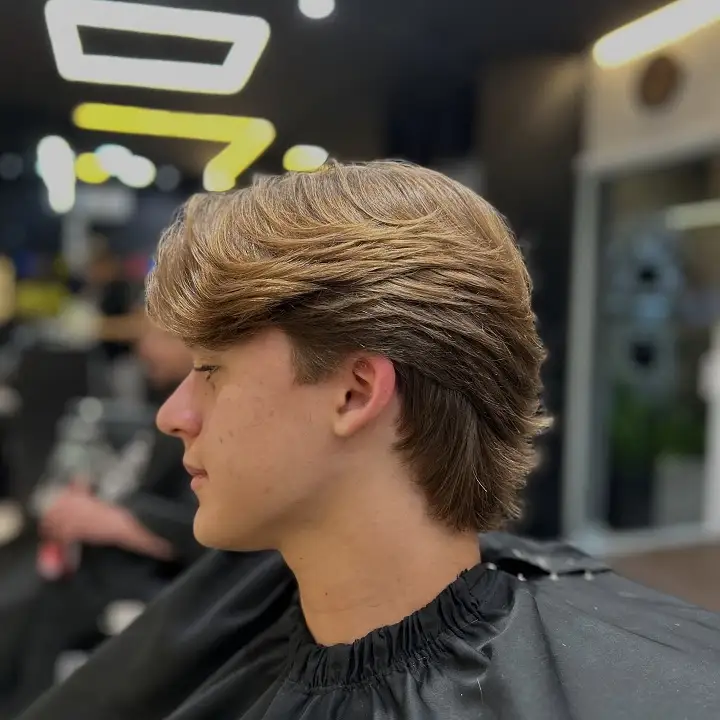
Height at the front, length kept over the collar, and a clean fade of weight around the ear so the whole thing does not look bulky.
The lighter blonde ends catch the light and make the layers read clearly, which is a big part of why this shape photographs so well.
The volume is not natural. It is a blow dryer and about four minutes.
Apply a volume mousse or sea salt spray to damp roots at the front only.
Dry the front section backward and upward with a round brush, holding each pass for a few seconds.
Dry the back and sides flat and downward so the contrast in shape stays sharp.
Hit the front with cool air for ten seconds to lock the lift, then break it up with a pea of matte clay.
Hair this length holds a blow dry all day. That is the trade for the four minutes.
5. Wavy Push Back With Length Left on the Neck
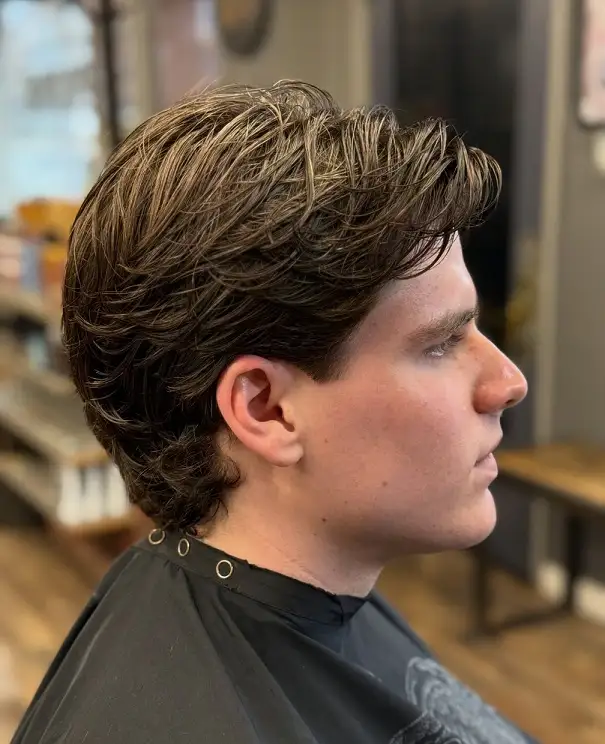
Two ways to handle thick wavy hair at this length, and the image picks the harder one on purpose.
Option one is to thin it out and keep the neck clean. Safe, tidy, and it loses the character.
Option two, shown here, keeps the natural wave pattern, pushes everything back off the forehead, and lets the ends curl over the neckline instead of cutting them off.
The compromise that makes it wearable is the ear. Hair is kept close and short around the ear so the head does not look wider than it is. Everything above and behind that stays full.
Coarse wavy hair suits this best. Fine hair will not hold the backward sweep past midday without a strong hold cream at the roots.
Keep the hair tight around the ear so width stays under control.
Ask for weight removed from underneath, not off the surface.
Let the neck length stay so the shape has a finish point.
Thinning shears used on the top surface, which leaves frizzy stubs.
A hard shaved neckline, which fights the soft top.
Heavy pomade, which drags the wave out flat.
6. Ear Length Layers Cut to Balance a Full Beard
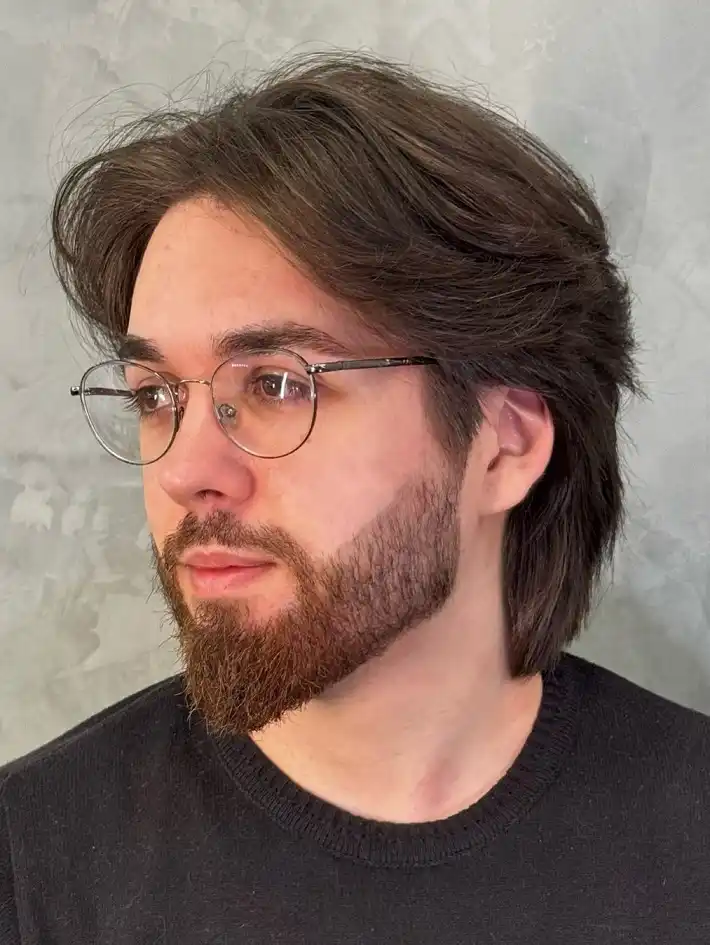
Beards this full pull visual weight down toward the jaw. The fix is not shorter hair, it is hair with enough length and volume through the top and sides to answer it.
Here the top keeps height, the sides fall to just below the ear, and the ends are thinned so they taper rather than sit as a blunt shelf. Nothing is tucked back, which keeps the sides doing their job of framing.
Getting the hair and beard to work together
Worth saying out loud at the chair: ask for the sides to be checked against your beard line before the final trim, not after.
7. Natural Curl Kept Medium With a Soft Taper
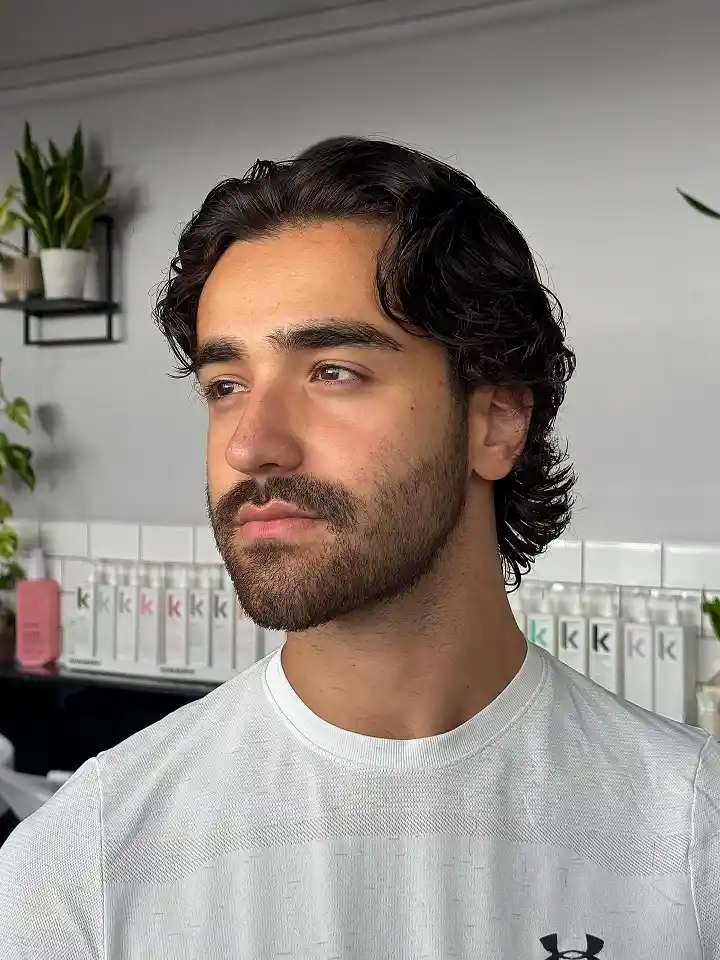
Curly hair at this length works when the cut respects the curl pattern instead of flattening it.
The curls sit loose and separated, the sides are kept close through the temple, and the length at the back is left to spiral over the neck.
No gel cast, no defined ringlets, no product shine. It reads relaxed because the curl is doing the shaping.
Cut it dry if your barber knows curls. Curly hair shrinks when it dries, sometimes by an inch or more, and a wet cut is the reason so many curly guys walk out with hair shorter than they asked for.
The taper at the temple keeps the silhouette narrow at eye level, so all the volume reads as height and movement rather than bulk.
8. Curtains With the Sides Cut Short
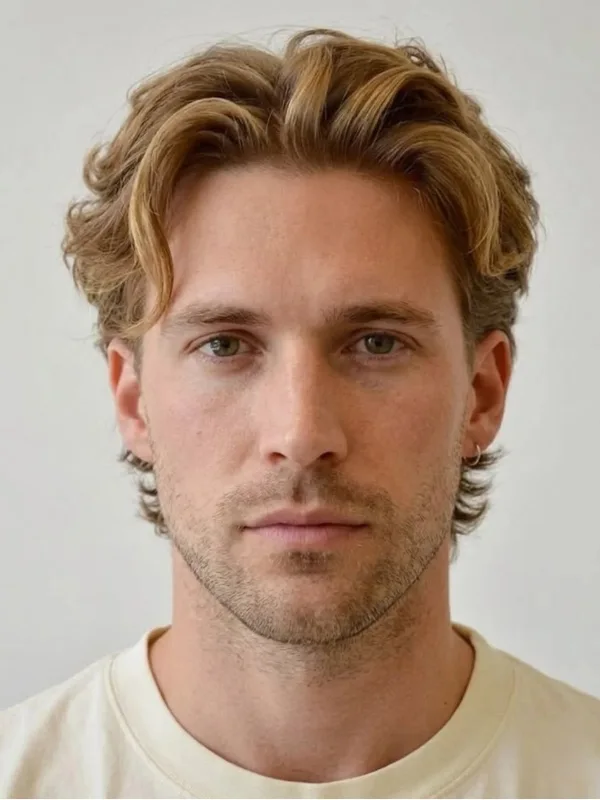
Front on, the shape does the thing curtains are supposed to do. The part opens in the middle, both sides sweep out and slightly back, and the wave in the hair gives the front a bend so it does not hang straight down like drapes.
What separates this from the version most guys end up with is the sides. They are cut noticeably shorter than the top, sitting above the ear, so the width stays in check while the front keeps its length.
| Curtains with long sides | Curtains with short sides (this cut) |
|---|---|
| Head looks wider, especially on round faces. | Silhouette stays narrow at the ears. |
| Grows out into one shapeless mass. | Grows out into the long sided version, so you get two looks per cut. |
| Needs product to stay off the face. | Falls into place on its own most days. |
| Trim every 10 weeks. | Side trim every 5 to 6 weeks. |
9. The Grown Out Quiff With Genuine Volume
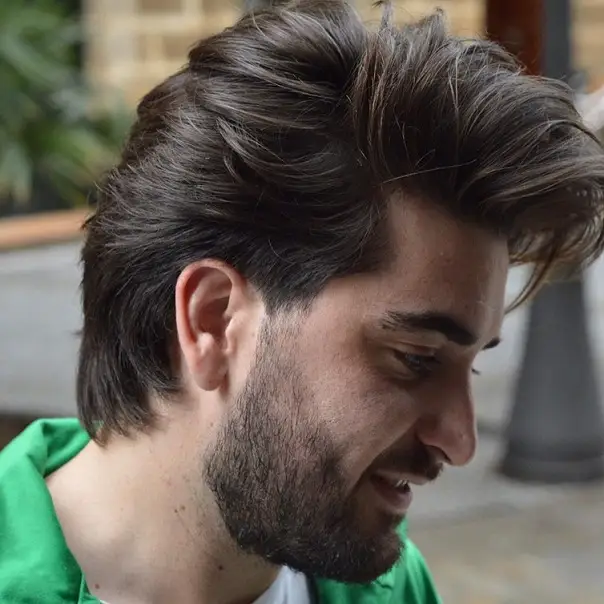
Most guys with thick hair go through a phase where the top gets heavy and just sits there. That is the starting point for this one.
The cut takes that same weight and turns it into a swept back shape with real height at the front and length running down past the ears.
Thick hair grown past the awkward stage, sitting flat and heavy on the forehead with no direction and no shape at the sides.
Weight taken out underneath, the front lifted and pushed back at an angle, and the sides left long enough to sweep behind the ear.
The forward tilt matters. The lift is not straight up, it leans back and slightly to one side, which is what stops it looking like a costume pompadour. A matte paste at the root and a hand pushing back while you dry gets you most of the way there.
Image file: bestmenshaircutsnyc_899.jpg
10. Soft Face Framing Waves for Rounder Faces

Length that stops right at the jaw does something useful for a fuller face. It draws a vertical line down either side and makes the face read longer than it is.
Details worth copying:
- ▸The part is off center, not dead middle, which keeps one side fuller and avoids a symmetrical look.
- ▸Front pieces curve inward toward the cheek instead of flaring out.
- ▸Volume is concentrated at the crown and upper sides, keeping height above the widest part of the face.
- ▸Ends are soft and slightly uneven, never blunt across the bottom.
- ▸A trimmed mustache adds a horizontal line low on the face, which balances the height on top.
Air dry with a leave in conditioner and scrunch the ends toward your face while it dries. Brushing this straight kills the inward curve, and the curve is the whole reason it flatters.
11. Shoulder Grazing Layers With a Deep Side Sweep
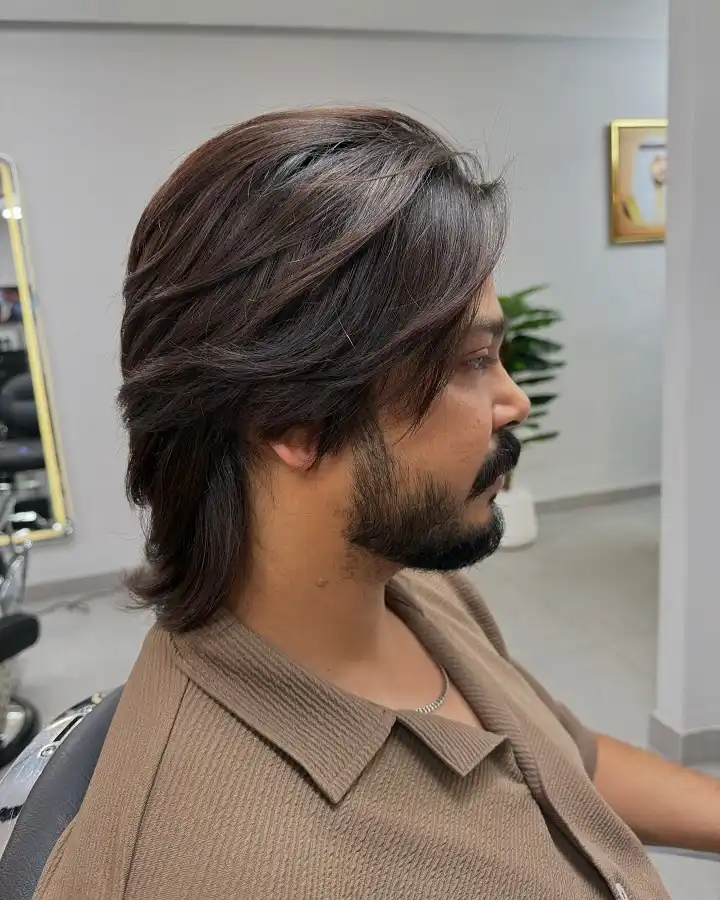
The longest cut in the roundup, and the one that needs the most cutting skill to stay wearable.
Length reaches the shoulder at the back, but the layers start high, near the top of the ear, so there is movement all the way down instead of one flat sheet.
The front is swept hard to one side and pinned back by nothing but the cut itself. That deep side sweep is what keeps hair this long from reading unkempt.
Dark hair shows every layer line, so the cutting has to be clean. Ask for long, sliding layers rather than sharp steps, and get the ends dusted every eight weeks even if you are growing it out.
Split ends at this length are visible from across a room.
12. The Timeless Side Part, Upgraded
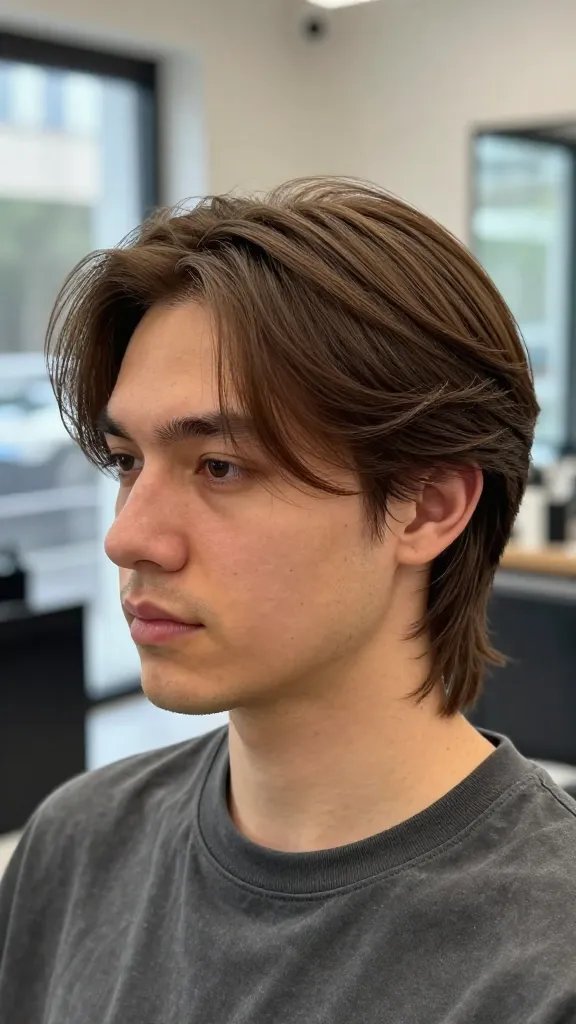
The side part has outlasted every trend cycle for one reason. It works on almost any face shape and any hair texture, and at medium length it stops looking like a job interview and starts looking like a choice.
The part itself should be natural, meaning wherever your hair already wants to split. A shaved line reads dated now.
Sides get scissor over comb work so they taper into the top instead of stopping at a hard edge.
Light cream keeps it moving. Matte clay keeps it in place. Same cut, two moods.
Comb the part in while damp, then rough it up once dry.
Keep three to four inches on top so the shape has something to hold.
Ask for a taper that softens gradually toward the ear.
A razored part line, which grows out badly and looks stiff.
High shine pomade, unless you want a formal finish.
Clipper faded sides, which fight the softness of the top.
13. The Classic Pompadour, Soft And Wearable
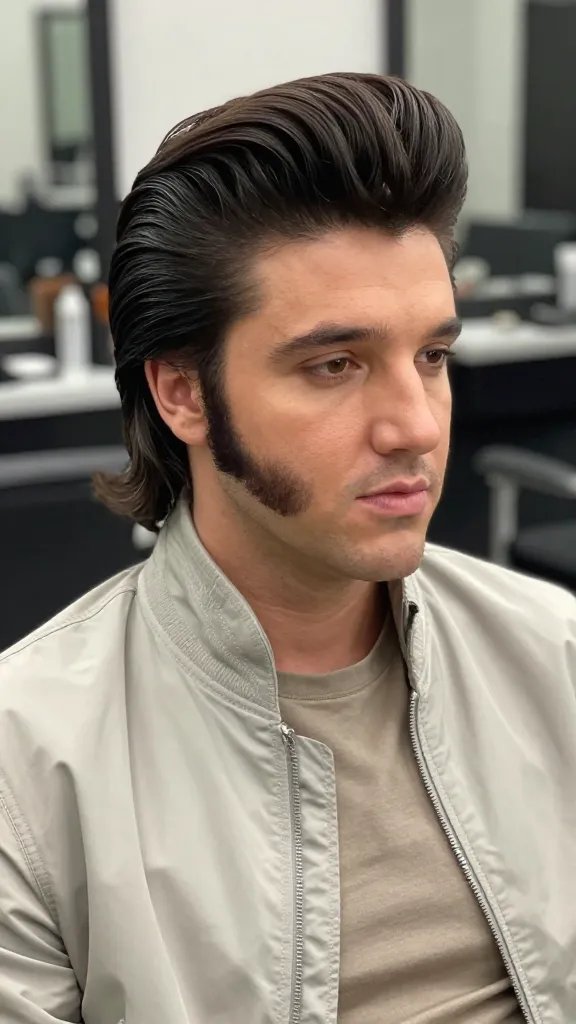
Fifties pompadours were built on hairspray and a hard set. The medium length version keeps the height and drops the stiffness, so the top still moves when you do.
Three to four inches on top gives you enough to lift. Layers underneath stop it from getting heavy at the crown. Sides stay scissor tapered so the volume flows down instead of stopping at a wall.
Start on damp hair with a pre styling spray or mousse at the roots.
Blow dry the front upward and back with a vent brush, section by section.
Work a light hold cream through with your hands for movement, or a matte pomade for a firmer shape.
Push the front slightly back rather than straight up, so the height reads natural.
Round and square faces benefit most here, since the added height stretches the profile and balances a wider jaw.
14. The Brush Back With Natural Flow
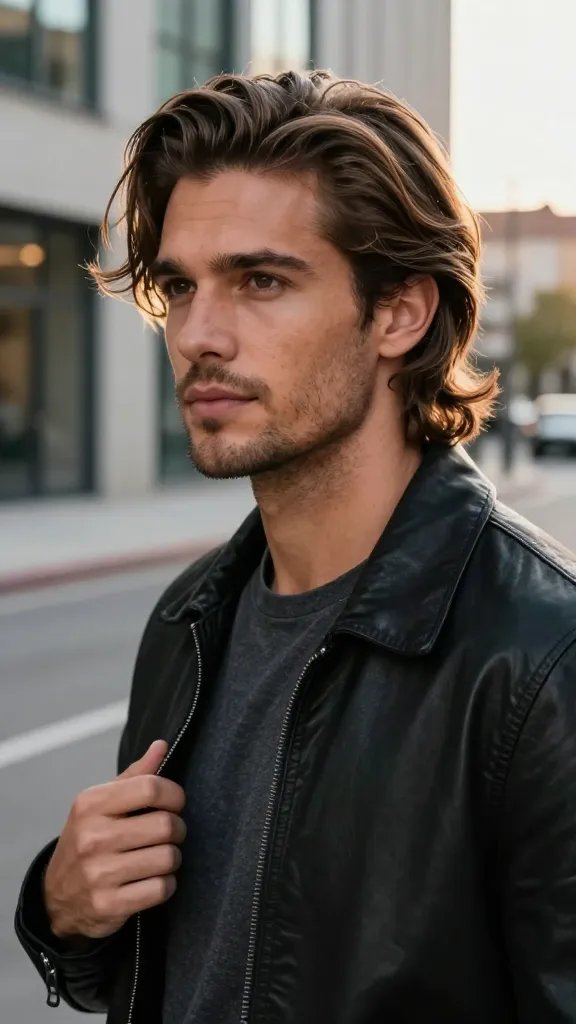
No slick, no crunch. Hair goes back off the forehead with whatever bend it already has, and the medium length is what gives it that worn in swagger.
Blow dry on medium heat with your fingers rather than a brush. Fingers leave the surface uneven, and uneven is the point. Follow with a texture cream or a light paste, then pinch the front upward for a bit of lift.
Thick hair carries this best. Natural waves make it easier still. Wear it tidy for work, run a hand through it before dinner, and it becomes a different look with no extra product.
15. The Modern Gentleman’s Shag

Shag has a reputation for rockstar mess. The current version is far more controlled, with layers placed on purpose and the length held at medium so it frames the face instead of swallowing it.
What to ask for at the chair
Air dry it with a sea salt spray and let the pieces separate on their own. Wavy and loosely curly hair takes to this fastest, and it sits well against stubble or a short beard.
16. The Contoured Scissor Cut
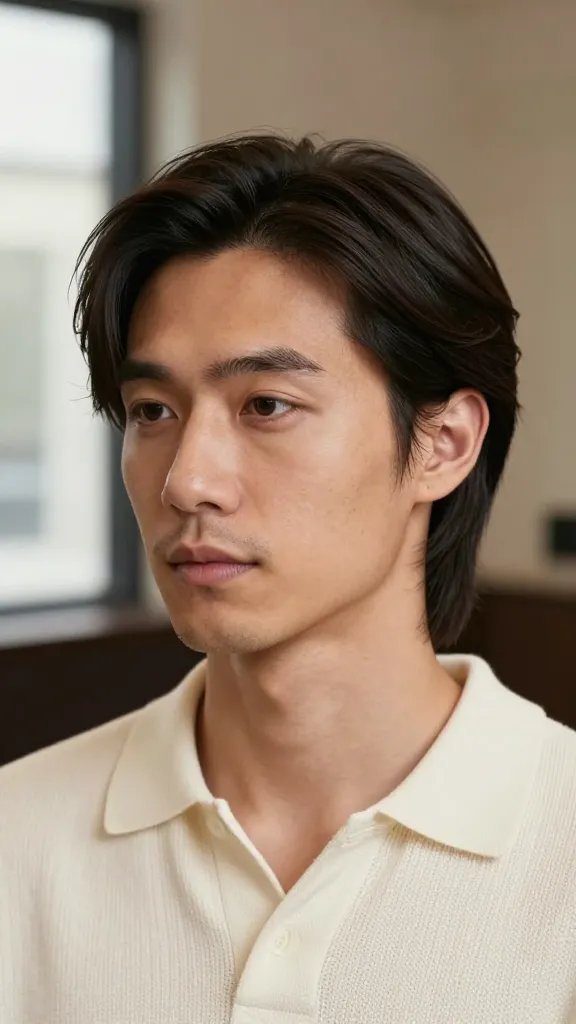
All scissors, no clippers, and no hard lines anywhere. The barber follows the actual shape of your head and adjusts for how dense your hair is in each section, which is why two guys can ask for the same cut and get results that look nothing alike.
The payoff shows up in week five. Because nothing is cut to a fixed guard length, there is no visible line to grow out.
| Clipper based cut | Full scissor contour |
|---|---|
| Same guard length regardless of head shape. | Length changes section by section to follow your head. |
| A visible line where the guard changed. | Soft transitions with nothing to spot. |
| Looks rough by week three. | Still holds shape at week six or seven. |
| Faster and cheaper in the chair. | Takes longer and usually costs more. |
Style it with a light grooming cream, or use nothing at all. A cut this precise does not need help.
17. The Medium-Length Waves, Loosely Defined
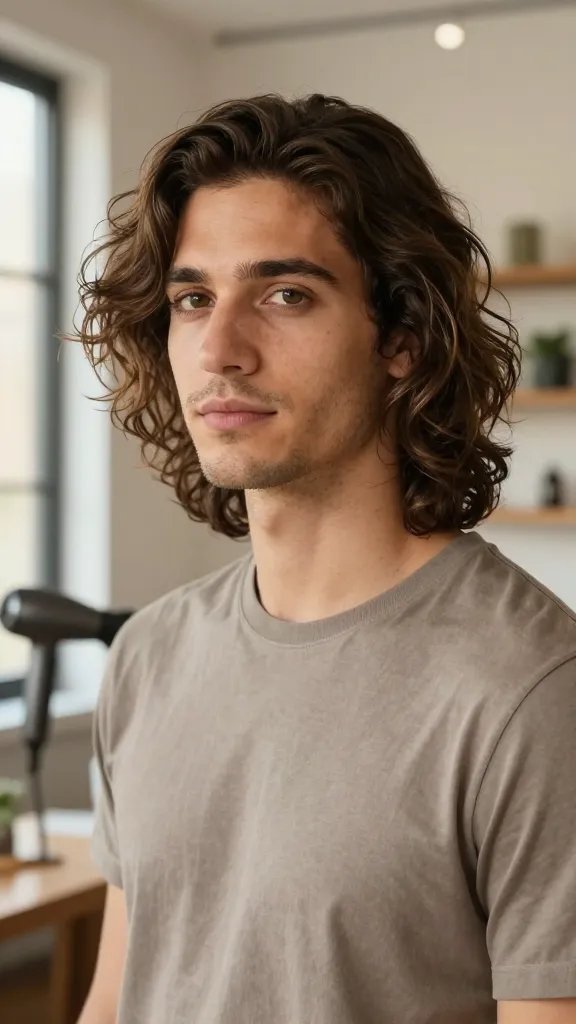
Natural wave is worth keeping. At medium length the pattern has enough room to fall properly, which is what stops the frizz and the triangle shape that shorter wavy cuts so often end up with.
Care matters more than styling here:
- ▸Use a hydrating conditioner every wash so the waves stay soft instead of coarse.
- ▸Apply curl cream or a light gel to soaking wet hair, never damp or dry.
- ▸Diffuse on low or let it air dry, and keep the towel away from the wave pattern.
- ▸Ask for layers that remove bulk from underneath, which lets the wave spring up rather than sit flat.
Rough towel drying is the single biggest cause of frizz in wavy hair. Squeeze the water out with an old cotton shirt instead and the difference shows up the same day.
On days you need it tidier, a loose side part reins the whole thing in without any extra product.

