
I Became a Caregiver for My Wife at 72: 10 Things It Taught Me About Being a Husband

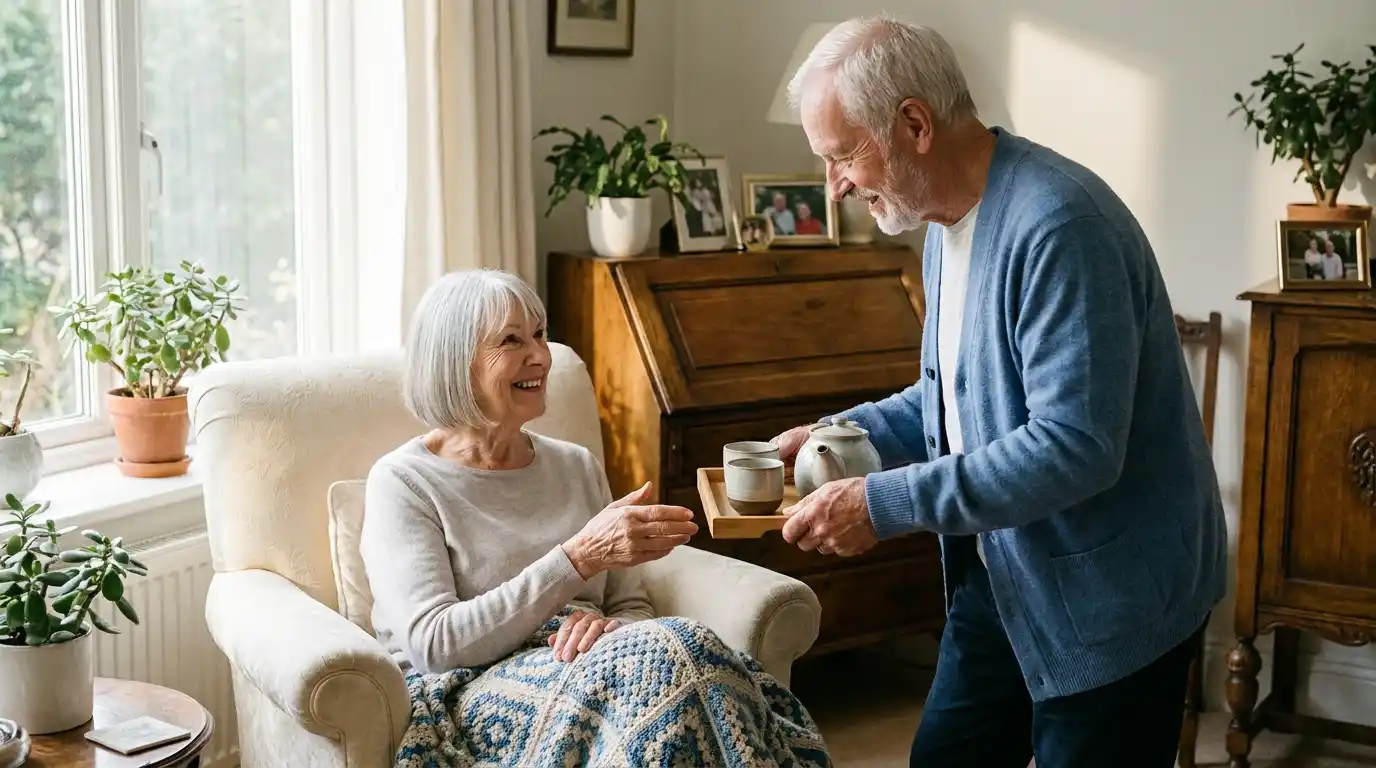
The first time I helped my wife button her blouse, I stood there with my big fingers and realized I didn’t know how. Fifty years married, and I didn’t know how.
That was the morning I started caring for a spouse. Nobody handed me a manual. There was no training day. One week I was her husband. The next week I was her husband, her driver, her nurse, her pharmacist and her bookkeeper.
If you are reading this, you may be in the same spot. You’re tired. You’re learning as you go. And you’re not sure where to turn for help, or if you’re even allowed to ask.
Here’s something that surprised me. Men are not rare in this role anymore. Close to half of all people caring for an older husband or wife at home are men. So you are not the odd one out. You’re one of millions of husbands doing this quietly.
This article shares the 10 things caregiving taught me about being a husband caregiver. Each lesson ends with one small step you can take this week. Some of them point to free help that most husbands never hear about.
How to Accept the Caregiver Role and Get Help Before You Burn Out
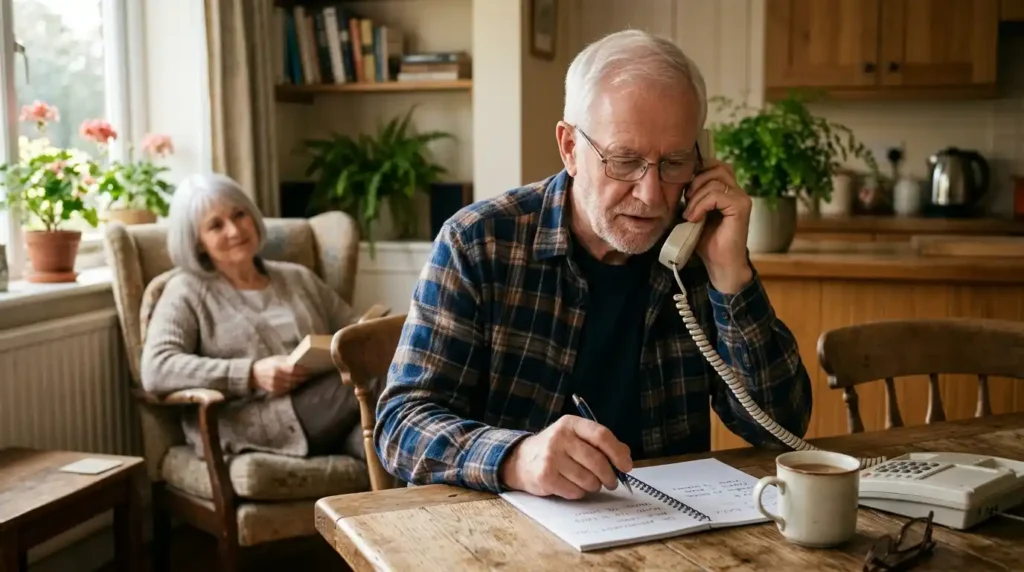
The first two lessons are about pride. Mine got in the way for months. Here’s what I wish I had known on day one.
1. I Was a Husband Caregiver Long Before I Used the Word
It didn’t start with a big moment. It started small. I drove her to appointments. I sorted her pills on Sunday night. I took over the bills because the numbers started to confuse her.
A nurse was the first person to call me her “caregiver.” I pushed back. I told her, “I’m not a caregiver. I’m her husband.” A lot of men say the same thing.
But here’s why the word matters. Almost every support program is built for “caregivers.” If you don’t see yourself that way, you won’t look for that help. And nobody will offer it, because they don’t know you need it.
This gets more common with age. About one in three people whose spouse is over 75 say they are now a caregiver. You may be in that group without knowing it.
This week: Write down everything you did for her in the last seven days. Rides, meals, pills, bills, baths. That list is your job description. Keep it. You’ll use it when you ask for help.
2. Asking for Help Is Part of Caring for a Spouse
Older husbands tend to carry the load alone. We were raised to fix things ourselves. I waited until I was falling asleep in my chair at 4 p.m. before I picked up the phone.
Don’t wait for a crisis. Help works better when it starts early, not after you’re already worn out. Most caregivers who use local aging programs say the support let them keep caring for their loved one at home longer.
Your first call should be to the Eldercare Locator at 1 800 677 1116. You can also dial 211. Ask for your local Area Agency on Aging and say these words:
“I’m caring for my wife at home. What caregiver support do you offer?”
They can connect you with:
- Short breaks so you can rest
- Caregiver training classes
- Support groups and counseling
- Help with meals, rides or home safety
This kind of spousal caregiver support is often free or low cost. It’s paid for with public money meant for people exactly like you.
This week: Make one phone call. Just one. Help was out there. But first, I had to learn how to do the daily care work myself.
How to Learn the Care Skills and Paperwork Nobody Teaches You
Love doesn’t teach you how to lift someone safely. It doesn’t teach you how to read a pharmacy label either. These two lessons cover the practical side.
3. I Had to Learn Skills No One Taught Me
My first real mistake was a lift. I tried to help her up from the couch by pulling her arms. She cried out. I hurt my back. We both ended up scared.
Helping someone stand, bathe, take medicine or change a bandage are skills. You can learn them. You just need someone to show you. More than half of family caregivers now do some kind of medical or nursing task at home, and most never got a lesson.
Here’s the good news. Medicare Part B now covers caregiver training. If her doctor, nurse or therapist decides you need training to help with her treatment, they can teach you and bill Medicare for it. You can go to the session without her. After the Part B deductible, you pay 20% of the approved cost.
Ask her doctor this, word for word:
Start with the task that scares you most. For me, it was transfers. Two sessions with a physical therapist changed everything.
This week: Name your hardest task. Ask her doctor or therapist for training on it at the next visit.
4. Her Appointments, Pills and Bills Became My Job
Soon the kitchen table was covered in pill bottles, bills and appointment cards. This is the hidden side of caring for a spouse. About half of spouse caregivers manage their partner’s health care. About half manage the money too.
What saved me was one binder. Everything went in it. Later I moved some of it to my phone.
Get these papers sorted early, while your wife can still take part in the choices:
For the legal papers, talk to an elder law attorney. Rules change from state to state, so don’t guess.
One more tip. If her symptoms come and go, record short videos on your phone. Show them to her doctor. A 30 second clip explains more than a page of notes.
This week: Write her one page medication list and put a copy on the fridge.
Why Taking Care of Yourself Is Taking Care of Her

This is the part most husbands skip. I did too. Then I got sick, and I learned the hard way that my health was holding up both of us.
5. Respite Care for Caregivers Is Not Selfish
The first time I left my wife with someone else, I sat in the car for ten minutes feeling guilty. Then I went to get a haircut. I came home calmer and kinder. She noticed.
A planned break is called respite care. Someone else stays with your wife for a few hours, a day or even a few nights. You rest. You see a friend. You go to your own doctor. That’s not walking away from her. It’s how you keep going.
Here’s where husbands can find a break:
| Your situation | Where to look |
|---|---|
| Any illness or frailty | Your Area Agency on Aging (Eldercare Locator, 1 800 677 1116). Many offer respite vouchers or free hours. |
| Your wife has dementia and Original Medicare | Ask her doctor about GUIDE, a Medicare dementia care program. It gives you a care guide, a 24/7 help line, training and, for many families, up to about $2,500 a year toward respite. |
| Either of you is a veteran | VA Caregiver Support Line, 1 855 260 3274 |
| You want to compare local providers | The ARCH National Respite Locator at archrespite.org |
A quick note on GUIDE. It only works with Original Medicare Parts A and B. It does not cover people on Medicare Advantage, in hospice or living in memory care. The respite amount can differ by program, so ask your local GUIDE team what you qualify for.
This week: Book one three hour break. Use it for anything that isn’t caregiving.
6. My Health Is Part of Her Care Plan
At 72, I’m an older adult too. For months I ignored a sore back and bad sleep. I skipped my own checkups because every appointment was hers.
Then I got the flu and couldn’t get out of bed for four days. That’s when it hit me. If I go down, two people need care.
Caregiver burnout sneaks up slowly. Watch for these signs:
Spouses who give many hours of care each week face a much higher risk of depression. About one in five caregivers already rate their own health as fair or poor. So this isn’t about being soft. It’s about staying strong enough to keep caring for a spouse.
Tell your own doctor that you’re a caregiver. It changes the questions they ask. It can also lead to real help for stress, sleep and pain.
This week: Book your own checkup. Put it on the calendar next to hers.
How to Stay Her Husband, Not Just Her Caregiver

Caregiving can take over a marriage if you let it. These two lessons are about keeping the man she married in the room, and about finding people who get it.
7. Love Changed Shape, but It Didn’t Shrink
Some days I felt more like her nurse than her husband. I was so busy with tasks that I forgot to just sit with her.
What brought us back was small stuff. I started playing our old songs while I brushed her hair. We kept Friday night dinner at the table, with the good plates. I let her fold the towels, even when it took twenty minutes.
Here’s what I learned about dignity during personal care:
- Tell her what you’re about to do before you do it
- Keep her covered as much as you can during baths and dressing
- Let her do every part she still can, even slowly
- Laugh together when things go wrong
Many spouse caregivers say caregiving actually brought them closer. That surprised me at first. Now I believe it. I know my wife better now than I did at 40.
This week: Plan one moment each day that is only husband and wife. No pills, no forms. Just the two of you.
8. Other Husbands Were the Support I Didn’t Know I Needed
Caregiving is lonely. Friends stop calling. You stop going out. For many spouse caregivers, their social life shrinks more than anything else.
I didn’t want a support group. I pictured sitting in a circle talking about feelings. But my first call was different. It was a phone group of husbands. One man talked about his wife’s bad nights. Another shared how he got his wife into the shower without a fight. I got more practical advice in an hour than in a month on my own.
Men often talk more easily side by side than face to face. A phone or video group works well for that. You don’t even have to leave the house.
Places to find spousal caregiver support:
- Well Spouse Association: peer groups just for people caring for a husband, wife or partner, in person, by phone or by video
- Alzheimer’s Association 24/7 Helpline, 1 800 272 3900: advice any time, plus local groups, some just for men
- Your Area Agency on Aging: local caregiver groups and classes
- Disease groups: cancer, Parkinson’s and stroke groups often run spouse support groups
- Your church, mosque, synagogue or senior center: many run caregiver meetups
This week: Join one group, even if you only listen.
How to Protect Your Money and Plan for What Comes Next

The last two lessons are the ones I put off longest. Don’t make my mistake. Money and backup plans are much easier to sort out when things are calm.
9. The Money Side Nobody Warned Me About
The first surprise bill was for a shower chair and grab bars. Then came adult briefs, a raised toilet seat, extra copays and gas for all those trips. It adds up fast. Nearly half of family caregivers say caregiving has hurt them financially.
Here’s what’s real, and what isn’t:
If your wife’s income and savings are low, ask about Medicaid. In many states, Medicaid can pay for home care help or adult day programs.
Keep every receipt in one envelope or folder. Even small costs count at tax time.
This week: Call a tax preparer and ask one question: “What caregiving costs can I deduct, and does my state have a caregiver credit?”
10. Plan for the Day You Can’t Do It Alone
When I had the flu, I realized nobody else knew her routine. Not our son. Not our neighbor. If I had ended up in the hospital, she would have been lost.
So I wrote an “If I’m in the hospital” page. It sits in the binder and on the fridge. It lists:
Then I did something harder. I visited an adult day program and one care community. I didn’t sign anything. I just wanted to know my options before I needed them.
Needing more help one day is not a failure. Caregiving gets harder as your wife gets older, and every husband reaches a limit. Decide now, while you’re calm, what “too much” looks like for you. Talk about it with your kids or a close friend.
You’ll feel grief along the way too. You miss the wife you had, even while she’s right beside you. That’s normal. Talk about it with someone you trust.
This week: Write your “If I’m in the hospital” page and give a copy to your backup person.
What Caring for My Wife Taught Me About Being a Husband
I still think about that morning with the blouse buttons. I felt useless. Today I can button that blouse in ten seconds. More than that, I know how to ask for help, how to rest and how to keep our marriage alive through all of it.
If you remember nothing else, remember this:
- Call yourself a caregiver, and ask for help early
- Get trained, get organized and take real breaks
- Guard your own health and your marriage as hard as you guard hers
You don’t have to do all ten things this week. Pick one. If you only do one thing, call the Eldercare Locator at 1 800 677 1116.
Caring for a spouse made me a better husband than fifty years of marriage ever did. If you have a lesson of your own, share it in the comments. Another husband out there needs to hear it.
FAQs About Caring for a Spouse
Does Medicare pay a husband to care for his wife?
No. Original Medicare does not pay family caregivers. But it does cover caregiver training from her doctors, and dementia families may get help with respite through the GUIDE program. Some Medicare Advantage plans and state Medicaid programs offer more.
How do I find free caregiver help near me?
Call the Eldercare Locator at 1 800 677 1116 or dial 211. Ask for your local Area Agency on Aging. They can connect you with breaks, classes, support groups and home help.
What are the signs of caregiver burnout?
Watch for poor sleep, a short temper, skipped meals, pulling away from friends and feeling hopeless. If these last more than a couple of weeks, tell your doctor.
Is it wrong to feel angry or sad while caring for my wife?
No. Anger, sadness and grief are normal for a husband caregiver. Talking with other spouse caregivers or a counselor helps a lot.
When should I think about more care for my wife?
Think about it when her safety or your health is at risk, or when you can’t keep up even with help. Visit options early so you can choose calmly, not in a crisis.

