How to Pack a Capsule Wardrobe for Men (All Categories Explained)

The average man wears only 20% of his closet regularly. The remaining 80% sits there as visual noise and wasted money.
You face morning decision fatigue and end up in mismatching, ill-fitting trends that expire in a single season.
It does not have to be this way. You can build a high-performance capsule wardrobe for men using 30 to 35 pieces.
This framework relies on basic outfit math where every top pairs with every bottom.
You will learn how to select high-quality men’s wardrobe basics to create an effortless daily look. This strategy is the ultimate blueprint for minimalist menswear.
The 2026 Rules of Clean Menswear
The era of buying cheap, micro-trend garments every three months is officially over. Fast fashion pieces fall apart quickly and harm your wallet.
Now, style centers on structural precision rather than giant, oversized clothes. The hyper-baggy trends of the past few years have plateaued.
Real style is back to clean silhouettes that drape naturally on your body without pulling.
Because utility now dictates design, fabric choice is everything. You should stick to 100% natural fibers like wool, cotton, and linen.
Synthetic fabrics trap sweat and lose their shape after three washes. Natural fibers breathe well and look premium.
To keep your closet clean, use the One In, One Out rule. If you buy a new shirt, you must donate or sell an old one.
This boundary keeps your collection lean. If an item does not align with the natural lines of your body, it has no place in a modern closet.
The Foundation Palette: Lock in Your Outfit Math
Many men think style requires a massive eye for color. In reality, it is just a simple math puzzle. You only need four base colors to build your system:
Once your black, white, grey, and navy anchors are locked down, you earn the right to introduce depth. You can add one accent tone like Olive, Tan, or Burgundy.
Think about a classic navy overshirt. It works interchangeably across grey chinos, dark raw denim, and khaki trousers.
You do not need to think about coordination in the morning. When every piece speaks the same color language, dressing in the dark becomes foolproof.
5 Essential Clothing Categories Explained

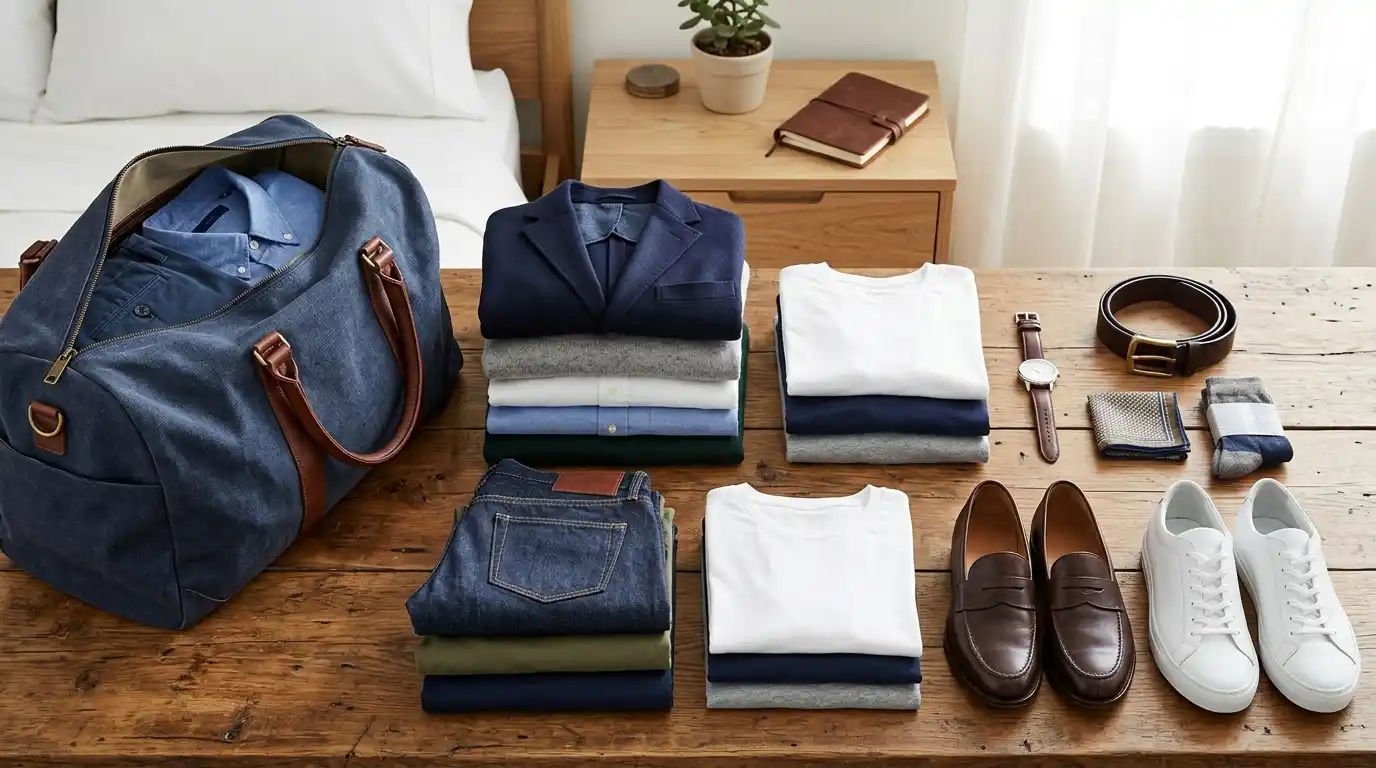
Let us build the engine room of your wardrobe from the ground up. You need specific items that last for years.
1. Tops (5–6 T-Shirts, 3–4 Shirts)
Buy heavyweight cotton t-shirts that weigh 230+ GSM. GSM means grams per square meter, which measures fabric thickness.
Thin shirts twist in the wash, but heavy cotton stays sharp. Add two classic white Oxford Cloth Button-Down shirts and two breathable knit polos.
2. Bottoms (2 Denim, 2 Chinos, 1 Trouser)
Get two pairs of dark indigo raw selvedge denim. This stiff denim molds to your body over time.
Add two pairs of mid-weight cotton-twill chinos in Navy/Stone. Finish with one pair of tailored merino wool trousers for formal days.
3. Knitwear and Layering (3 Pieces)
Select two fine-gauge Merino wool crewneck sweaters. They layer perfectly under jackets without adding bulk.
Add one structured cotton overshirt to wear open over t-shirts.
4. Outerwear (2 Pieces)
You need one unlined, unstructured navy blazer for smart events. You also need one heritage utility jacket, like a waxed cotton coat or a technical trench for rainy weather.
5. Footwear (3 Pairs)
Your shoes anchor your outfit. Buy minimalist, low-profile white leather sneakers. Add one pair of leather boots with Goodyear-welted soles.
This term means the sole is stitched to the upper fabric, so a cobbler can easily repair it when it wears down. Finish with classic suede loafers.
Your footwear and coats take the brunt of the elements. Invest heavily there, and the rest of the capsule falls into place.
4 Steps to Build Your Wardrobe
Building your collection does not start at a cash register. It begins with an audit. Follow these steps to sort your clothes:
- Empty your closet completely. Put every single piece of clothing on your bed.
- Filter by reality. Separate items based on your actual weekly routine, not a fantasy schedule. If you work from home, you do not need six business suits.
- Check the fit. Try on every item. If it is tight or loose, put it in a donation pile.
- Identify the gaps. Note what basics you actually miss, like a solid grey sweater or proper chinos.
Sorting your clothes shows you what you actually wear. Most men realize they own duplicate items they dislike.
Off-the-rack garments rarely offer a flawless fit. Budget about 10% to 15% of your clothing money for a local tailor.
A tailor can adjust sleeve lengths, taper trousers, and set shoulder seams. This step turns basic clothes into high-end personal style.
Clear the noise, find your baseline gaps, and only purchase items that fill them.
The Packing and Maintenance Protocol

A perfectly executed capsule wardrobe turns a week-long business trip into a single carry-on breeze.
You can pack your core pieces easily using the bundle-rolling technique. Roll your t-shirts and sweaters tightly to prevent wrinkles and save space.
Place your shoes at the bottom of the bag and stuff them with socks to keep their shape.
Proper storage keeps your clothes fresh when you are back home. Use this matrix to maintain your garments:
Avoid harsh, hot ironing on quality fabrics because it burns the fibers. Use a handheld steamer instead to relax wrinkles safely.
Take care of your fabrics, and they will save you thousands of dollars in replacement cycles over the next decade.
Summary of Next Steps
True style is not about having a huge closet. It is about structural clarity and interchangeable parts. When you own fewer, better things, you save time and look sharper every day.
Take action this weekend:
- Clear out your closet and run a lifestyle audit.
- Select your four base colors.
- Find a local tailor to fix your favorite pieces.