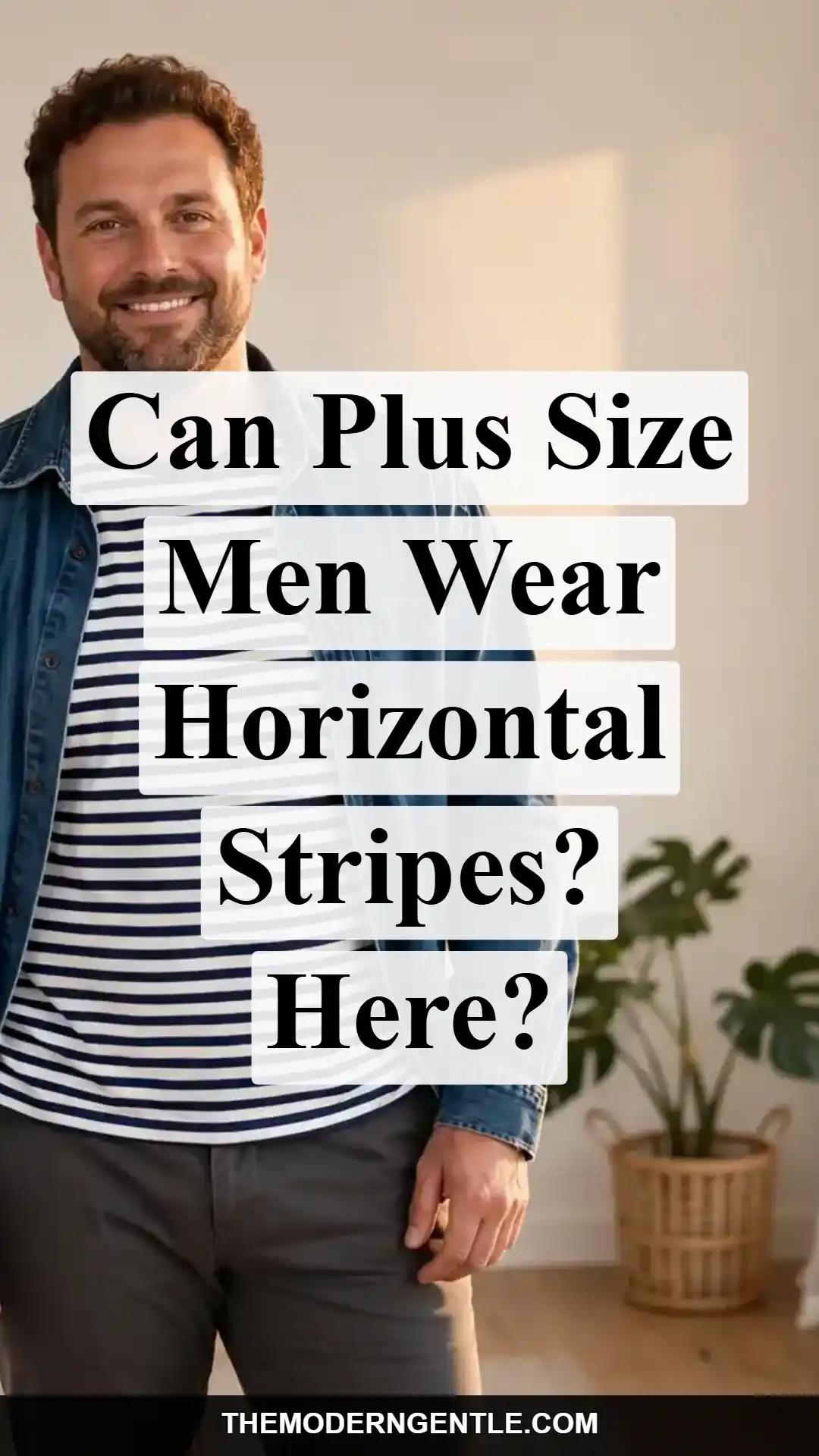
Can Plus Size Men Wear Horizontal Stripes? Here’s How to Get It Right


You’ve heard it a hundred times: horizontal stripes make you look wider. So you skip every striped shirt on the rack and reach for solid black again.
Here’s the truth — that rule was written for nobody in particular, and it definitely wasn’t written with real body shapes in mind.
Yes, plus size men can wear horizontal stripes. The stripe itself was never the problem. Width, spacing, and fit are the problem, and all three are things you control.
This guide walks you through picking a stripe pattern that works with your build instead of against it, choosing the right contrast and scale, and finishing the outfit so it looks pulled-together instead of accidental.
You’ll go from “stripes are off-limits” to knowing exactly what to look for on a hanger in under 15 minutes.
No sewing, no tailoring, no special tools. Just a few things to check before you buy, and a few habits to use when you get dressed.
Grab a shirt you already own with stripes — even if you’ve been avoiding it — and let’s figure out if it’s actually working for you.
Start with stripe width — the detail plus size men skip

Thin stripes, roughly a quarter-inch or less, read as texture from a distance instead of hard lines. Thick stripes, an inch or wider, do the opposite.
They create bold horizontal bands that pull the eye side to side across your widest points.
Check the label or measure with a tape if you’re unsure. Hold the shirt at arm’s length — if the stripes blur together slightly, that width usually works in your favor.
Choose a color combo with real contrast

Navy and white. Charcoal and cream. These pairings work because the eye reads them as a pattern first, not a shape.
Low-contrast pairs — like light gray and white — tend to wash out and look shapeless in photos, which defeats the whole point of wearing a pattern.
If two colors sit close together in tone, hold the shirt under normal room light before buying. You want the stripes to be visible from six feet away, not just up close.
Match the stripe scale to your body size
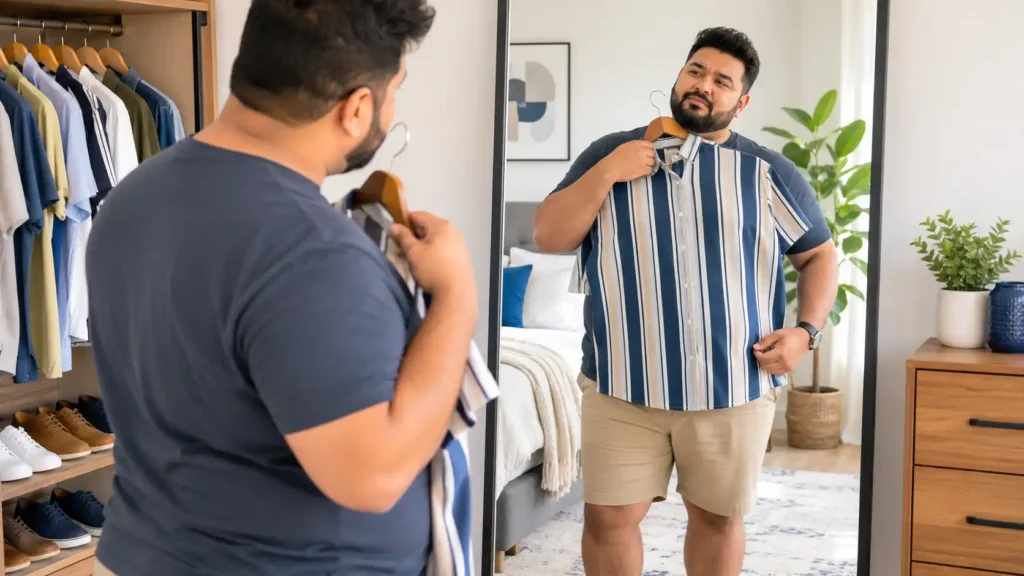
A bigger chest and shoulders can carry a slightly bolder stripe than a smaller frame — the pattern needs enough “room” to read as a pattern instead of a single block of color.
This is the opposite of what most guides say, and it’s the part beginners get wrong most often.
Aim for stripes between a quarter-inch and three-quarters of an inch. Anything much wider starts to compete with your body’s natural width instead of complementing it.
Pick a fit that skims instead of squeezes
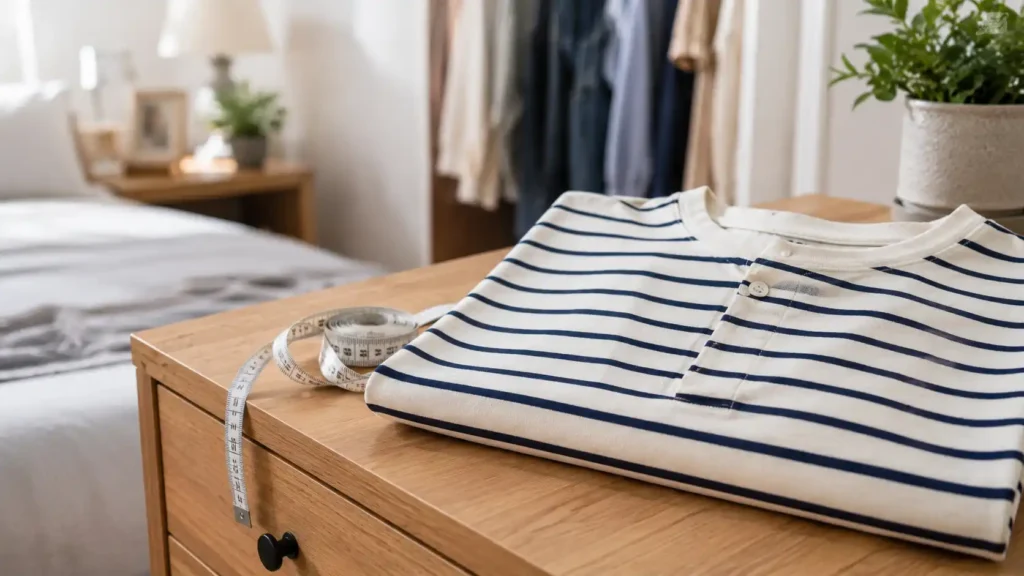
If a shirt pulls tight across the chest or pulls at the buttons when you sit down, the stripes will bend and stretch with the fabric, and that’s what actually creates the widening effect people warn about — not the pattern itself.
Look for a fit with about an inch of room at the chest and shoulders when you pinch the fabric. It should skim your body, not hug it or hang loose like a tent.
Add one vertical element to break up the horizontal lines
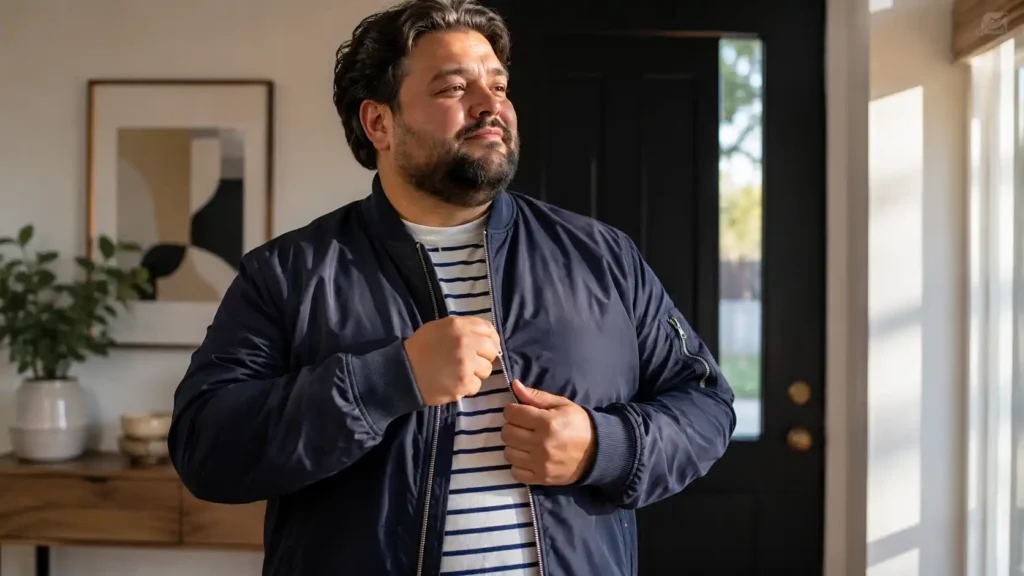
A half-zip pulled up a few inches. An open button placket. A layered chain or a contrast placket color.
Any of these draw the eye up and down for a second, which is enough to soften the horizontal pull of the stripes. Small detail, real effect.
Pair the striped top with solid, darker bottoms
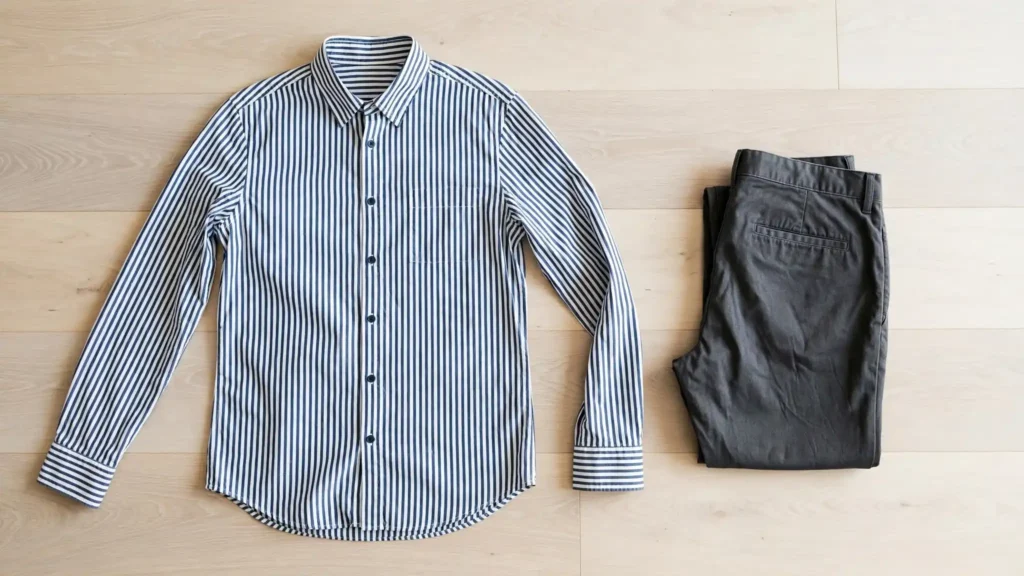
Two patterns fighting for attention is the real outfit killer, not one pattern on its own. Keep the bottom half solid — navy, charcoal, or black chinos work with almost every stripe combo.
Darker bottoms also anchor the outfit visually, which balances out the lighter, busier top half.
Skip patterned shorts or light-wash denim here; save those pairings for a plain tee instead.
Layer with an open jacket or overshirt

An unbuttoned overshirt, a bomber jacket, or a light cardigan worn open does two things at once.
It breaks the stripe pattern into shorter vertical sections instead of one continuous horizontal sweep, and it adds a layer of solid color that draws focus.
Wool, cotton twill, or a lightweight denim overshirt all work — the material matters less than keeping it unbuttoned.
Buttoned up, you lose the effect completely and end up back where you started.
Try the full outfit in a mirror before you commit
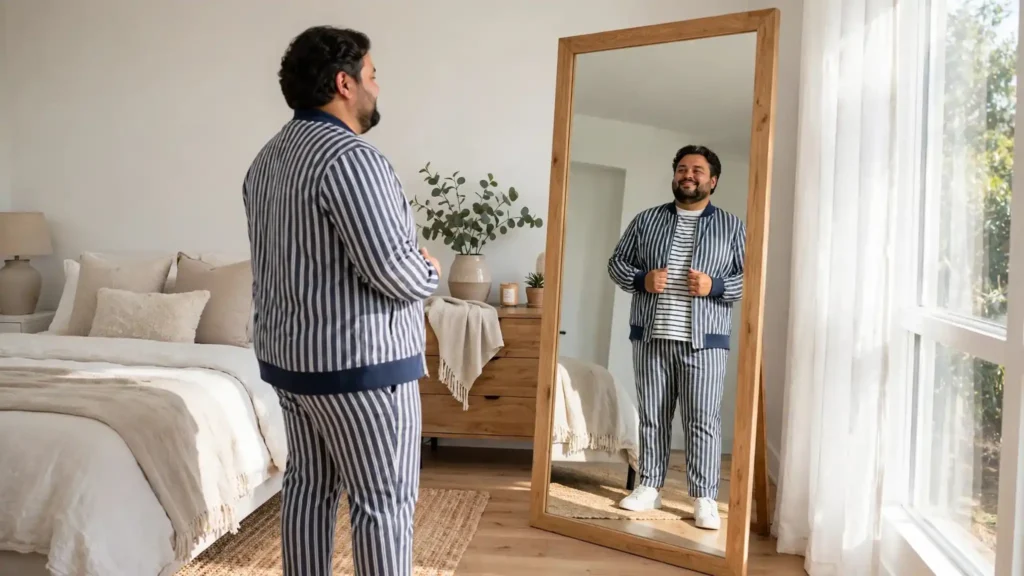
Step back six feet from a full-length mirror in real light, not a phone camera in a dim fitting room. Check three things:
- Does the stripe pattern stay visible or blur into a solid blob?
- Does the fabric pull anywhere when you sit or raise your arms?
- Does the layering piece actually stay open when you move?
If all three hold up, the outfit works. If something’s off, it’s almost always the fit, not the stripes.
Conclusion
You now know exactly what to look for on a hanger: the right stripe width, real contrast, and a fit that skims instead of squeezes.
That’s the whole trick. Yes, plus size men can wear horizontal stripes — the old blanket rule just never accounted for fit and scale doing the real work.
Try it with one shirt you already own before buying anything new. Small adjustments, like keeping that jacket open, make a bigger difference than swapping the whole outfit.
Save this guide to your style board so it’s ready the next time you’re shopping.