How to Measure Tall Men for Clothing (At Home Guide)

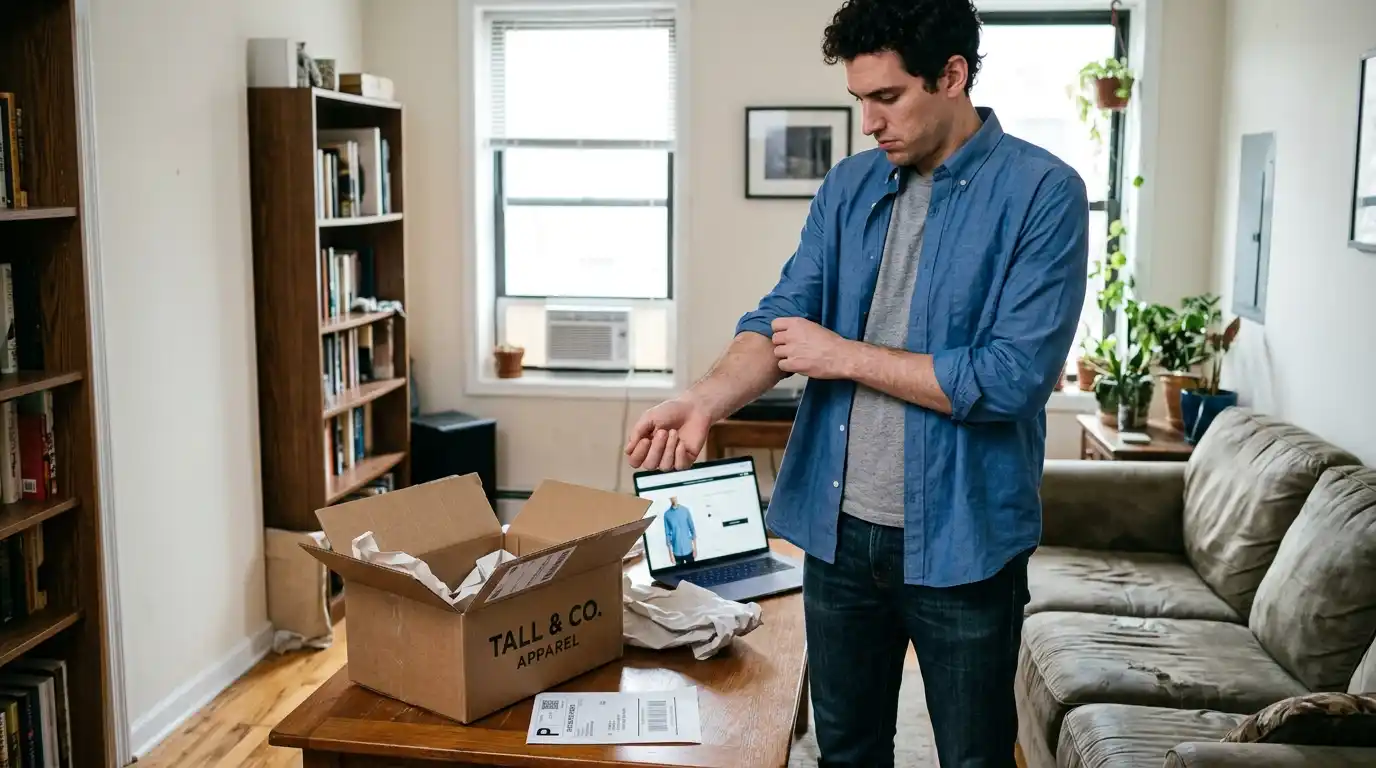
If you are over 6’1″, buying clothes online usually feels like a gamble. You are forced to choose between sleeves that show your wrists or a torso that looks like a literal parachute.
Standard apparel metrics overlook the unique limb to torso ratios of taller builds. They often incorrectly group “Tall” with “Big” sizes.
You do not have to guess your size anymore.
This step by step tutorial breaks down exactly how to measure tall men for clothes in your own bedroom. Learning these numbers ensures your next online order fits perfectly on the first try.
You will save time, avoid return lines, and finally get clothes that match your frame. Here is your ultimate tall mens clothing size guide to getting the right fit.
❌ “Big” Sizing
Adds width around the chest and waist. Great for broader frames, but leaves sleeves and torso length unchanged.
✅ “Tall” Sizing
Adds length to the torso, sleeves, and inseam — keeping the same width so the fit stays proportional.
The Essential Toolkit for Home Sizing
Do not reach into the garage for that metal construction tape measure.
Metal tape does not hug body curves. It gives a false, rigid reading that translates to overly tight clothes.
Minor errors multiply quickly when you order online. A tiny 0.5 inch mistake in a drop shoulder cut can throw off an entire sleeve profile.
To get an accurate measurement, you need the right at-home tailoring tools.
Gather these items before you start:
🧰 Your Home Sizing Checklist
Once you have these tools ready, you can measure with confidence. Let us start with your upper body.
How to Measure Your Chest and Torso Length

The biggest trap in men’s apparel is assuming a 6’4″ frame needs a 3XL shirt width. Retail brands often scale shirts outward instead of downward.
You need to focus on vertical length, not just horizontal volume.
Dedicated tall brands add 1.75 to 2.5 inches (4.5 to 7 cm) to shirt lengths relative to regular sizes. This extra length keeps your stomach covered when you reach upward.
+1.75″–2.5″
Extra shirt length added by tall-specific cuts — enough to stay tucked when you reach up.
3 Steps to Find Your Upper Body Measurements
- The Chest Wrap: Stand straight and breathe normally. Wrap the tape horizontally directly under your armpits and across the widest part of your shoulder blades.
- The Torso Drop: Place the start of the tape at the highest point of your shoulder. This is where your neck base meets your shoulder line.
- The Target Hem: Run the tape straight down your chest to your mid crotch line. This is your ideal torso length for casual shirts.
Now check your chest measurement against a brand’s specific “T” or “Tall” variant. This allows you to buy a Large Tall (LT) instead of an Extra Large (XL), giving you length without the baggy waist.
Pro Tip: Match your chest measurement to a brand’s “Tall” (T) variant instead of sizing up. This gets you an LT instead of an XL — length without the extra waist bagginess.
How to Find Your True Sleeve Length
There is a distinct art to tracking a long arm. It requires introducing an intentional bend. Your arms are rarely completely straight during the day.
Measuring a completely straight arm means the sleeve will pull back the moment you lift a coffee cup.
Common Mistake: Never measure with your arm locked straight. Always add a slight elbow bend — otherwise every sleeve you order will ride up when you actually move.
True tall lines extend 1.5 to 2 inches (3 to 5 cm) in the arm to prevent standard cuffs from riding up. This keeps your wrists warm and covered. Use this method to get the right sleeve length for tall guys.
3 Steps to Measure Long Arms
- The Neck Base Anchor: Place the start of the tape at the prominent bone at the base of your back neck.
- The Shoulder Pivot: Run the tape over the top of your shoulder point and down the outside of your arm.
- The Wrist Finish: Drop your arm with a slight bend at the elbow. Stop the tape right at your outer wrist bone.
This total number is your official sleeve length. Use this exact number when buying formal button down shirts or casual jackets.
How to Measure Your Waist and Inseam
Pants shopping for tall men often ends in a frustrating compromise. You end up with a sagging waist or a flood ready ankle crop.
Standard retail pants jump in width as they go up, but they keep an average 32 inch inseam.
Specialized tall inseams generally start at 34 inches and scale up past 38 inches for heights 6’6″ and above. To find your size, you must separate your natural waist from your pant waist.
3 Steps to Measure for Tall Pants
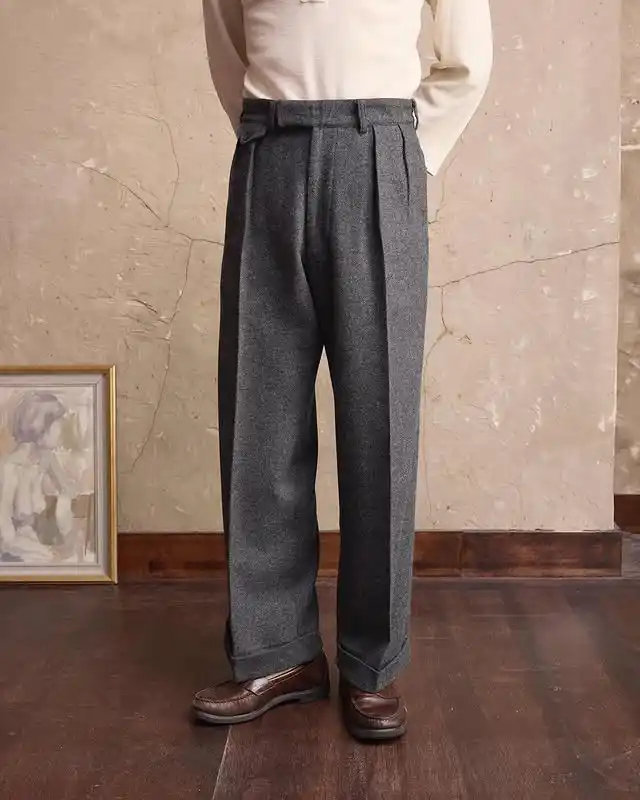
Waist Location: Wrap the tape where you actually wear your trousers.
Body Inseam: Measure from the crotch straight down to the ankle bone.
Flat Pant Check: Lay a well-fitting pair flat and measure crotch to hem.
Comparing your body inseam to your flat pant check gives you a precise number to look for online.
Quick Reference Sizing Table
| Measurement | Start Point | End Point | Why It Matters |
|---|---|---|---|
| Torso Drop | Shoulder point | Mid crotch line | Stops shirts riding up when reaching |
| Sleeve Length | Back neck bone | Outer wrist bone | Stops cuffs pulling back past wrists |
| True Inseam | Crotch seam | Base of ankle bone | Guarantees pants sit correctly, not short |
Summary of Next Steps
Sizing long proportions does not require a professional tailor. You just need a methodical approach to tracking lengths rather than scaling widths.
Open the notes app on your phone right now. Type in your chest, torso, sleeve, waist, and inseam numbers.
Save these details before your next digital checkout window. Having these accurate metrics handy makes online shopping fast, easy, and completely predictable.