16 Business Formal Outfit Ideas for Plus Size Men

Finding a suit that actually works for a bigger frame is less about chasing trends and more about understanding a handful of details most guys never get taught.
The right shoulder seam placement, a shirt cut that lies flat instead of straining at the buttons, a jacket length that flatters instead of fights your proportions, these are the things that separate a suit that looks off the rack from one that looks tailored, whether you spent five hundred dollars or five thousand.
This business formal guide for plus size men pulls together sixteen real looks, from tonal linen sets to pinstripe three pieces to double breasted jackets worn with nothing but a sweater underneath, and breaks down exactly what makes each one work.
Some are strict boardroom appropriate, others lean business casual, and one or two are reserved for the rare event that calls for something bolder.
Whatever your body type, your office dress code, or your budget, there’s a fit principle here you can actually use. Save this one, you’ll want to reference it before your next tailor appointment.
1. Go Tonal From Collar to Cuff for a Leaner, Sharper Silhouette
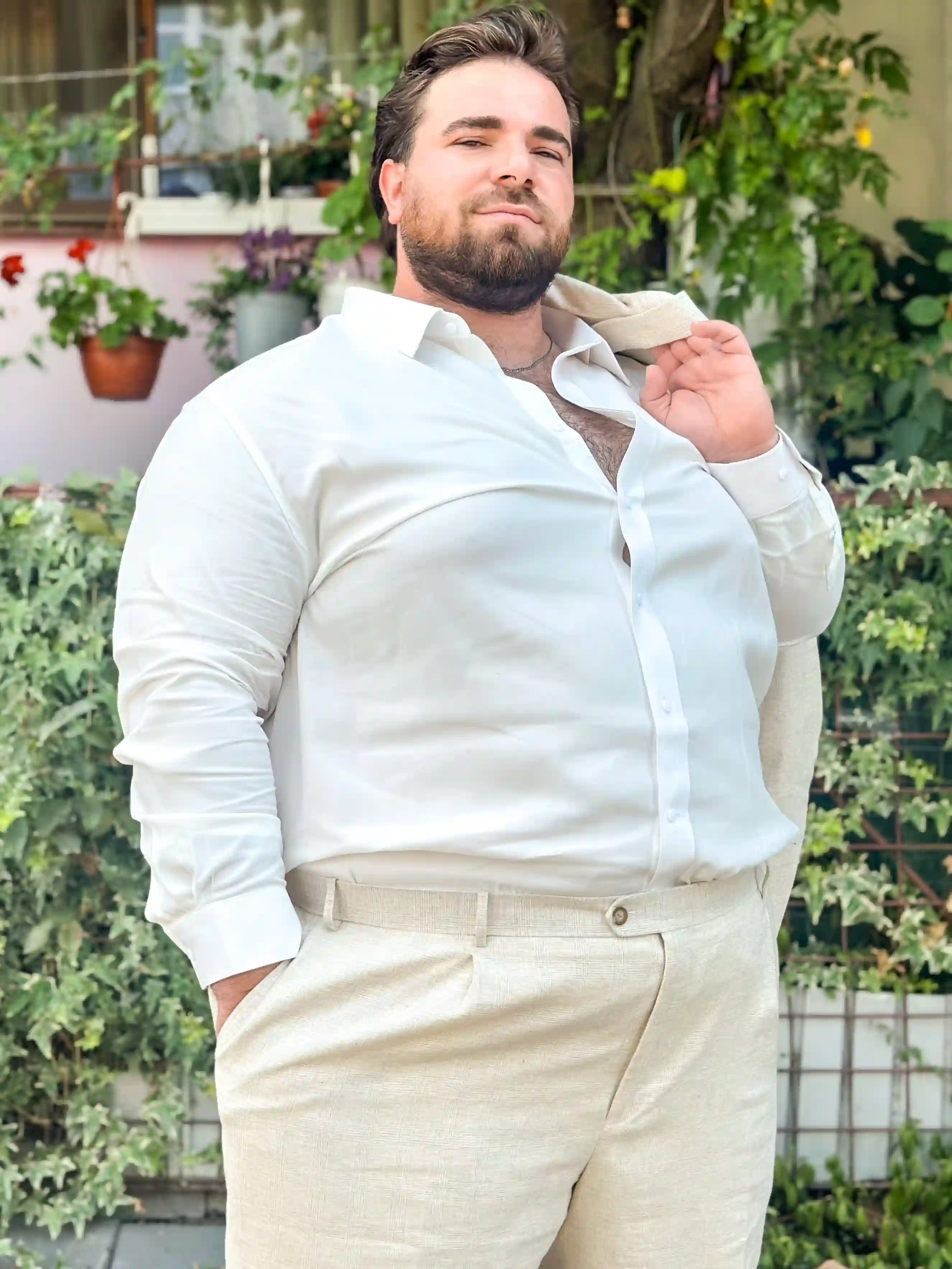
This one nails a trick a lot of plus size guys overlook matching the shirt and trouser tone almost exactly.
When everything sits in the same cream and oatmeal family, the eye reads one long line instead of two separate blocks, which makes the whole frame look taller and leaner.
A few things worth copying here:
- The shirt is tucked but not tight. There is room through the chest so the buttons lie flat instead of pulling.
- The trousers sit at the natural waist, not below the belly, which keeps the torso looking balanced.
- The linen texture in the jacket and pants adds visual interest without adding a second color to track.
- Skipping the tie and leaving the collar open softens the whole look for business casual settings.
2. Swap the Full Jacket for a Patterned Vest on Long Office Days
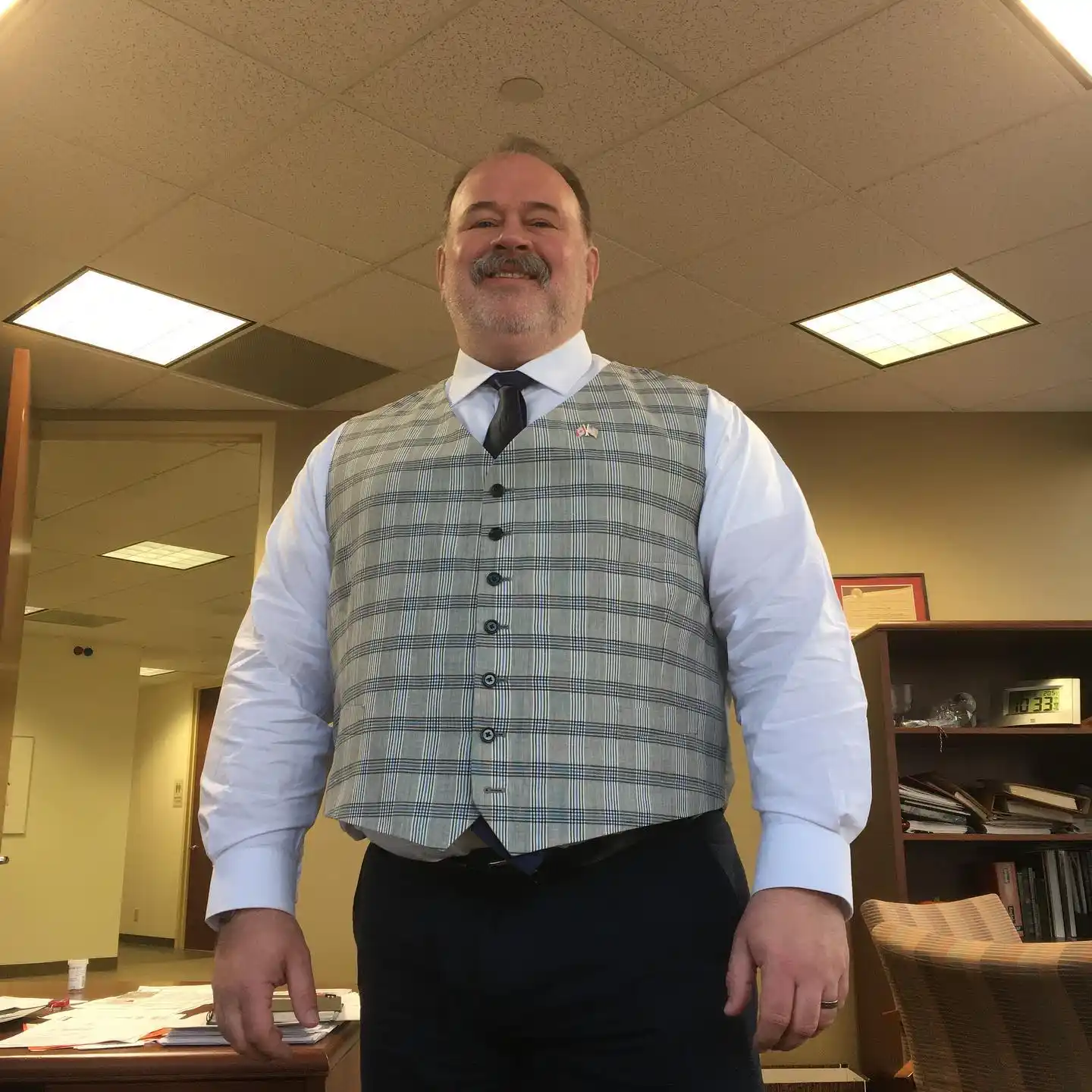
Not every business formal day needs a full three piece look. Here, the plaid waistcoat carries all the formality on its own, paired with a crisp white shirt and a navy tie, while the sleeves stay rolled down and buttoned for a polished finish.
Vests are one of the most forgiving pieces for a bigger frame because they sit close through the torso without the extra bulk of a jacket collar and lapel stacked on top. The key is length.
A vest that is too short will ride up and gap at the bottom button when you sit or stand for long stretches, so it should land right at the belt line and stay flat there.
📌 Good To Know
A tailor can add a small back strap adjuster to most vests so you get a close, flat fit without buying a whole new size up.
3. Let a Pinstripe Do the Slimming Work a Plain Suit Can’t
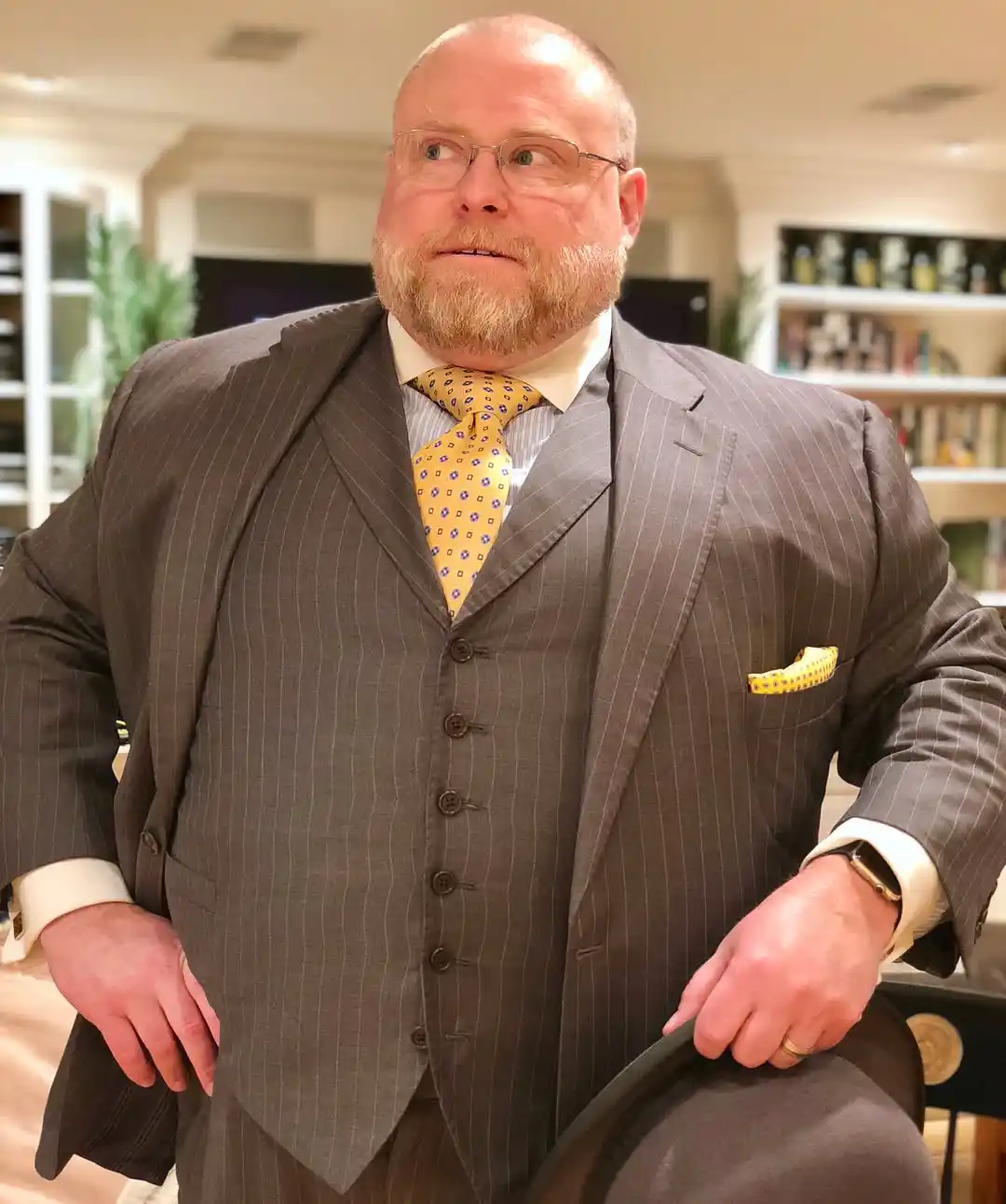
Charcoal pinstripe is one of the hardest working patterns in a bigger man’s closet.
The vertical lines pull the eye up and down instead of side to side, which is exactly the effect you want in a fuller frame, and the subtle stripe reads as sharp without looking flashy under office lighting.
What works here:
- The three piece cut, jacket, vest, and trousers in matching fabric, keeps everything as one unbroken column.
- The pocket square and tie in a warm gold add personality without breaking the tailored line.
- The vest closes flat with no pulling at the buttons, a sign the size is right, not just close enough.
- Glasses and a full beard balance a rounder face shape when paired with the structured lapel.
4. Use One Bold Color to Break Up a Navy Suit Without Looking Loose
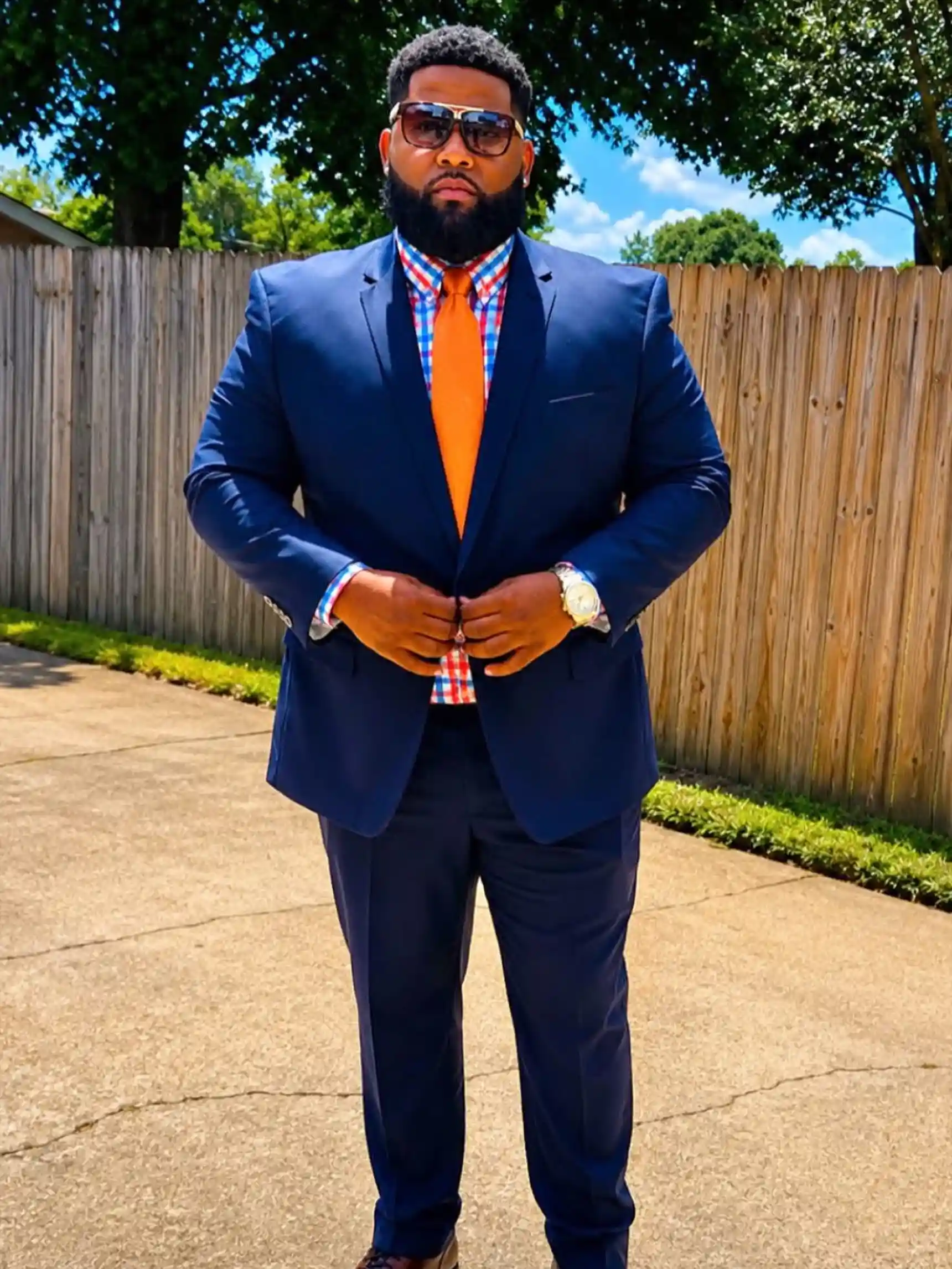
A single breasted navy suit is about as classic as business formal gets, and it is one of the most reliable choices for a bigger build because the dark, solid color reads clean and unbroken from shoulder to hem.
What keeps this outfit from looking flat is the orange tie against a plaid shirt in matching tones. It is the one loud move in an otherwise buttoned up outfit, and it works because everything else stays quiet.
A few fit notes worth studying:
- The jacket is buttoned on the top button only, which is the correct single breasted rule and it lies flat with no pulling across the stomach.
- Sleeve length hits right at the wrist bone, letting a bit of shirt cuff show.
- Trousers break cleanly at the shoe with no bunching at the ankle.
- The tie length ends right at the belt, not above or well below it.
Button only the top button on a single breasted jacket.
Let one accent color, like the tie, carry the personality.
Buttoning every button on the jacket, it strains the fabric across the middle.
Pairing two loud patterns at once, like a bold tie with a bold pocket square.
5. Know Where the Line Sits Between Business Formal and Statement Piece
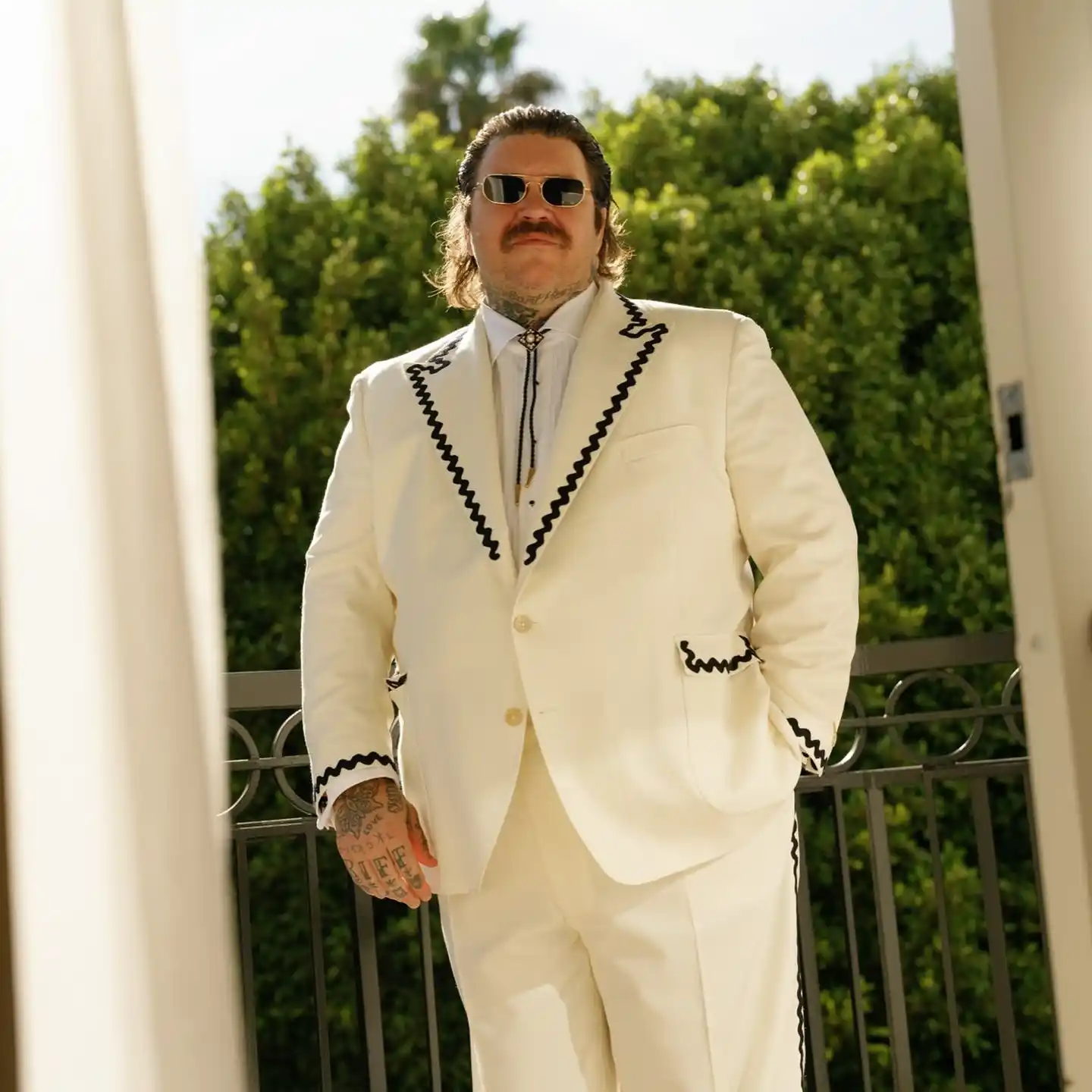
Cream suits with contrast trim like this one belong in a different category than the vests and pinstripes covered so far.
This is a special occasion look, not a nine to five office outfit, but it earns a spot in this guide because it shows how a structured, notch lapel jacket can carry embroidery, a bolo tie, and a heavier fabric without losing shape on a fuller build.
Notice how the dark stitching traces the lapel edge and pocket flap. That kind of contrast detailing draws the eye along the jacket’s structure, which actually works in favor of a bigger frame instead of against it, as long as the jacket itself still closes cleanly and sits flat at the shoulder.
Save a look like this for weddings, galas, or industry events with a creative dress code.
For daily business formal, stick to the quieter suits earlier in this list, and let something like this be the one bold outfit in the closet for when the occasion calls for it.
Structured shoulders and a clean close matter more than the trim. Get the fit right first, then let the details do the talking.
6. Try a Double Breasted Jacket Without a Tie for Modern Business Formal
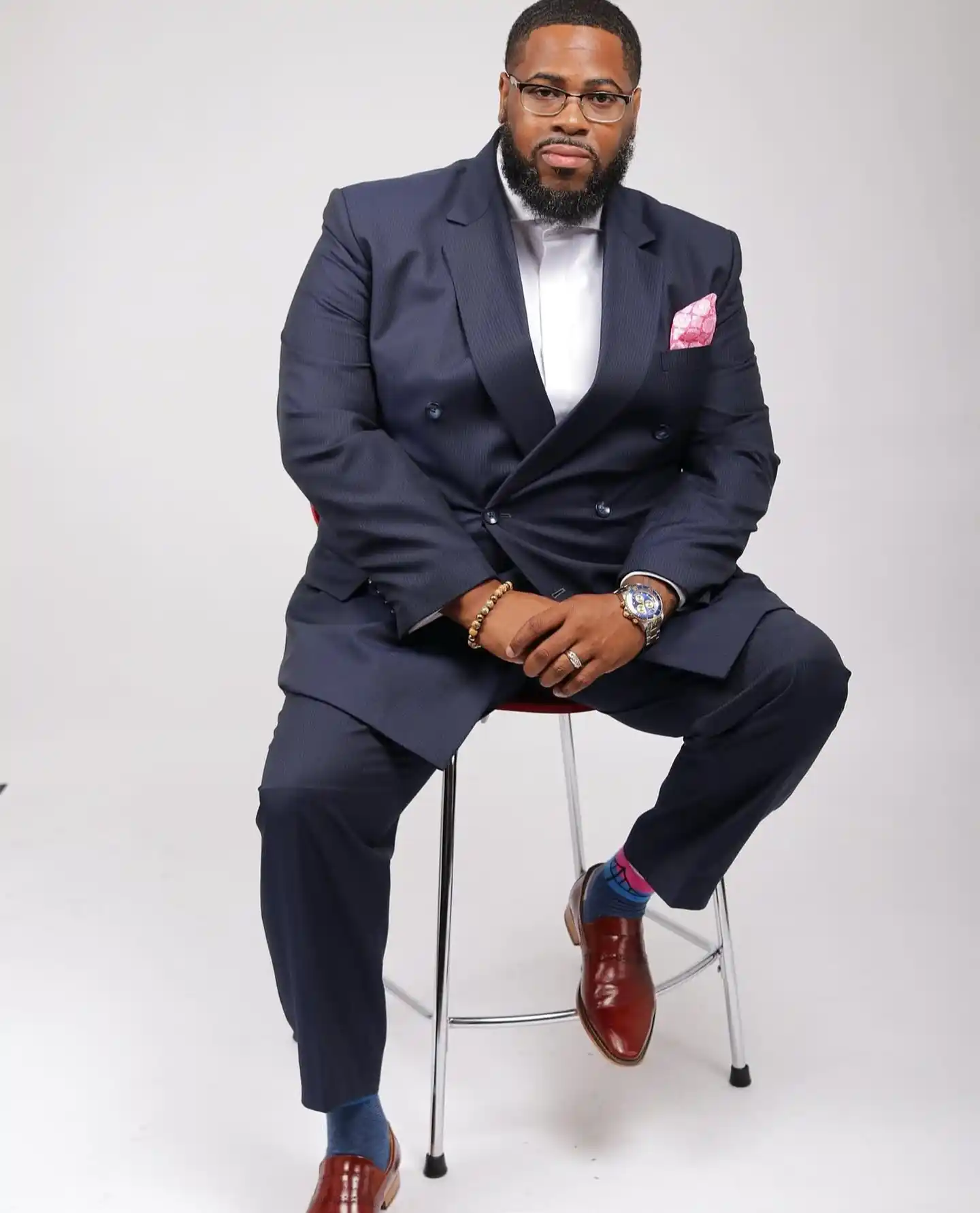
Double breasted suits have a reputation for adding bulk, but seen here, the opposite is true.
The overlapping front panel actually creates a strong horizontal line across the chest that balances a fuller torso, and skipping the tie for an open collar keeps the whole look current instead of stiff.
A soft pink pocket square and patterned socks add just enough personality without pulling focus from the fit.
| Right Fit | Wrong Fit |
|---|---|
| Lapels lie flat against the chest with no gapping. | Lapels pull open when you move your arms. |
| The overlap sits smooth with no stress lines at the buttons. | Visible strain or a button that looks ready to pop. |
| Jacket length covers the seat when seated or standing. | Jacket rides up and exposes the shirt underneath. |
7. Watch How a Suit Behaves When You Sit, Not Just When You Stand
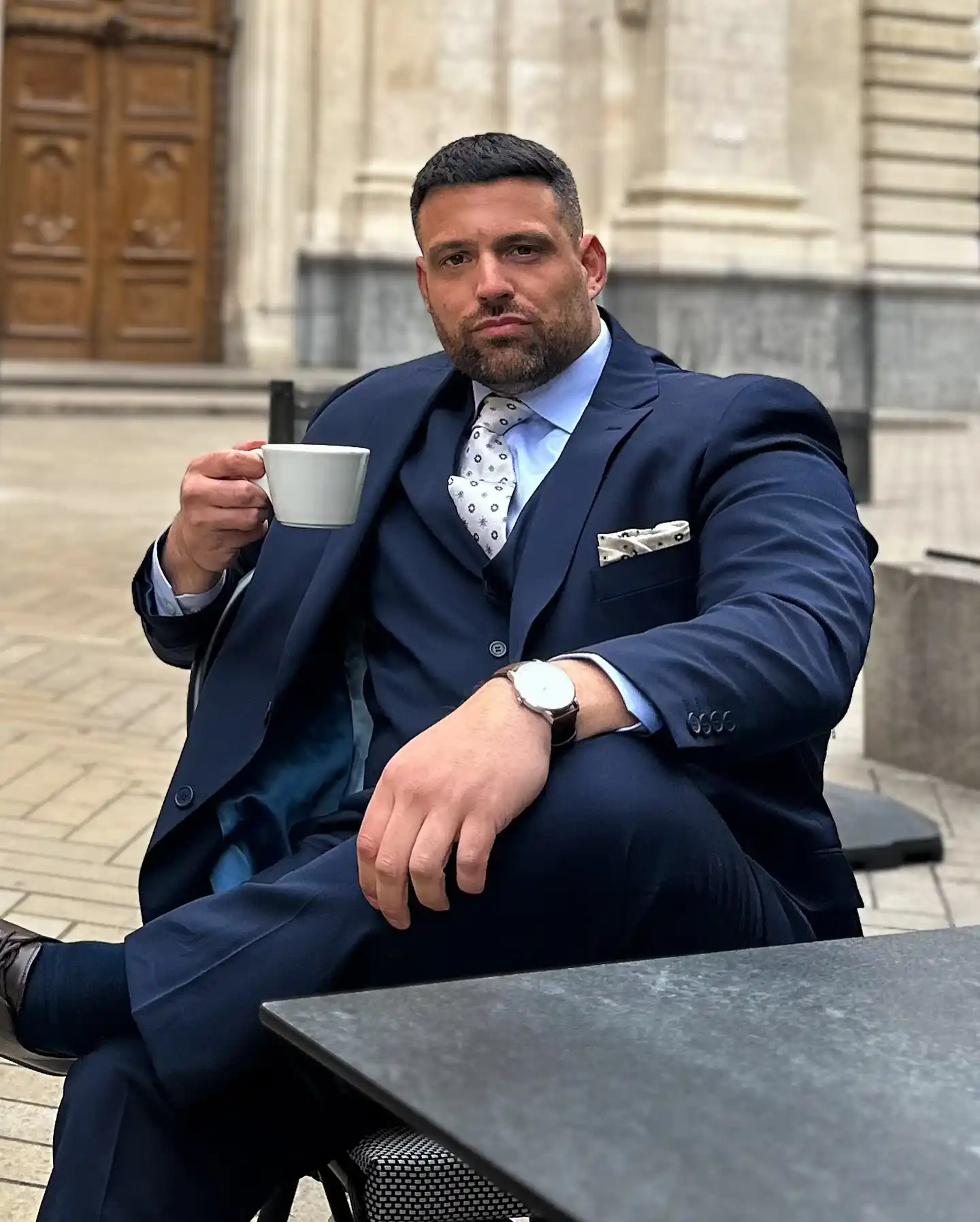
A three piece navy suit looks sharp in almost every photo, but the real test happens the moment you sit down at a table for coffee or a client meeting.
This shot is a good study in that. The vest stays flat across the stomach even while seated, the trouser fabric has enough ease through the thigh to bend without pulling, and the jacket sleeve shows just enough shirt cuff and watch when the arm rests on the knee.
Silver gray tie, matching pocket square, and a plain white shirt keep the whole outfit calm, letting the tailoring itself do the talking rather than any bold color.
The seated fit test
8. Pair a Subtle Windowpane Check With a Black Shirt for Elevated Business Casual
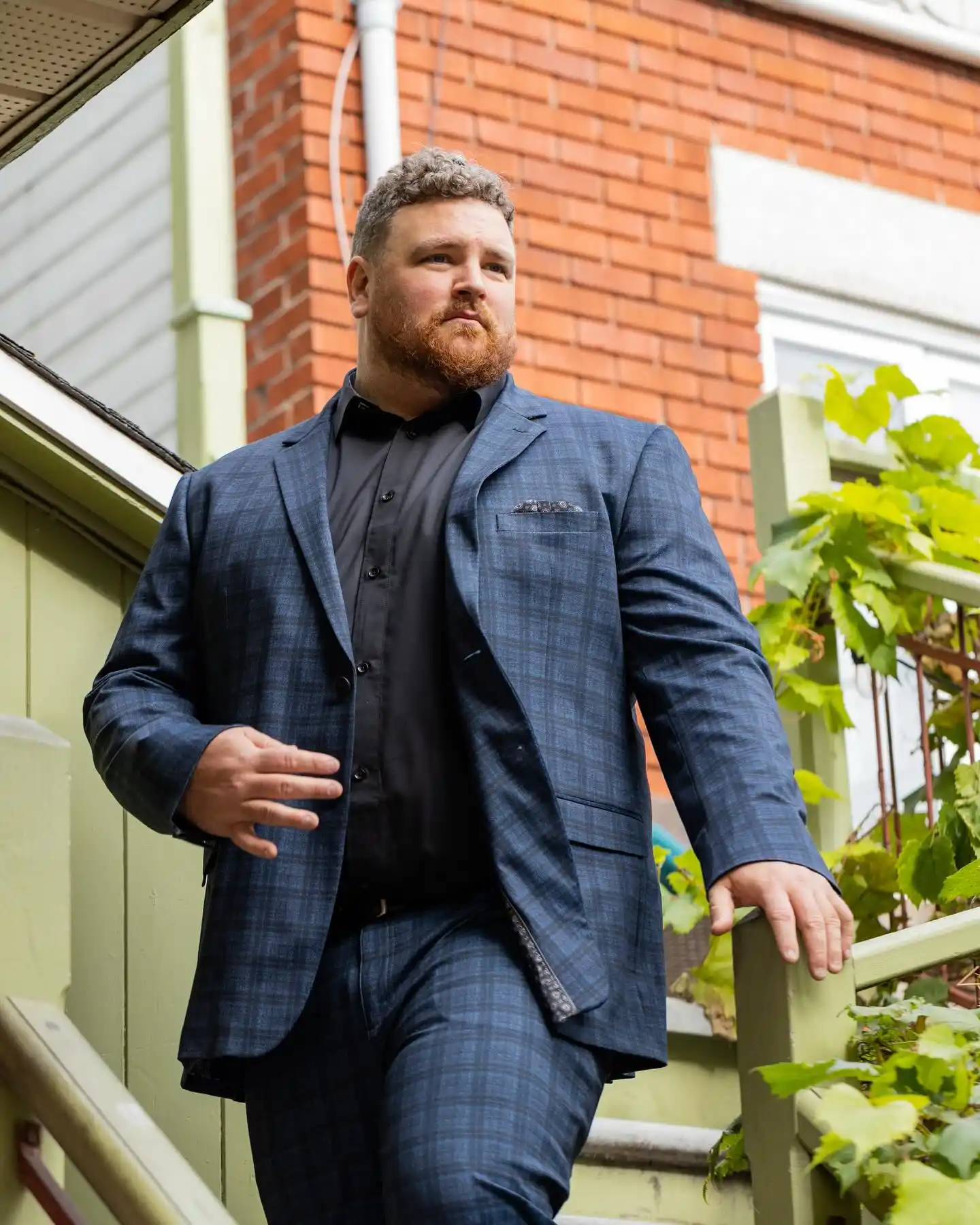
Not every entry on this list has to include a tie, and this one makes a strong case for going without.
The suit itself carries a faint windowpane check in navy and gray, subtle enough to read as solid from a few feet away but with enough texture to keep it interesting up close.
Swapping the usual white dress shirt for black and leaving it open at the collar shifts the whole outfit from strict boardroom formal into something you could wear to a client dinner or a less traditional office.
Start with a suit in a subtle check, not a bold plaid, so it still reads as business appropriate.
Swap the white shirt for black or charcoal and skip the tie entirely.
Add one patterned pocket square in tones already in the suit so nothing feels random.
9. Pleated Trousers Still Have a Place, Especially at This Scale
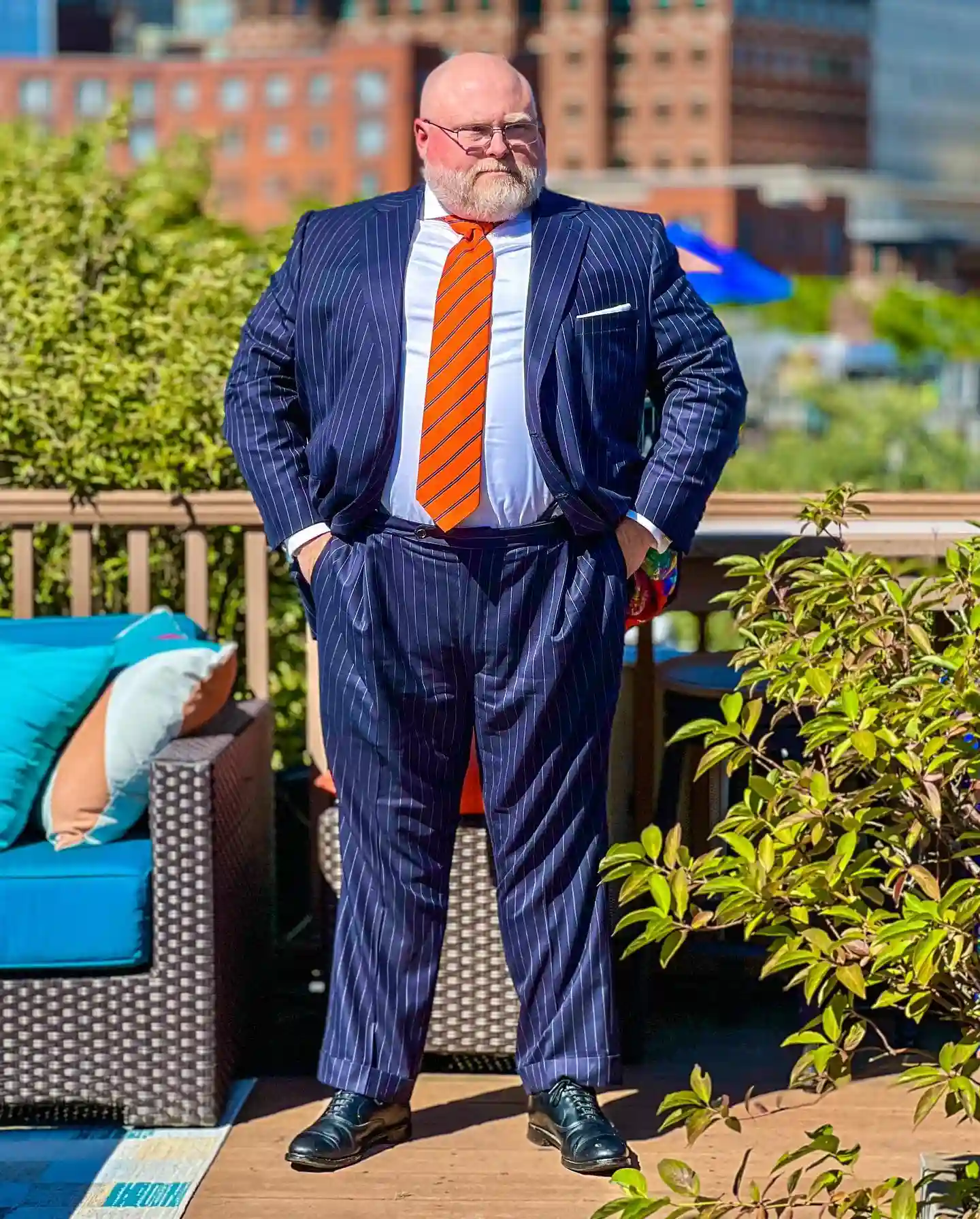
Pleated pants get written off a lot in modern menswear advice, but on a fuller frame they earn their keep.
The pleats give the fabric room to fall cleanly over the hip and thigh instead of pulling tight, which flat front trousers can struggle to do at this size without a very precise tailor.
Here the wide chalk stripe and cuffed hem lean into a slightly old school silhouette, and the orange striped tie against a crisp white shirt keeps it from feeling stuffy.
Standing with hands in the pockets, the jacket stays smooth with no pulling at the button, which tells you the shoulders and chest were measured correctly before anything else.
- ▸Pleats add ease through the seat and thigh without adding visible bulk.
- ▸A cuffed hem adds weight at the bottom of the leg, which balances a fuller top half.
- ▸Cap toe black shoes keep the whole look formal even with a bold tie in play.
10. The Shoulder Seam Tells You More Than Any Other Measurement
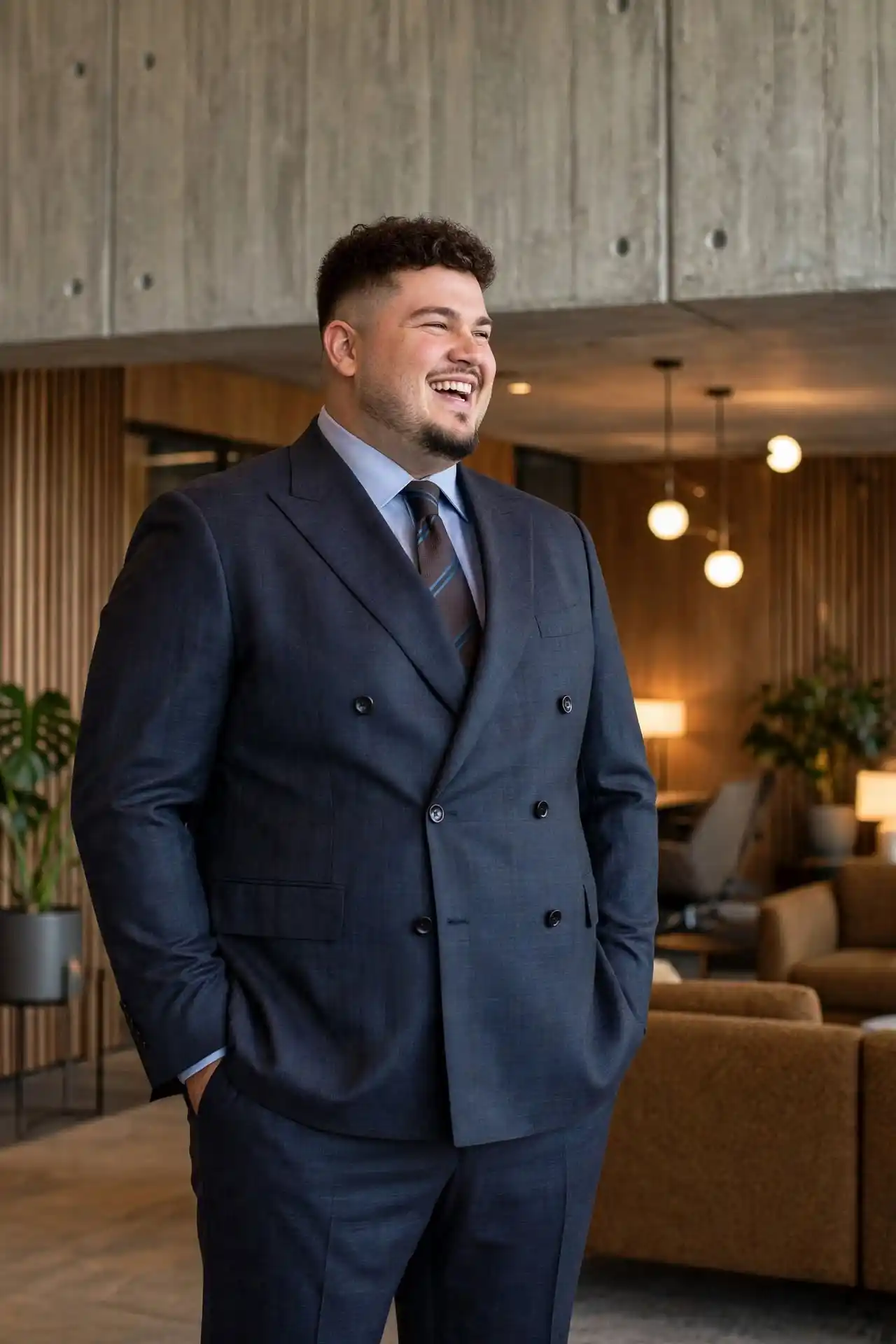
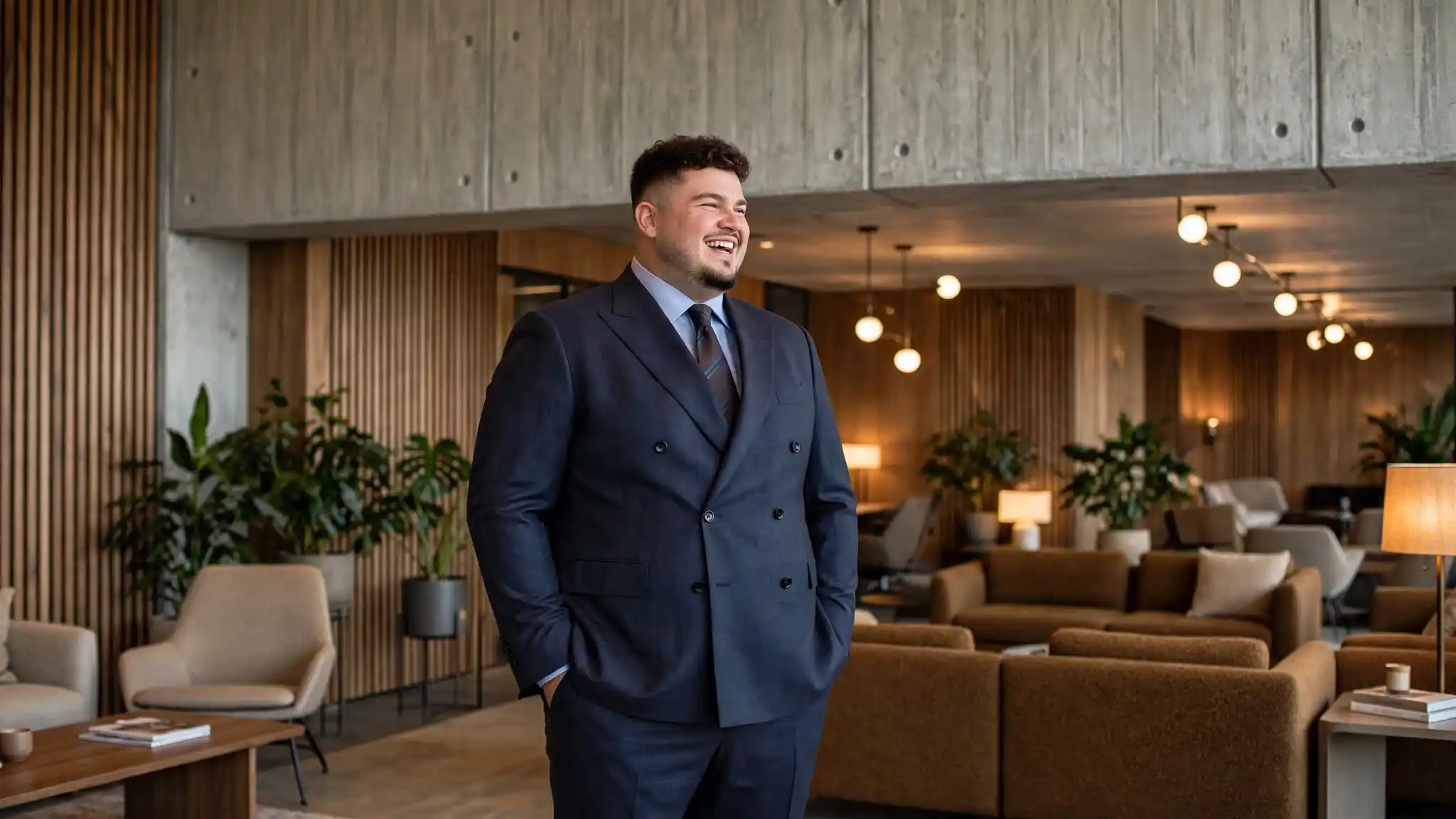
Genuine laughter in a suit photo is rare, and it happens here because nothing about this fit is fighting the guy wearing it.
Look at the shoulder seam specifically, it sits right at the edge of the shoulder bone with no divot pulling inward and no excess fabric bunching up toward the neck.
That single seam placement is the fastest way to judge if a jacket was actually sized for a bigger frame or just bought a size up and left alone.
The peak lapel double breasted cut adds width at the chest on purpose, which reads as strong rather than boxy when the shoulder is right.
A brown striped tie against a light blue shirt keeps the palette warm without competing with the charcoal navy suit.
Shoulder seam sits past the bone, fabric pools at the collarbone, sleeve looks longer than it should.
Shoulder seam meets the bone exactly, jacket moves with the arm instead of restricting it.
11. Drop the Tie and Shirt Entirely for a Smart Casual Take on Business Formal
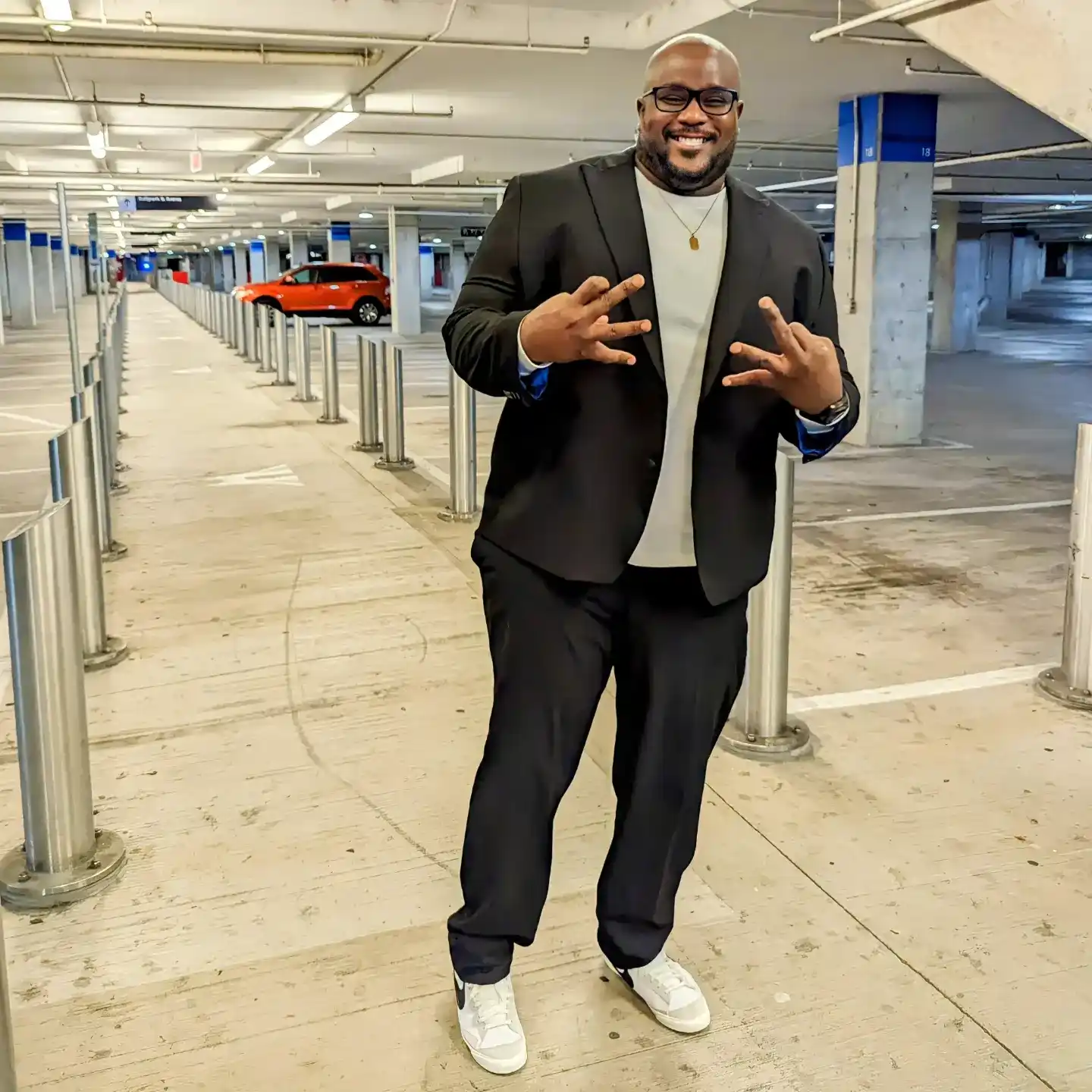
A relaxed blazer over a plain crewneck sweatshirt with sneakers is not traditional business formal, but plenty of modern offices have loosened up enough to make this a real option for client meetings or team events that fall outside strict boardroom rules.
Black on black keeps it looking pulled together instead of sloppy, and the loose, slightly oversized cut of both the blazer and trousers is doing real work for a bigger frame, since nothing is fighting to close or strain anywhere.
This look works because of what it leaves out just as much as what it includes. No tie, no button down, no dress shoes, and it still reads as intentional rather than thrown together.
⚠️ Watch Out
A relaxed blazer only reads as intentional when the shoulder still fits correctly. Baggy through the body is fine, baggy at the shoulder just looks like the wrong size.
12. Mixing Navy and Black Is Allowed, Here’s How to Do It Without Looking Off
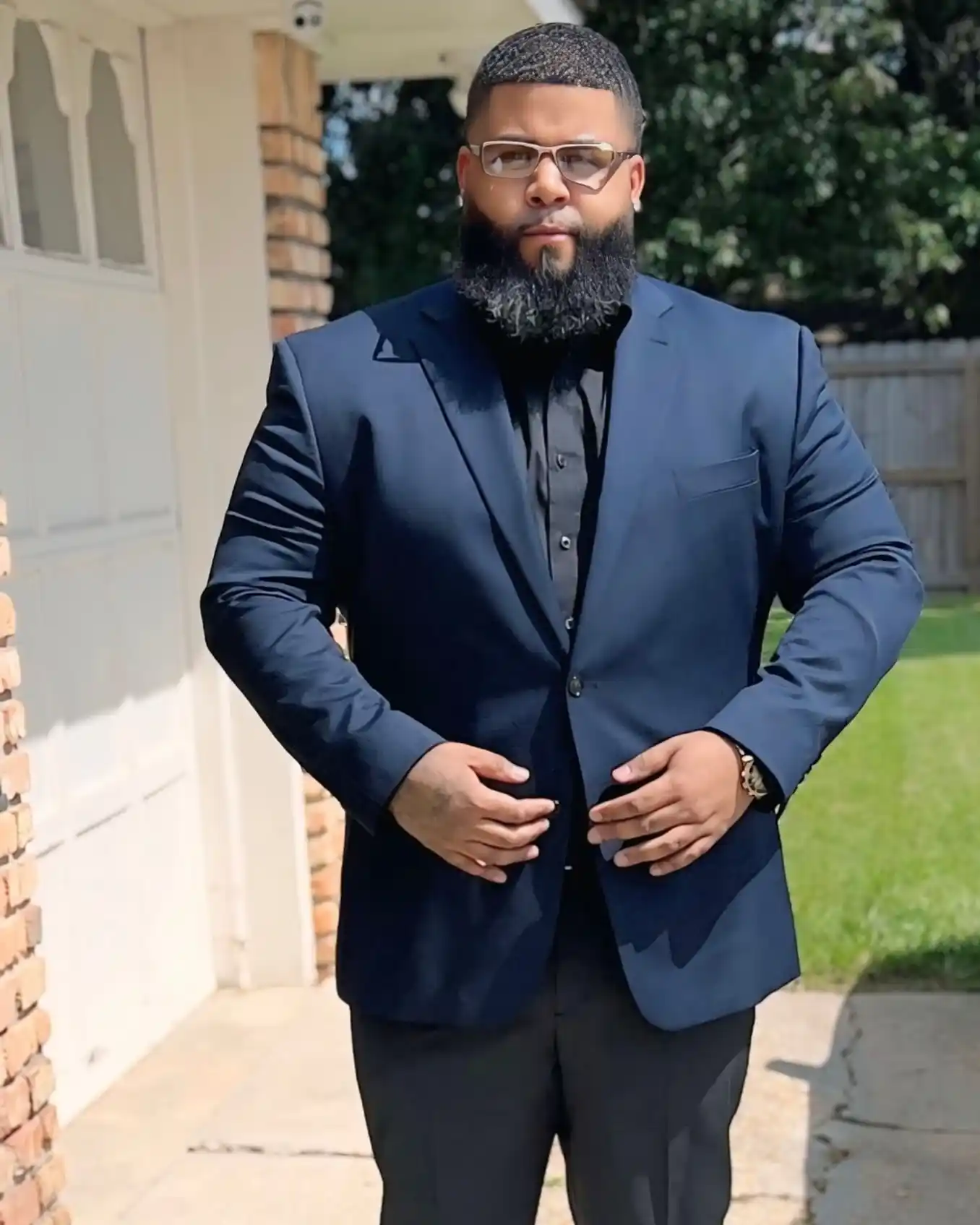
There is an old rule that navy and black should never be worn together, and this photo is proof that rule deserves an exception.
A deep navy blazer over a black button up and black trousers reads intentional rather than mismatched because the navy is dark enough to sit close to black without the two competing for attention in the same frame.
The trick is contrast level, not color matching. If the navy is light or bright, it clashes hard against black.
If it is this deep and saturated, the eye barely registers a difference from a few feet away, so the combination reads as one cohesive dark palette instead of two clashing choices.
A bright or medium navy blazer paired with black pants. The two colors visibly fight.
A deep, near black navy blazer with true black pants. The tones blend into one dark palette.
12. Mixing Navy and Black Is Allowed, Here’s How to Do It Without Looking Off
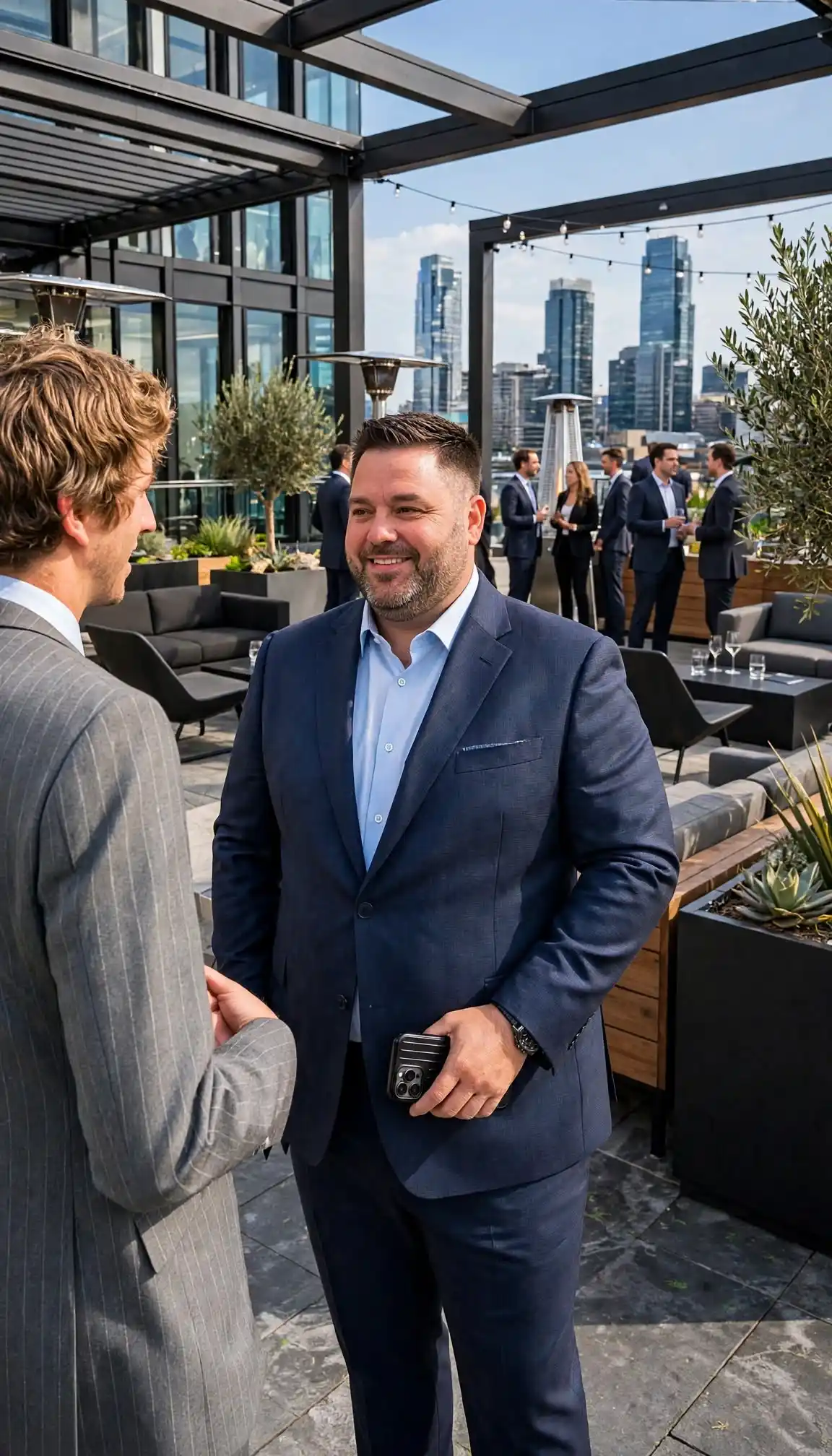
There is an old rule that navy and black should never be worn together, and this photo is proof that rule deserves an exception.
A deep navy blazer over a black button up and black trousers reads intentional rather than mismatched because the navy is dark enough to sit close to black without the two competing for attention in the same frame.
The trick is contrast level, not color matching. If the navy is light or bright, it clashes hard against black.
If it is this deep and saturated, the eye barely registers a difference from a few feet away, so the combination reads as one cohesive dark palette instead of two clashing choices.
A bright or medium navy blazer paired with black pants. The two colors visibly fight.
A deep, near black navy blazer with true black pants. The tones blend into one dark palette.
13. Read the Button Line Before You Read Anything Else on a Dress Shirt
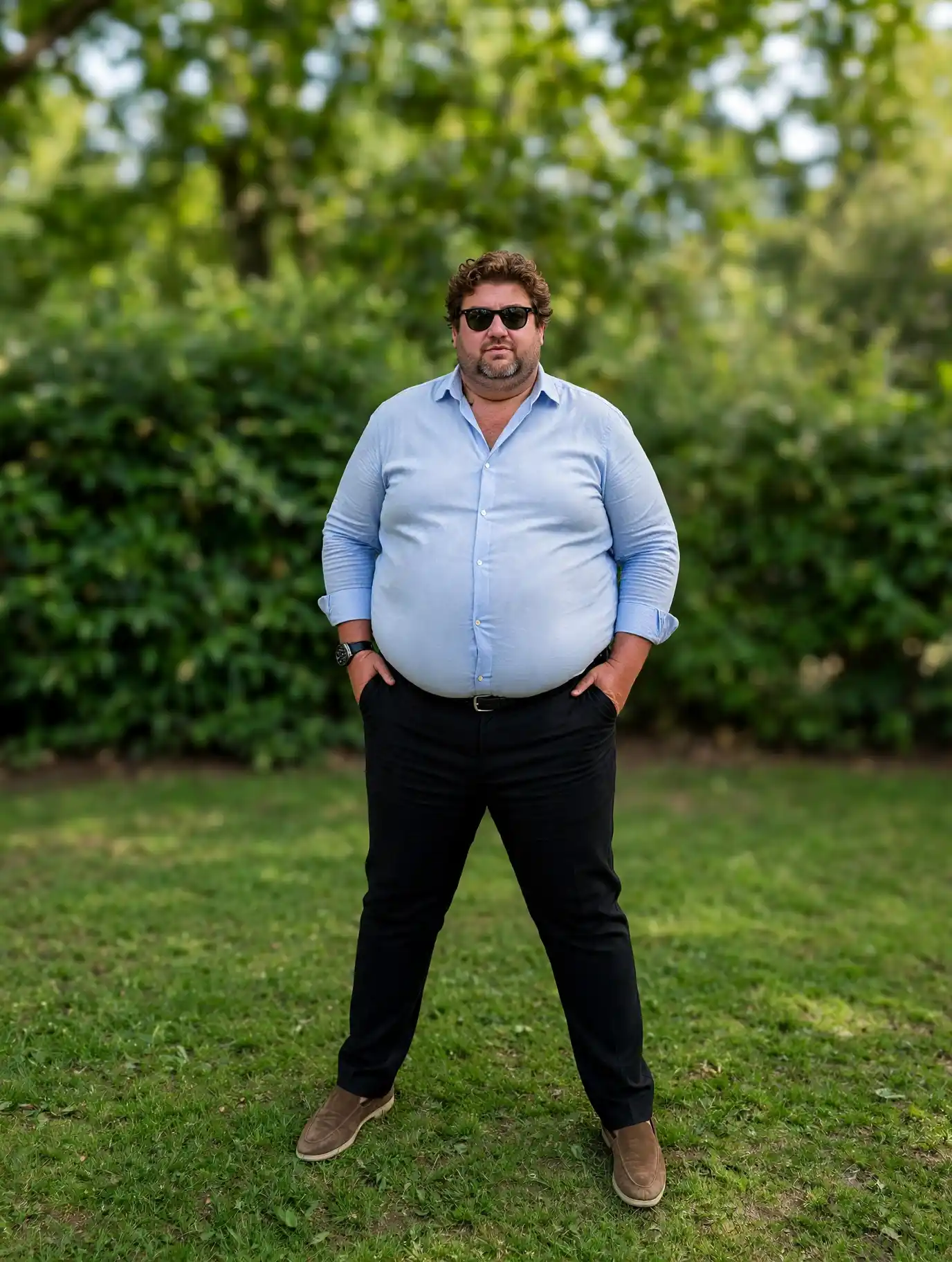
This one is a useful teaching moment. Look closely at the button placket down the center of the shirt: there is visible pulling between the buttons, small gaps where the fabric is working harder than it should.
That is the single clearest sign a dress shirt is sized too small through the body, no matter how good the color or collar looks.
A shirt cut for a bigger midsection should lie flat all the way down, with the placket sitting straight and no strain at any button.
Once a shirt pulls like this, the fix is not to size up the whole shirt, since that often makes the neck and shoulders too loose.
The better fix is a shirt with a fuller cut through the body specifically, sometimes labeled a relaxed or classic fit, or a proper made to measure order.
⚠️ Watch Out
If you can see skin or undershirt peeking through the gaps between buttons, the shirt is too small, even if the collar and sleeves fit fine.
14. A Longer Jacket Length Can Work in Your Favor, Not Against It
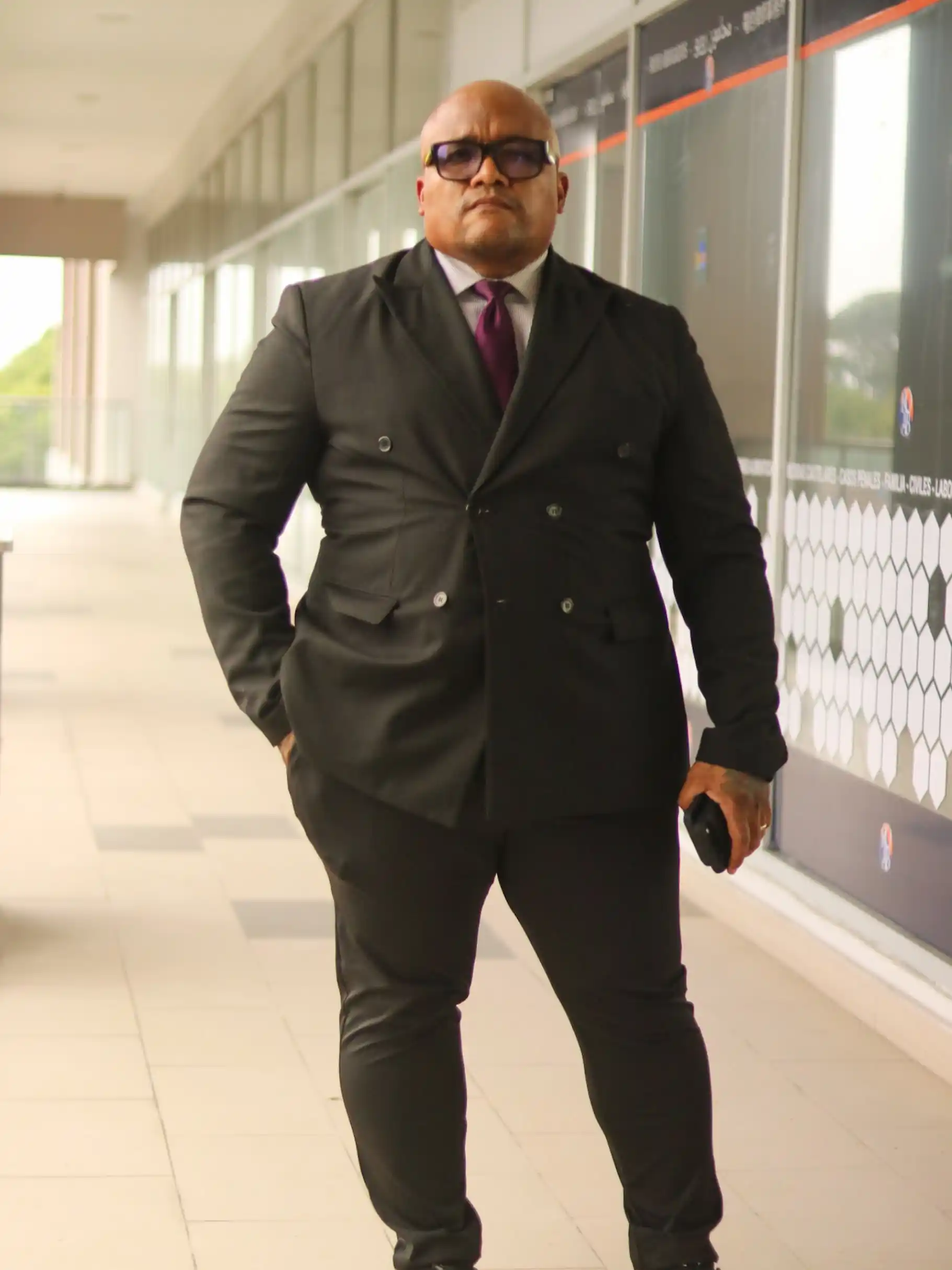
Most fitting advice pushes toward a shorter, cropped jacket for a leaner look, but this photo makes a case for the opposite.
The double breasted coat here runs noticeably longer than a standard blazer, closer to a topcoat length, and it elongates the whole frame instead of cutting it off at the hip.
A deep purple tie against a light dress shirt is the only real color break in an otherwise all black outfit, which keeps the focus moving vertically instead of stopping at the middle.
15. Trade the White Shirt for a Textured Sweater on One Piece Business Formal Days
Brown does not get enough credit in business formal wardrobes, and this suit is a good reason to change that. Warm brown reads softer than navy or charcoal but still holds its own for daytime formal events.
Underneath, a ribbed cream sweater replaces the usual button up entirely, which trades some formality for a lot more comfort and movement through the shoulders, something worth considering if you spend the day standing or moving around rather than sitting at a desk.
Cognac brogues and a silver watch pick up the warmer tones in the suit instead of defaulting to black accessories, which is the detail that makes the whole outfit feel put together rather than accidental.
A few notes on making this combination work:
- Keep the sweater fitted through the body so it does not bunch under the jacket buttons.
- Match your shoe tone to the warmth of the suit, cognac and brown work, black can look stark against it.
- A crew or mock neck sweater sits cleaner under a lapel than a turtleneck does on a bigger frame.
16. Grey Is the Suit Color Most Guys Skip, and It Shouldn’t Be

Everyone reaches for navy or charcoal first, but medium grey deserves a spot in the rotation too. It photographs lighter and softer than either of those, which makes it a good option for daytime meetings or anywhere the room already feels a little formal without needing to look severe.
A light blue shirt underneath keeps the palette calm, and the jacket is left open here, showing off a clean chest line with no gapping at the button.
Two details are doing quiet work in this photo. First, the jacket has some breathing room at the waist button without looking loose, the mark of a jacket cut for the body rather than nipped in too far.
Second, the notch lapel sits flat against the chest instead of curling outward, which only happens when the shoulder padding matches the actual shoulder width.

