How to Layer Clothing for Tall Men So It Doesn’t Look Dumpy

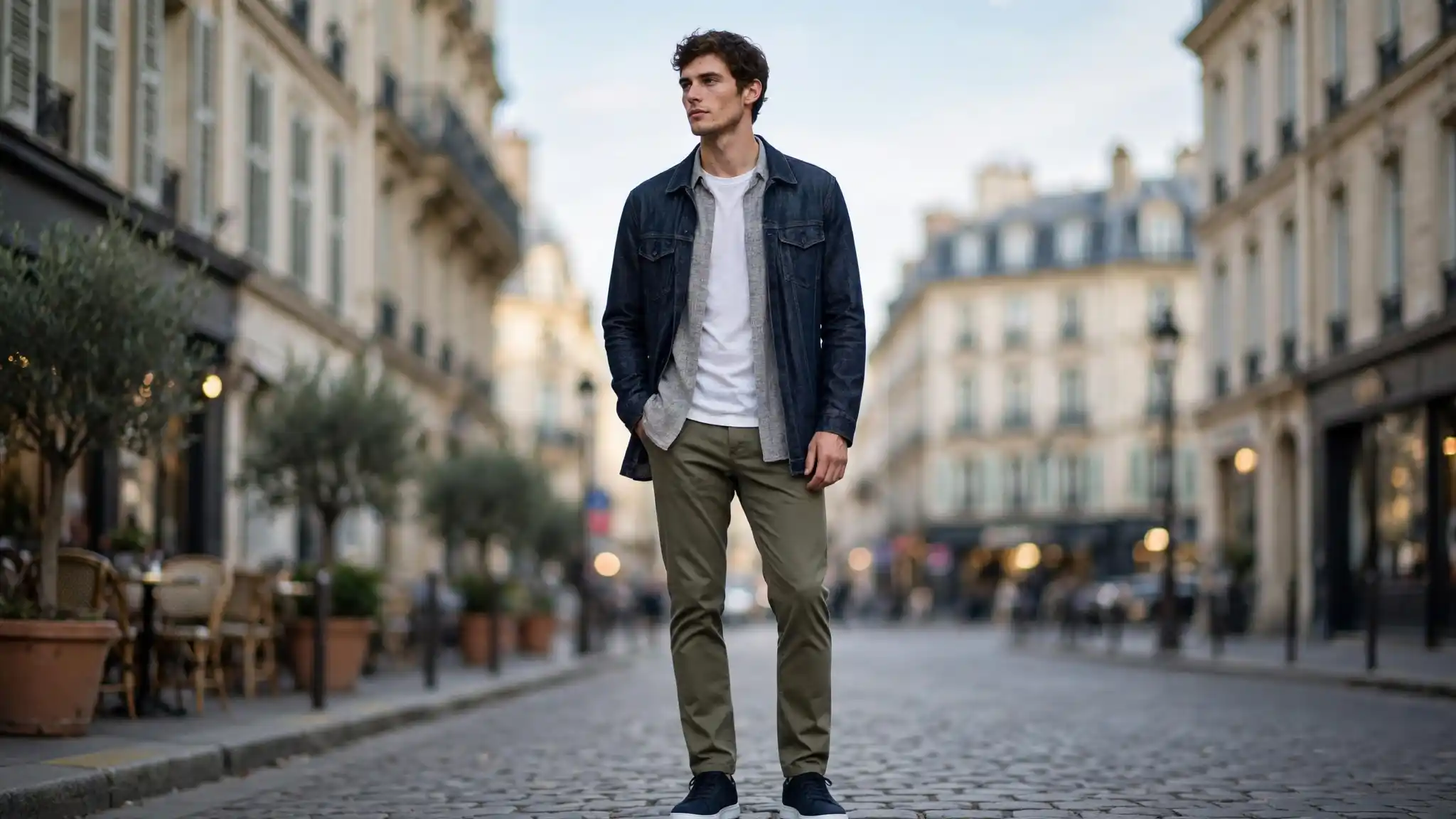
For tall men, layering is a double-edged sword. Done right, it adds masculine structure to your frame. Done wrong, it makes you look like you are wearing an oversized tent.
The biggest problem is standard off the rack clothing.
Most brands scale garments horizontally instead of vertically when they make larger sizes. This creates a dumpy appearance.
Your shirts billow around your waist like a parachute, while your sleeves sit two inches too short for your arms.
You are left with a frustrating choice between clothes that fit your length or clothes that fit your width.
This tall men style guide will solve that issue. You will learn how to layer clothing for tall men without adding sloppy bulk.
This guide covers the thin to thick rule, how to use horizontal visual breaks, and how to choose structural mid layers.
By using these rules, you can build a proportional style for tall guys that keeps you looking sharp and well put-together.
1. Build Your Outfit From Thin to Thick
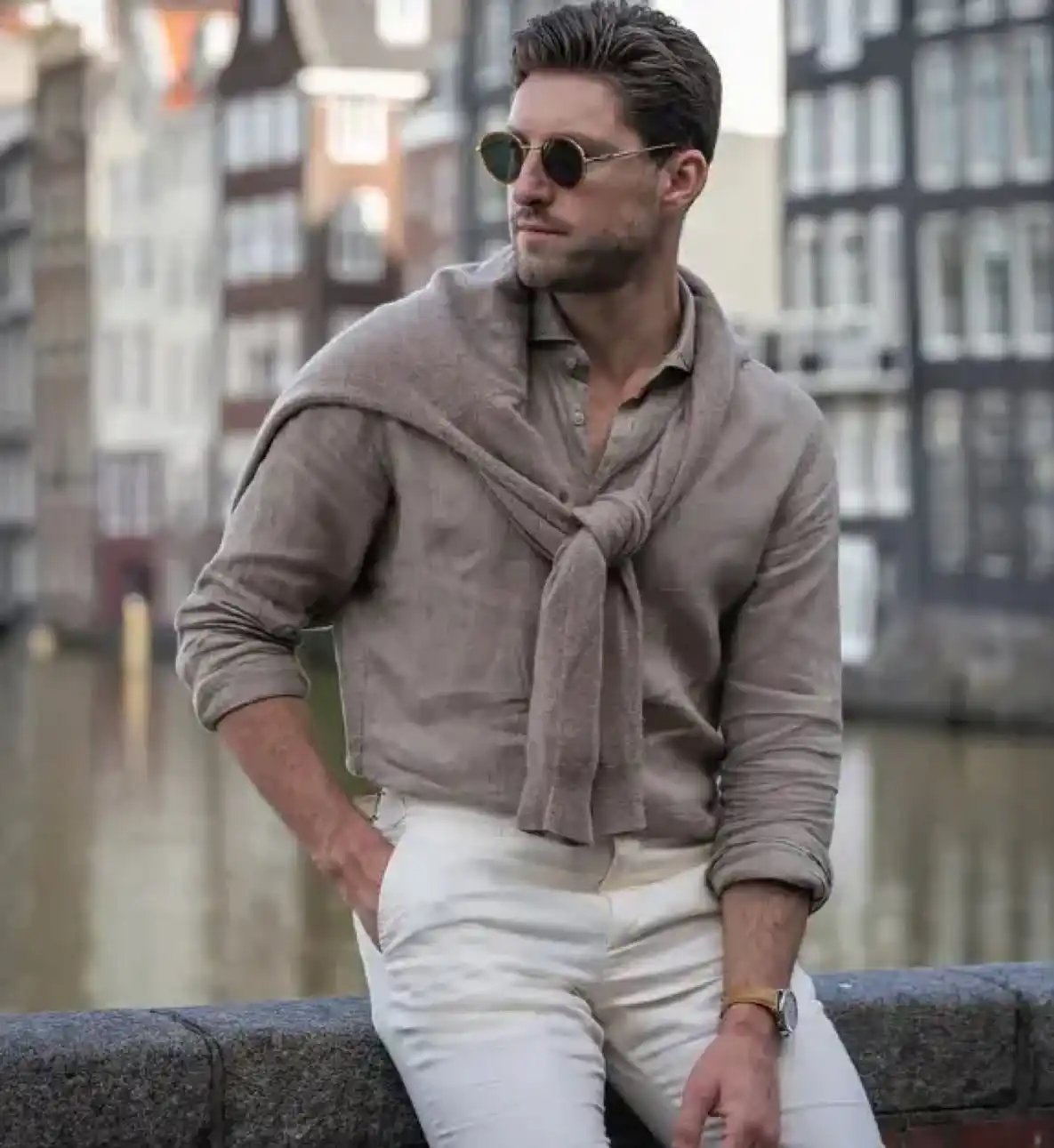
Many tall men assume adding bulk requires heavy fabrics. But real structural depth comes from stepping up fabric weights incrementally.
If you start with heavy fabrics right against your skin, you will look bulky in the wrong places. You need to build a graduation of weight to keep your look clean.
📊 The Fabric Weight Gauge
Build weight in steps — never jump straight to heavy fabric against skin.
- Start with your base layer. This should be a lightweight, fitted cotton or bamboo blend t shirt. Choose a fabric weight under 150 GSM. It should cling comfortably to your chest and torso without gathering excess fabric around your ribs.
- Add your mid layer. Once you have a slick, low friction base layer, your second piece can slide over it without catching or wrinkling. This should be a tightly woven piece like an overshirt or a fine gauge knit sweater. Aim for a fabric weight between 250 and 300 GSM.
- Finish with your outer layer. This is your heaviest piece, like a denim jacket, a bomber, or a structured coat. This final piece anchors your silhouette and defines your upper body.
The Fabric Weight Rule: Keep your base layer under 150 GSM and your mid layer around 250 GSM. This step method stops your clothes from bunching up around your stomach.
Keep your outfit to a maximum of three intentional layers to preserve clean lines.
2. Fix Your Hem and Sleeve Lengths to Stop the Slouch
There is nothing more frustrating than a jacket sleeve that surrenders your wrist to the cold the second you bend your elbow.
Standard retail sizing increases width by up to two inches per size. Yet those same brands only add half an inch to the sleeve length.
This is why standard extra large clothing makes tall men look sloppy.
To fix this, you must change how you view garment lengths. Use the step down length rule.
This means each layer should hit slightly higher or lower than the layer beneath it. Your base t shirt should terminate exactly at mid fly.
Anything longer creates an elongated torso that shrinks your legs visually.
Your outerwear needs specific attention. Prioritize jackets with high armholes. Low armholes create excess fabric under your arms. This creates a batwing effect that destroys your shape.
When shopping, look for brands like American Tall, Navas Lab, or Tailor Store.
👖 Shop These Tall-Cut Brands
These brands offer specific medium tall or large tall sizes.
They provide the extra length you need in the sleeves and torso without adding horizontal width.
If a garment does not have a tall tag, check the shoulder to hem measurements before you buy it.
3. Break Up Your Height With Colors and Textures
When you are tall, your body presents a massive vertical canvas to the eye. Your job is to paint a few horizontal signposts along the way.
If you wear a single color from head to toe, you will look overly lanky. You need visual breaks to balance your frame.
While shifting colors is the easiest way to break up height, utilizing diverse textures achieves the exact same balance with a much cleaner look.
Textured fabrics add perceived mass to your body without making you look heavy.
- Merino wool: Perfect for thin sweaters that retain warmth without swelling.
- Waffle knit cotton: Adds physical depth and grid lines to your base or mid layers.
- Corduroy and flannel: Heavy textures that give substance to overshirts.
You can also use the sandwich method to balance your height. Match your outer jacket color directly to your footwear. Then, choose a contrasting color for your mid layer and your trousers.
The Sandwich Method:
🥪 The Sandwich Method
This styling logic is used by style experts to keep tall frames proportioned.
Think of your outfit like a sandwich where your top and bottom elements anchor the look, while your middle layers serve up the contrast.
4. Use Overshirts and Blazers for Better Proportions
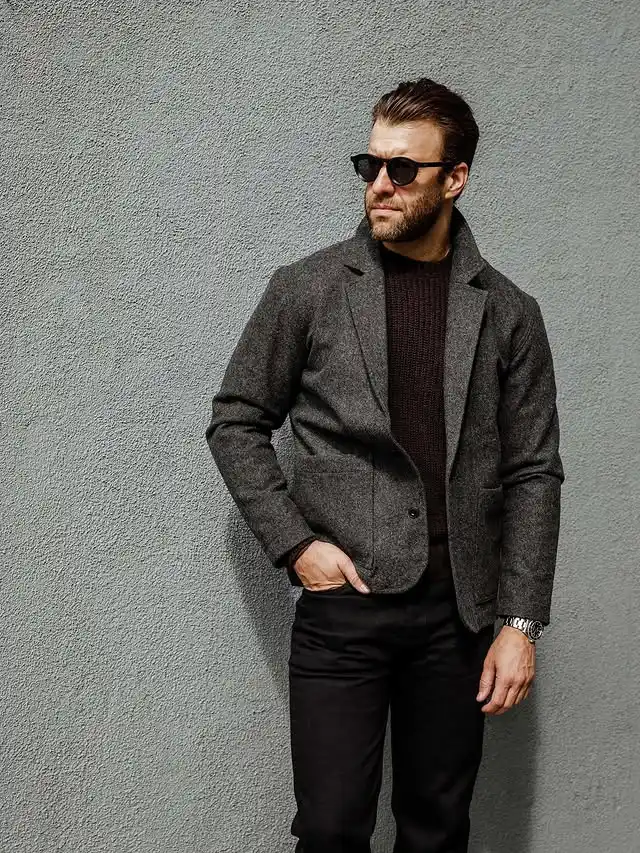
If you only add two items to your wardrobe this year to master your proportions, make it an unbuttoned overshirt and an unconstructed casual blazer.
These two items are excellent for layering clothes for tall slim men because they change how your torso looks.
An unbuttoned overshirt creates two clean vertical parallel lines down your chest. This visual trick breaks up your side to side torso width.
It makes a thin torso look more athletic and structured. For a dressier look, a single breasted, two button blazer builds a masculine shape by accentuating your shoulders.
✅ Quick Proportion Check
☑ Base shirt hits mid fly
☑ Jacket has high armholes
☑ Overshirt left unbuttoned
☑ Trousers sit mid-to-high rise
| Layer | Recommended Item Type | Purpose for Tall Frames | Key Proportion Check |
| 1. Base | Lightweight, fitted crewneck | Prevents bunching at the waist | Must hit exactly at mid fly |
| 2. Mid | Heavy cotton flannel overshirt | Adds physical horizontal texture | Leave unbuttoned for visual lines |
| 3. Outer | Tailored denim jacket | Defines and anchors the shoulders | Hem must clear the hips cleanly |
However, even the most sharply tailored blazer will fail if it meets a waistband that sits too low on your hips.
Low rise pants drop your waistline artificially and make your torso look miles long.
⚠️ Fit Warning
Even a perfectly tailored blazer fails over low-rise pants. Always anchor layers with mid-to-high rise trousers.
Always pair your layers with mid to high rise trousers. This keeps your waistline in its natural position.
When your layers fit your length properly, you no longer have to slouch to match the room. Your clothes do the structural work for you.
Conclusion
Layering does not mean you have to look swallowed by loose fabric. You can look sharp by following a few simple steps.
Focus on thin to thick materials to keep your look clean.
Watch your hem lengths so your torso looks proportional, and use heavy textures instead of baggy fits to add mass to your frame.
Now it is time to use this advice. Go to your closet today and find your favorite light jacket.
Pair it with a fitted, tall sized base shirt and a textured mid layer. Check your sleeve and hem positions in the mirror.
Once you see the difference a structured layout makes, you can build sharp outfits every day.