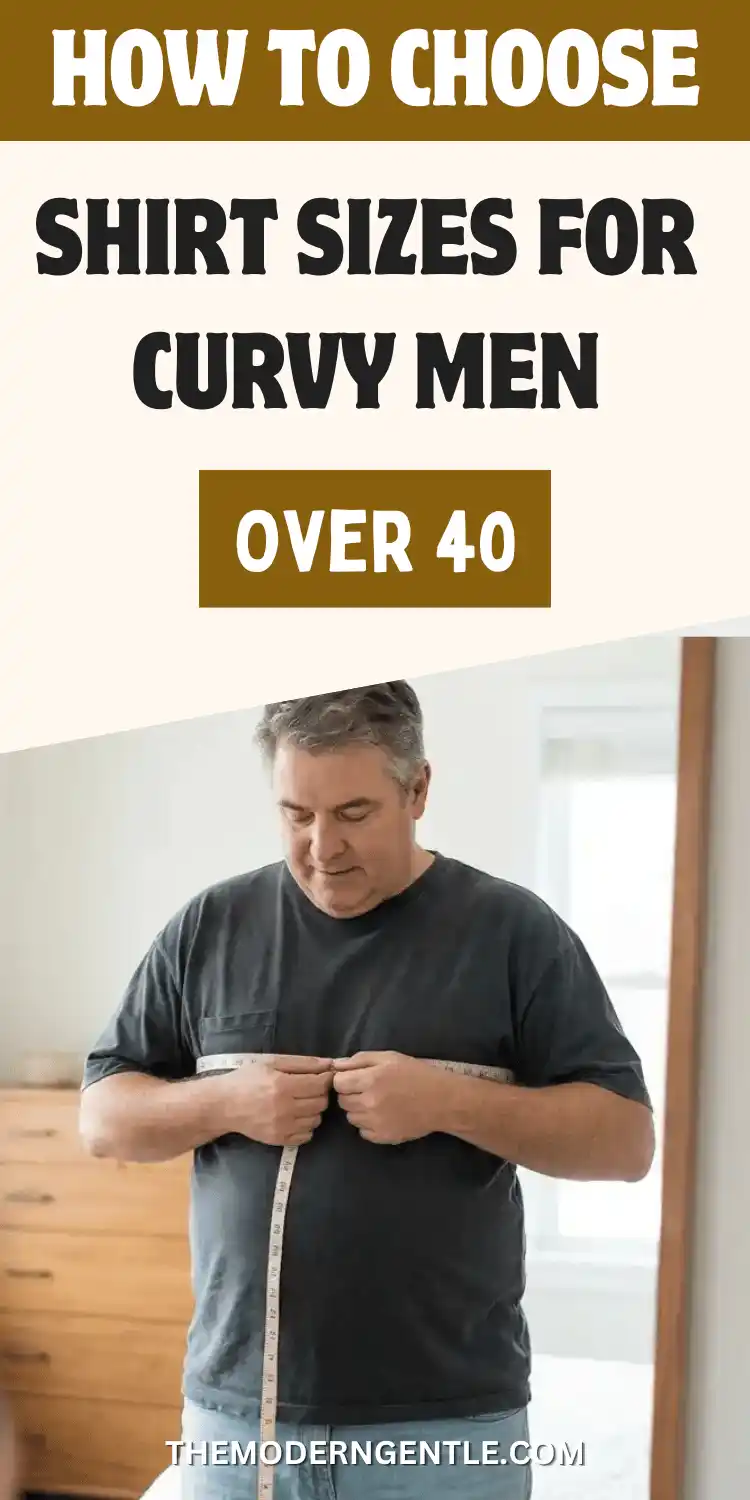
How to Choose Shirt Sizes for Curvy Men Over 40 (No More Bulges)

You reach into your closet for your favorite button-down shirt. You put it on, but it feels like the fabric is fighting back against your body.
After 40, our bodies change because metabolism naturally slows down. According to PMC Research, men over 40 typically lose 3 to 5 percent of muscle mass per decade.
This muscle loss often leads to visceral fat, which causes a protruding big belly while your shoulders and arms stay the same size.
If you try to fix this by simply buying a larger size, you run into problems. The sleeves end up way too long and the shoulders droop down your arms. You look like you are wearing a tent.
Learning how to choose shirt sizes for curvy men requires a new strategy. True style for men over 40 is about choosing clothing that matches your current build. You will learn how to measure your torso length accurately,
pick breathable fabrics that do not cling to your skin, and use the mid-fly rule to hide midsection bulges for good. Size is just a random number, but a great fit is pure geometry.
The Golden Ratio of Fit for Men Over 40

Wearing oversized shirts hides a big belly. Large, baggy shirts actually make you look bigger and shorter than you really are.
To look your best, you must focus on proper shoulder alignment first. The shoulder seam of your shirt needs to sit directly on the corner of your shoulder bone.
If the seam drops down onto your bicep, you look sloppy. If the seam sits too close to your neck, you will look squeezed.
Once the shoulders match, look at how the fabric drapes over your torso. You want the fabric to skim your body rather than cling to it.
Skimming means the fabric falls straight down from your chest without grabbing your stomach. Clinging happens when thin fabric sticks to every curve and bulge.
The length of your shirt matters just as much as the width.
The current 2026 fit standard states that an untucked shirt should land exactly at your mid-fly level. This torso length ensures the shirt stays 2 to 3 inches below your belt line.
ideal hem
zone
It prevents the embarrassing belly peek when you reach up for items on a high shelf.
Fabric Science: Texture is Your Best Friend
Thin, lightweight shirts keep you cool and look best. Thin materials lack structure and sink into every body crease.
You should completely avoid shiny fabrics like silk or thin polyester.
These materials reflect light directly off your bulges and draw attention to your stomach. Instead, look for matte materials that absorb light.
Heavy GSM cotton is the ultimate secret weapon for men over 40. GSM means Grams per Square Meter, which measures fabric thickness.
A thin poplin shirt is usually around 120 GSM and offers zero structure.
A premium Oxford cotton shirt is over 200 GSM. This heavier fabric creates a structured silhouette that holds its own shape instead of taking the shape of your belly.
Modern clothing technology has made stretch blends incredibly useful. Look for shirts that feature 2 to 3 percent elastane or spandex mixed with breathable fabrics.
Antonio Centeno from Real Men Real Style emphasizes using vertical lines and structured fabrics to create a slimming look.
These technical stretch blends give you total comfort when sitting down without permanently bagging out at the stomach.
The Gentleman’s Playbook notes that the biggest current style shift favors high-texture options like Merino wool polos and heavy cotton over thin, synthetic fast-fashion trends.
How to Measure Your Body Accurately
You can buy flattering shirts for overweight men using your standard neck size alone. Neck sizes do not account for stomach projection.
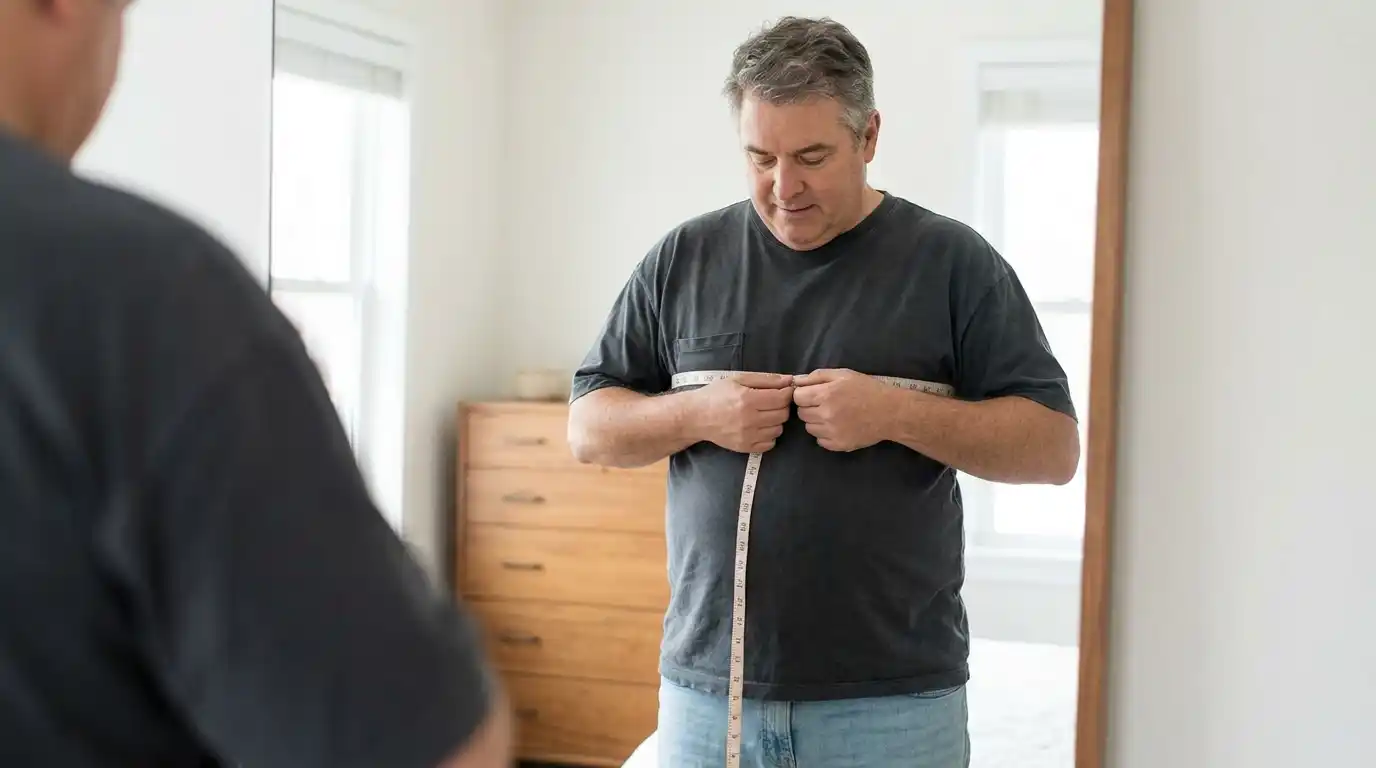
You need to take your own measurements using a soft fabric tape measure. Do not guess your size or rely on old data.
The 3-Step Sitting Measurement Test
Always add 1 extra inch to this final number to account for daily stomach projection after meals. When you shop online, compare this number to the shirt’s size chart.
When browsing retail sites, pay close attention to tall vs big sizes. “Big” sizes add extra width everywhere, which can leave you with giant sleeves.
“Tall” sizes add length without adding massive width, making them ideal if you have a long torso or a high belly.
Finally, look at the armhole fit. Many men assume large armholes offer more comfort. However, shirts with lower, baggier armholes pull fabric from the waist whenever you move your arms.
Higher armholes keep the body of the shirt completely still and actually make your upper torso look slimmer.
You can even use handy tools like e-commerce Fit Finder apps or the AIPRM SEO extension to look up local tailors who can adjust these specific areas for you.
Pro-Tip: If a shirt fits your neck and shoulders perfectly but pulls tight at the middle button, ask a local tailor to move the bottom three buttons out by a quarter of an inch.
Action Plan for a Sharper Look

Dressing well after 40 is not about hiding your body under giant layers of fabric.
It is about using intentional structure, heavy fabrics, and precise measurements to build a timeless wardrobe.
Flattering shirts for overweight men exist, but you have to look past the basic size tag on the collar.
Focus your attention on the shoulder seams, choose high-GSM matte materials, and always use the mid-fly rule to guide your hem length.
These basic steps will instantly change how you look and feel in your clothes.
Check your current closet today. If the shoulder seam of your favorite shirt sits halfway down your bicep, it is time for an upgrade.
Take your tape measure out, find your true numbers, and buy clothes that actually fit the man you are right now.