How to Style a Curvy Men’s Waistline Without Looking Bulky

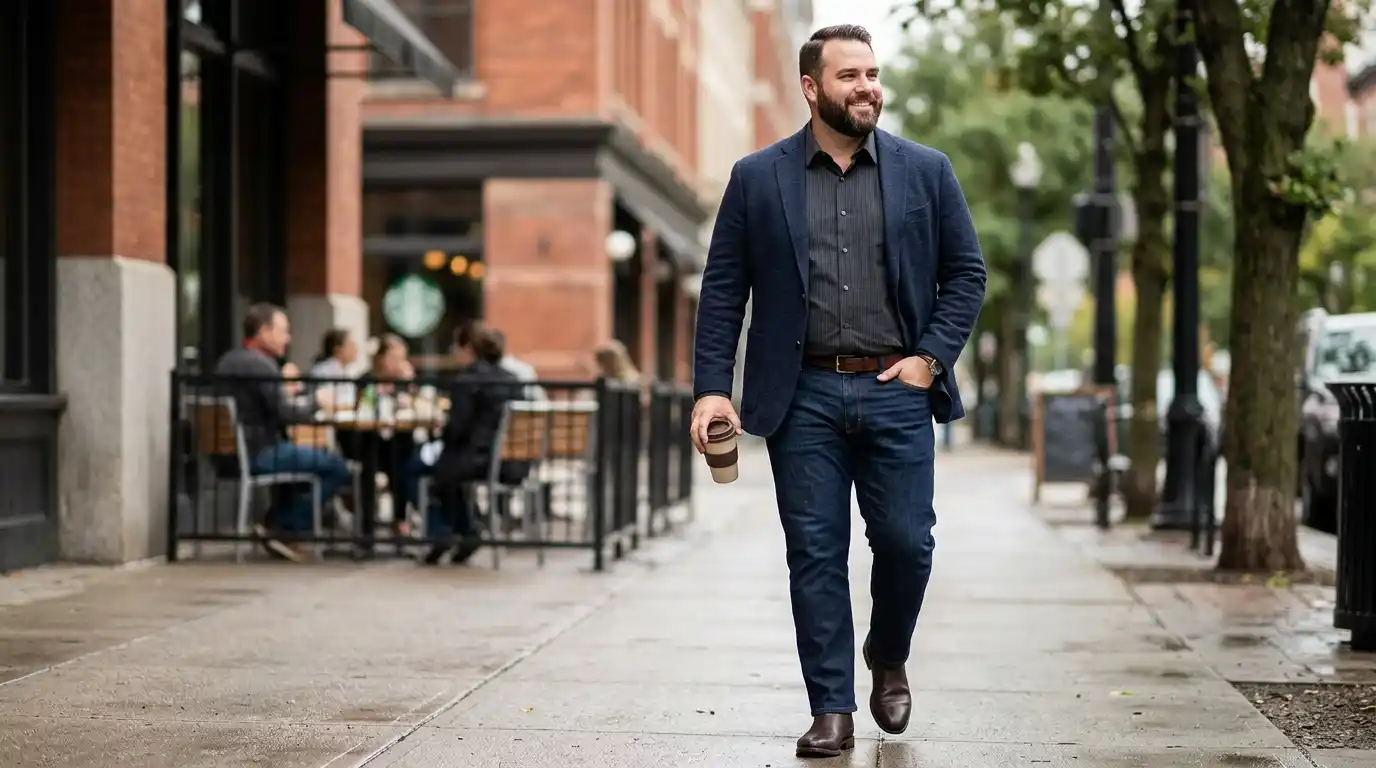
For years, plus-size style advice for men has boiled down to a single, deeply frustrating tip: “Just wear bigger clothes to hide it.”
Sizing up to cover a midsection actually creates a massive silhouette. It lacks structure. It makes you look boxy and adds unnecessary bulk.
The issue is not your body. The problem is how your clothes manage visual lines. You do not need to hide under tents anymore.
By observing plus-size men’s style trends 2026, you can learn a better approach. This guide shows you exactly how to style a curvy men’s waistline.
You will discover how to manipulate visual weight, choose structured cuts, and use simple layering formulas to perfectly frame your body.
Why Low-Rise Pants Ruining Your Proportions Are Over
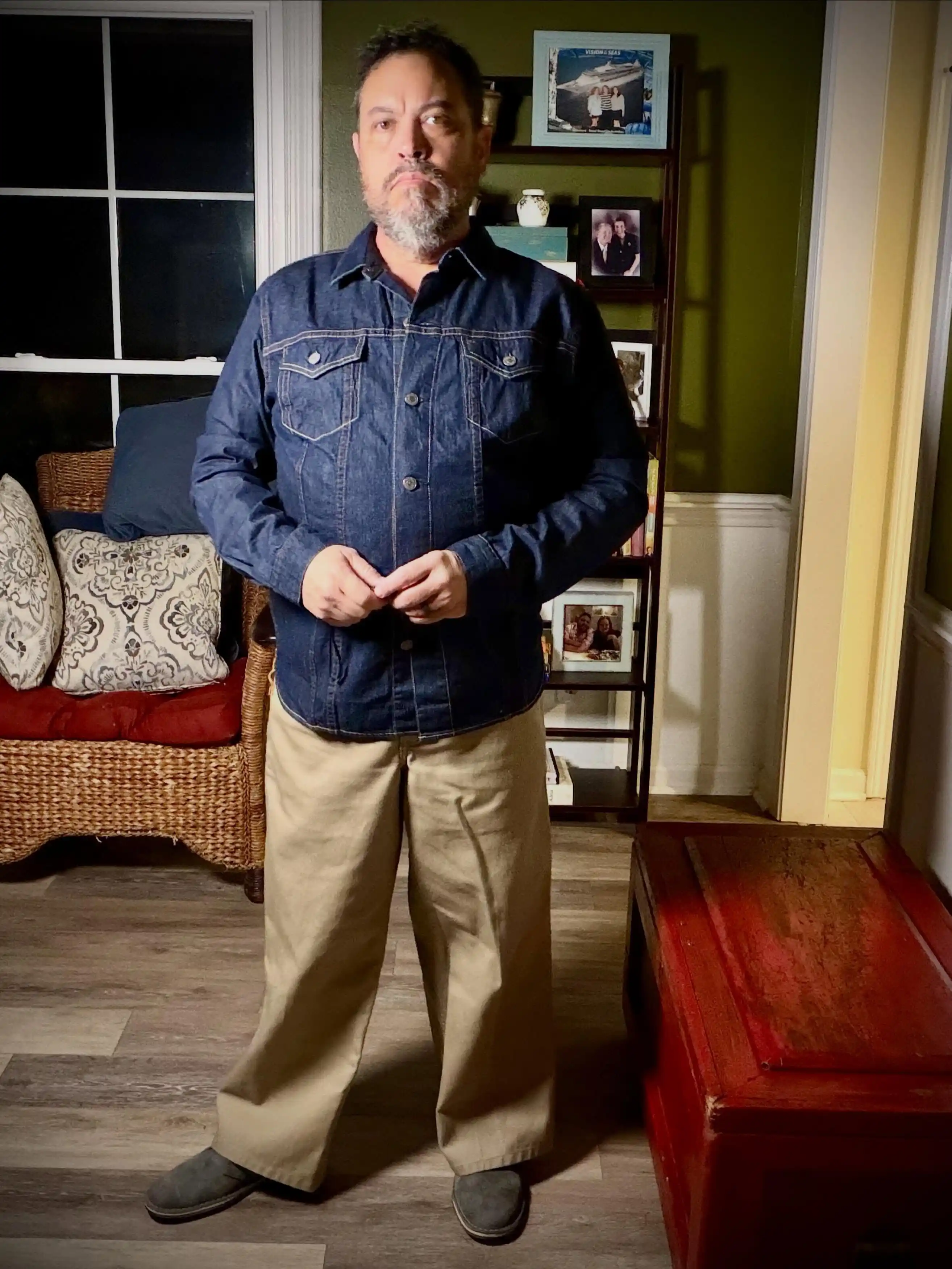
When you buy pants, your instinct is probably to button them underneath your belly. It feels easiest to secure them there. But this simple mistake ruins your silhouette.
Low-rise pants sit beneath your abdomen. This placement naturally pushes your belly upward and outward. It creates a harsh visual bisection.
It cuts your body exactly in half, making your torso look shorter and your waist look wider.
Mid-rise and high-rise trousers fix this instantly. They anchor at your natural waistline.
The fabric drapes cleanly over your abdomen instead of slipping under it. This simple shift creates a smooth line from your torso to your shoes. It elongates your legs and slims your profile.
The year 2026 has seen a major return of pleated trousers as a functional tool. Modern pleats are not old-fashioned.
They add necessary room across the hips when you sit down, but they lay flat when you stand. They provide comfort without adding extra fabric bulk.
Major menswear brands have caught on to this geometry. In 2026, retailers like Destination XL and ASOS Plus redesigned their patterns.
They now use an extended rise metric. This design ensures that flattering pants for men with a belly stay securely in place. Look for a rise measurement of 11 inches or greater on your next trouser purchase.
3 Layering Tricks That Make Your Midsection Look Slimmer
Layering does not make you look bigger. Improper layering does. If you wear thick, insulated puffers or chunky knits, you will look bulky.
But you can use lightweight, high-density fabrics to build a sleek frame.
The secret lies in creating open vertical lines. Unbuttoned overshirts and jackets create two parallel vertical lines down your chest.
This visual trick draws the eye up and down, ignoring horizontal width.
To make this work, use the three-layer formula:
- Put on a solid base layer like a dark, well-fitting crew-neck t-shirt.
- Tuck the shirt into your high-rise trousers to establish your waistline.
- Add an unbuttoned outer layer like a structured utility vest or a fine-gauge knit shirt.
This approach relies heavily on the Monochromatic Core Technique. You wear a single dark color from your chest down to your ankles. For example, pair a charcoal t-shirt with dark-wash straight jeans. Then, add a contrasting open outer layer like a rich olive overshirt.
According to 2026 styling data from Taelor Stylists, combining a monochromatic foundation with an open outer layer visually slices the perceived width of your midsection by up to 30%.
The eye focuses on the central dark column and skims right past the sides. Your base shirt tucked into high-rise denim, topped with an unbuttoned overshirt, creates a complete, bulk-free look.
Swap Lightweight Fabrics for Thicker Materials That Hold Their Shape
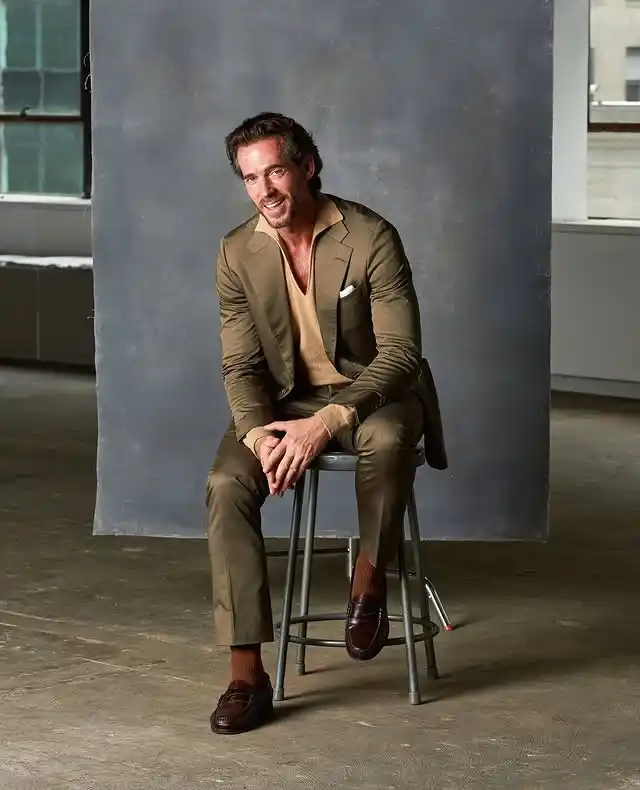
Pick up a shirt and hold it to the light. If you can see your hand through it, it does not belong in your wardrobe.
Cheap, thin fabrics are highly unstable. They cling to every curve, accentuating rolls and pockets. They provide zero structural support for a larger midsection.
Heavyweight natural materials do the exact opposite. They act as architectural scaffolding for your torso. Heavyweight cotton and thick denim hold their own shape instead of taking on the shape of your body.
- Look for shirts labeled 240+ GSM (Grams per Square Meter).
- Choose heavy denim that weighs 12 ounces or more.
- Select 280-gram chino twill for structured trousers.
Avoid synthetic blends that over-stretch. Materials with too much polyester warp throughout the day, bagging out at the waist. Instead, choose high-density natural fibers blended with just 1.5% to 2% elastane. This minor touch of stretch provides comfort while maintaining total shape retention.
Think of heavy cotton loopback t-shirts as a crisp frame. The fabric stands independently from your skin. Heavy fabric stands on its own, while thin fabric relies on your body to give it shape.
How Wider Shoulders Create a More Balanced Body Shape
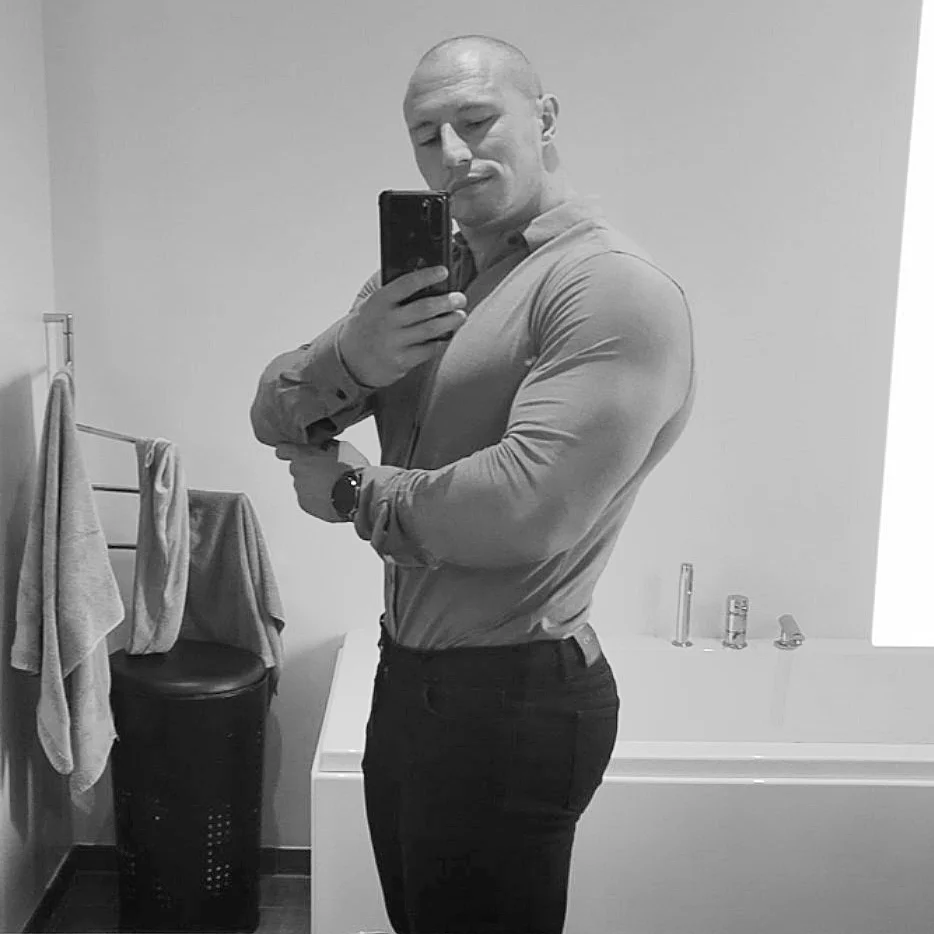
Style is a game of misdirection. If you want to balance a curvy waistline, you must draw attention upward toward your face and shoulders.
Many plus-size men wear dropped-shoulder shirts. They think the extra fabric is comfortable. In reality, dropped seams round your shoulders, making your upper body look like a circle.
Always select jackets and shirts with structured, traditional shoulder seams. The seam should sit exactly on the corner of your shoulder bone. This sharp point creates an anchor line, making your upper torso look wider.
Necklines also play a critical role. Avoid tight, thin crew necks that make your neck look choked. Instead, adopt open camp collars, deep V-necks, or structured quarter-zips. These styles create a sharp V-shape beneath your chin.
Brands like Epic Fits and Westwood Hart shifted heavily toward relaxed tailoring in 2026. Their collections feature sharp necklines and structured blazers that build a strong upper frame.
Shifting the focal point just 12 inches upward completely alters how people perceive your waist dimensions. A jacket with built-in shoulder structure does 90% of the visual heavy lifting for you.
Your 2-Minute Wardrobe Audit
Styling a curvy waistline is not about restriction. It is an engineering game of trouser rise, fabric weight, and vertical lines. You can look sharp right now by making a few intentional choices.
- Ditch low-rise pants that push your midsection out.
- Buy heavy cotton tees that drape without clinging.
- Keep your top layers open to create elongating vertical lines.
- Ensure untucked shirts terminate at mid-fly to keep your legs looking long.

