How to Use Belts to Flatter a Curvy Man’s Figure

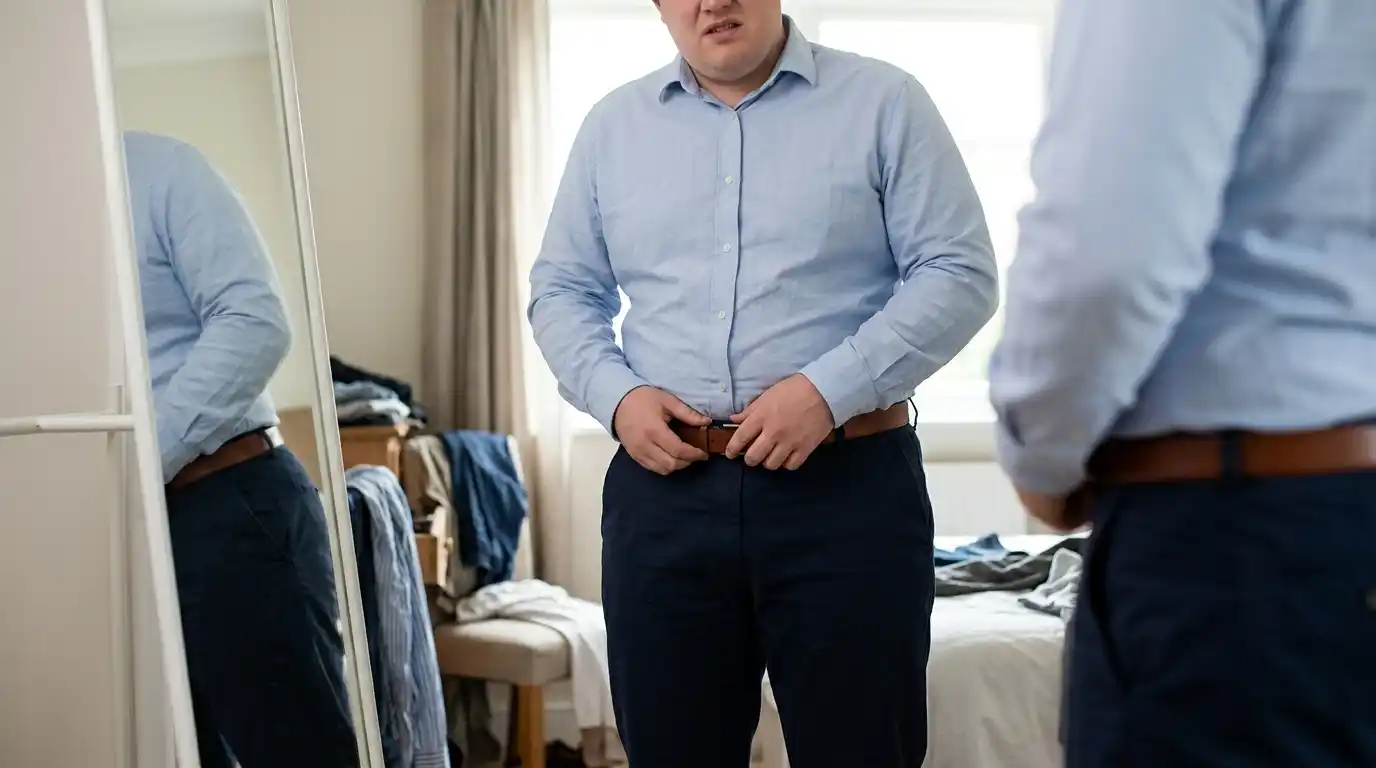
For years, standard style advice has treated the larger midsection like something to cover up rather than style intentionally.
Traditional fashion guides tell you that accessories are the enemy. They tell you to hide behind baggy clothes.
The reality is that the wrong belt can dig in painfully and cause unsightly bunching.
It can create a harsh horizontal line that splits your frame and makes you look shorter and wider.
But you do not have to skip accessories altogether. This guide shows you how to select the correct width, material, and buckle mechanics.
You will learn to turn a belt from an instrument of discomfort into a powerful tool.
By the end, you will know exactly how to choose belts for curvy men that flatter your frame.
We will look at how to select plus size mens belts and use them to flatter a large waistline with ease.
A Simple Guide to Choosing the Right Width and Thickness
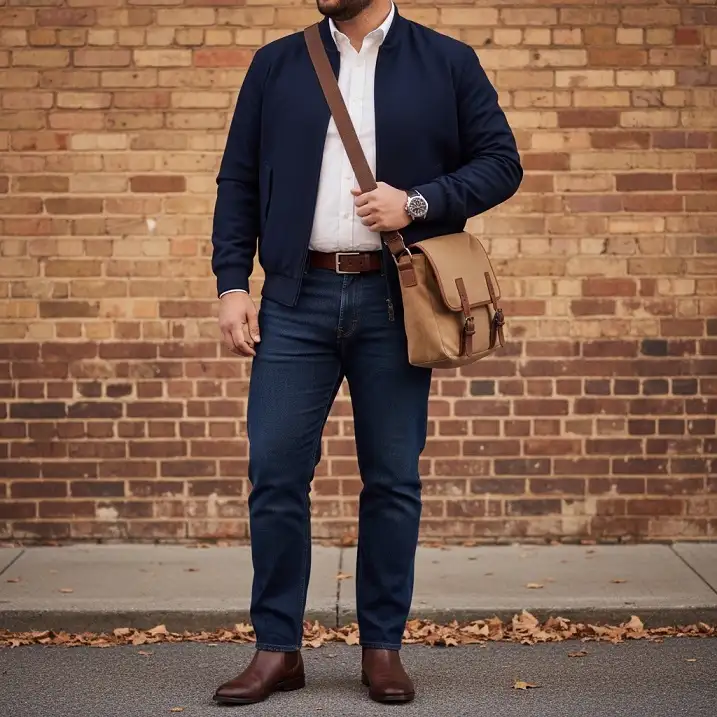
Proportion is everything in menswear. Think about framing a large piece of art. A tiny, thin frame looks completely out of place on a massive canvas. The same rule applies to your waistline.
Many men mistakenly grab narrow dress belts that measure less than 1.25 inches wide.
On a fuller midsection, a skinny strap like this looks disproportionately small. It actually exaggerates the size of your waist by contrast.
It looks like the belt is struggling to do its job.
For everyday wear, the sweet spot is a width between 1.5 inches and 1.75 inches.
Brands like GAZMAN recommend a solid 3.5 to 4 centimeter width for casual balance.
This size fills your pant loops properly. It creates a stable, balanced line across your center.
You also want to avoid overly thick, stiff bridle leathers. Heavy leather adds actual physical bulk right on your front profile.
Stick to sturdy materials that lie flat against your clothes. A robust 1.5 inch pebbled leather belt offers great visual scale without the stiffness.
- Formal Trousers: Stick to a clean 1.25 inch width in smooth leather.
- Casual Chinos and Jeans: Move up to a 1.5 or 1.75 inch strap to match the heavier fabric.
Width Cheat Sheet
Bigger canvas, bigger frame — a wider belt fills the loops and gives your center a stable line.
3 Placement Strategies: Above, Mid, or Below the Belly?
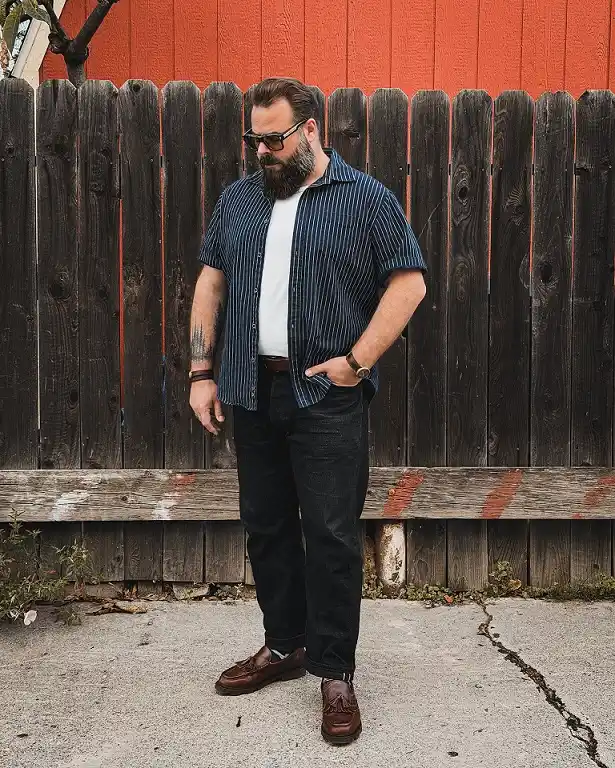
Where do your pants actually sit throughout the day? Most men with a rounder build struggle with this constantly. The answer determines how well your belt performs.
Many men pull their belt down under the belly. This under belly drop creates a low rider effect. It forces your pants to crease and slip down constantly.
It also pushes your torso out of balance by making your legs look short. Worst of all, it forces your shirt to bunch up and come untucked every time you sit down.
Where’s Your Belt Really Sitting?
🔻
Below the Belly
Low-rider drop, shirt untucks, legs look shorter.
AVOID
➖
Above the Belly
Can pinch and dig; less common but still tricky.
RISKY
✅
Mid-Belly (Natural Waist)
Clean vertical drop, shirt stays tucked, legs read longer.
BEST FIT
The solution is to look at the rise of your trousers. Standard tailoring data shows that a higher rise trouser can visually subtract 10% of apparent midsection mass.
It does this by creating a clean, straight vertical drop from your hip.
Try wearing mid rise or high rise pants at your natural waist, which sits mid belly. When you place plus size mens belts here, they hold everything securely.
It keeps your shirt tucked in and creates a long, smooth line from your waist to your shoes. It is the easiest way to flatter a large waistline.
Choose Belt Buckles That Create a Sleek Look
Metal hardware reflects light. Because of this, your belt buckle acts like a spotlight on your midsection. You need to choose a shape that does not draw the wrong kind of attention.
Massive, flashy buckles or western style novelty designs create an intentional focal point right on your stomach.
They stick out when you sit down and add unnecessary depth to your silhouette.
Shiny, highly polished gold and silver hardware reflects light forward, which makes things look larger.
Instead, look for classic, low profile frames. A single prong square or a slightly rounded buckle is ideal.
Choose brushed or matte metals. These materials diffuse light and blend seamlessly into your outfit.
You should also look into micro adjustable track belts. These do not use traditional holes.
Instead, they use a hidden track system that adjusts in quarter inch increments. This gives you dynamic comfort as your body shifts throughout the day.
Color Secrets to Avoid the Cut in Half Effect
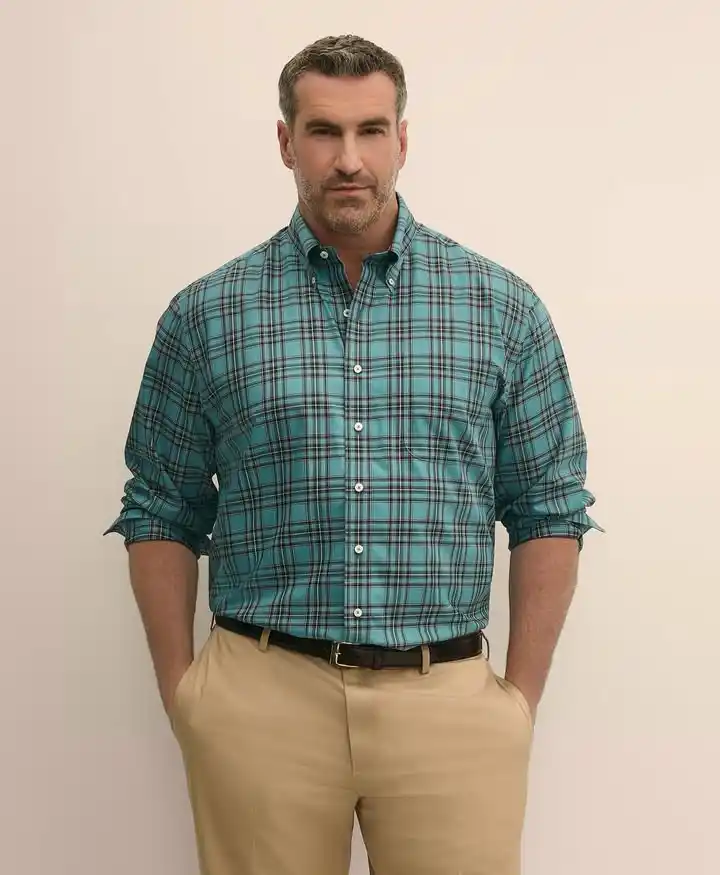
To look your best, you want the eye to move smoothly from your head to your toes. High contrast outfits interrupt this movement.
If you wear a white shirt, a black belt, and light chinos, you create a harsh contrast line.
This line slices your silhouette horizontally. It splits your body into two distinct blocks, making you look shorter.
Monochromatic styling is a better approach. Match your belt color closely to your trouser color.
For example, pair a dark brown belt with navy trousers, or a black belt with charcoal trousers.
This keeps your torso unified. It creates an uninterrupted vertical line that elongates your frame.
Match, Don’t Slice
✅ Dark brown belt + navy trousers
✅ Black belt + charcoal trousers
✕ Black belt + light chinos (harsh cut-line)
Material selection matters too. Choose fabrics with built in flex.
Pebbled leather, matte suede, and woven stretch fabrics offer excellent give. They move with you without pinching or losing their shape.
3 Easy Steps to Get the Right Fit Every Time
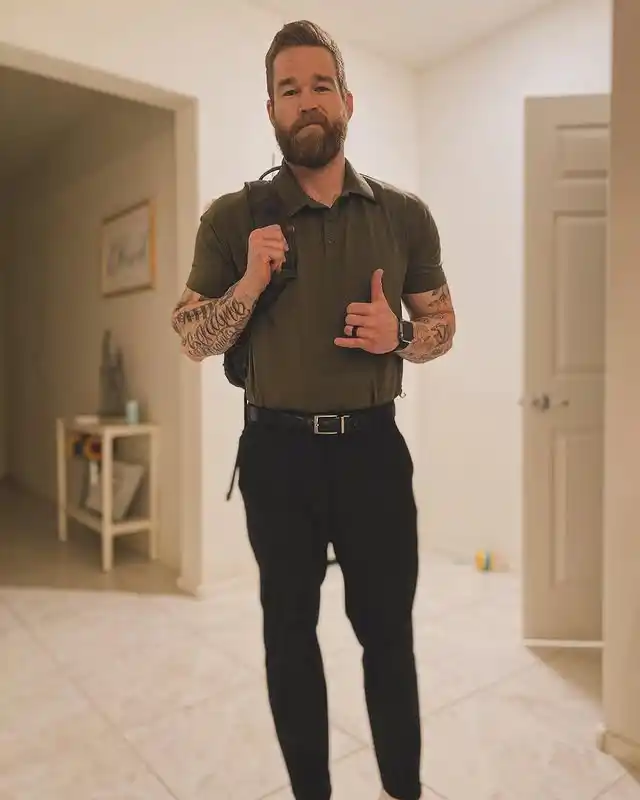
Do not rely on the size tag inside your favorite jeans. Pant sizing uses vanity metrics and varies wildly between brands. To find a belt that fits comfortably, follow these steps.
Get a Tool
Grab a flexible fabric tape.
Measure Right
Wear your favorite trousers, stand relaxed.
Check the Loops
Thread the tape where you actually wear your belt.
Your real belt size is uniformly 2 inches larger than your actual trouser measurement.
This extra space accommodates the thickness of your tucked in shirt and the pant fabric itself.
Buying the right size ensures the buckle sits comfortably on the middle hole every single time.
Summary
Belts are more than just functional tools to hold your pants up.
They are structural frame builders. When you select the right width, match your belt color to your pants, and use low profile buckles, you completely transform how your clothes drape.
Take a look at your current belt collection today. Use a fabric tape measure to check your real size.
Investing in the right belt will help you build a clean, comfortable, and balanced style. Use a proper mens belt styling guide strategy to make your wardrobe work for you.

